All posts tagged: Thomas

The Lessons of Thomas Massie’s Defeat

The Lessons of Thomas Massie’s Defeat

For a long time, Representative Thomas Massie confidently defied an ironclad law of modern Republican politics—that to oppose President Trump was to start a ticking clock on your electoral career. “I’m not worried about losing,” he told me last spring inside the Capitol, as he explained to a group of reporters the strength of his support within his Kentucky district. Massie had already angered Trump just a few months into the president’s second term, after clashing with him during his first. Massie voted against government-funding bills, criticized the president’s tariffs, and would soon become one of the only Republicans in Congress to oppose Trump’s One Big Beautiful Bill Act, which the fiscally hawkish Massie deemed irresponsible. Trump lashed out at Massie and vowed to find a primary opponent to defeat his bid for an eighth term; as early as last summer, the president’s allies stood up a political-action committee to run ads attacking Massie in his district. Still, Massie refused to fall in line. Over the next several months, he condemned Trump’s military adventurism, including …

Thomas Paine and the Humanist Soul of the American Revolution

Thomas Paine and the Humanist Soul of the American Revolution

The Times That Try Men’s Souls In moments of political strain, societies are not only tested by what they can endure, but by what they are willing to become. I challenge you to reread the opening lines of “The American Crisis.” “These are the times that try men’s souls.” Without context, you could be forgiven for thinking Thomas Paine wrote those words in 2026. That is not because history repeats itself neatly, nor because our age is uniquely dramatic, but because Paine understood something Americans have repeatedly had to relearn: Political crises are not only contests of power. They are tests of moral courage. They ask not merely what institutions can withstand, but what kind of people we become when the cost of seriousness rises. Thomas Paine is often remembered as a revolutionary writer. He should be understood as something more demanding: a thinker who grounded political legitimacy not in tradition or authority, but in the dignity of ordinary people. In that sense, Paine is not simply a figure of the past. He belongs to …

Michael Tilson Thomas dead: L.A.’s wunderkind conductor dies

Michael Tilson Thomas dead: L.A.’s wunderkind conductor dies

Grammy-winning conductor Michael Tilson Thomas, the bird-like maestro affectionately dubbed MTT and a “bad boy of classical music” while leading almost all of the major orchestras of the United States and Europe since his teen years, has died in his San Francisco home. Born in Los Angeles, the celebrity conductor and former child prodigy died Wednesday of glioblastoma, a representative for Tilson Thomas confirmed to The Times. He was 81. He had a brain tumor removed in 2021 and underwent months of therapy. He was met with rapturous standing ovations at the New York Philharmonic and San Francisco Symphony upon his return to the stage months later. Tilson Thomas’ illness seemed to inspire him to work more and travel regularly. In 2022, he conducted in Prague, Munich, London, New York, Miami, Cleveland, San Francisco and L.A. When Times classical music critic Mark Swed sat down for an interview with him in 2023, the critic noted that Tilson Thomas seemed as indefatigable as ever. Tilson Thomas told Swed that his doctors were “jubilant” after his most …

Clarence Thomas’ attack on progressivism should alarm you

Clarence Thomas’ attack on progressivism should alarm you

Like a modern-day Paul Revere, Clarence Thomas is sounding the alarm: Progressives are an existential threat, determined to destroy all you hold dear, unless you are willing to sacrifice and fight them with everything you have. Perhaps you think that’s a bit aggressive coming from a Supreme Court justice charged with making dispassionate decisions about the Constitution and the rule of law. But he made his position clear in an April 15 speech before invited faculty and students at the University of Texas at Austin. You have been warned. The speech was supposed to commemorate the 250th anniversary of the Declaration of Independence, which the nation will be celebrating this summer. (For his part, Donald Trump is planning an IndyCar street race around Washington, D.C., and a UFC fight on the White House lawn.) Thomas used the opportunity to charge that “progressivism seeks to replace the basic premises of the Declaration of Independence and hence our form of government,” adding that the ideology “holds that our rights and our dignities come not from God, but …

Clarence Thomas’ attack on progressivism should alarm you

Clarence Thomas blames progressivism for Hitler. Historians aren’t having it

U.S. Supreme Court Justice Clarence Thomas is facing backlash after remarks linking progressive political ideas to the rise of Adolf Hitler, a comparison critics say misrepresents history while escalating partisan rhetoric. During a recent speech, Thomas criticized early 20th-century progressivism — including ideas associated with President Woodrow Wilson — arguing that such movements contributed to conditions that enabled authoritarian regimes in Europe. The comments, which circulated widely online, drew sharp responses from historians and legal scholars who rejected the comparison as inaccurate and misleading. Experts note that the rise of Nazi Germany is broadly understood to have stemmed from a complex set of factors, including economic collapse, political instability and the aftermath of World War I, not American progressive reforms. Critics argue that invoking Hitler in modern ideological debates risks distorting that history while inflaming political divisions. Supporters of Thomas defended the remarks as part of a broader critique of government overreach, suggesting he was drawing philosophical parallels rather than asserting a direct causal relationship. Start your day with essential news from Salon.Sign up for …

Call the Midwife’s Heidi Thomas says goodbye to Sister Monica Joan

Call the Midwife’s Heidi Thomas says goodbye to Sister Monica Joan

The end, when it came, didn’t arrive with a whimper or a bang. Instead, the conclusion-for-now of Call the Midwife will have been met, in living rooms from Aberdeen to Zouch (Nottinghamshire, trivia fiends), with sobs and sighs. Certainly, it was a tearjerker of an episode in which Midwife’s, er, midwife, showrunner Heidi Thomas, had doubled the usual doses of bittersweet poignancy and shiny optimism, injecting them into proceedings like emotional steroids. From Rosalind and Cyril’s shotgun nuptials and Beryl reconciling herself to being a Sister and never a mother, to Susan Mullucks gaining an independence unimaginable when she was born a thalidomide-affected baby a decade earlier, our 133rd visit with Nonnatus’s nuns’n’nurses delivered. Well of course it did. It was never more affecting and tender than when concerned with the passing of Sister Monica Joan. Hers was a death foretold, mostly by Sister Catherine, who was two-for-two in her predictions about Monica Joan’s demise – how her condition would worsen without treatment and who would guide her to the pearly gates. (With prognostics like …

‘Thomas Crown Affair,’ ‘Bullitt,’ Screenwriter Was 95

‘Thomas Crown Affair,’ ‘Bullitt,’ Screenwriter Was 95

Alan Trustman, who wrote the screenplays for The Thomas Crown Affair and Bullitt, back-to-back 1968 films that starred Steve McQueen in two of his most memorable roles, has died. He was 95. Trustman died Feb. 5 in a Miami nursing home, his son, John Trustman, told The New York Times. Trustman also co-wrote They Call Me Mister Tibbs! (1970), the crime drama that was directed by Gordon Douglas and starred Sidney Poitier as police detective Virgil Tibbs in the sequel to the Oscar best picture winner In the Heat of the Night (1967). Trustman was working as a Harvard-trained corporate lawyer at a large law firm in Boston in 1967 when he acted on an idea to write a film about a bank heist. “I knew I could never write a book. But maybe I could write a movie,” he told author John Spooner years ago. Through his college connections, Trustman found the name of a New York literary agent and pitched him his story, and it wound up becoming The Thomas Crown Affair. Directed …

Hannibal Lecter origins: A review of Brian Raftery’s Thomas Harris biography

Hannibal Lecter origins: A review of Brian Raftery’s Thomas Harris biography

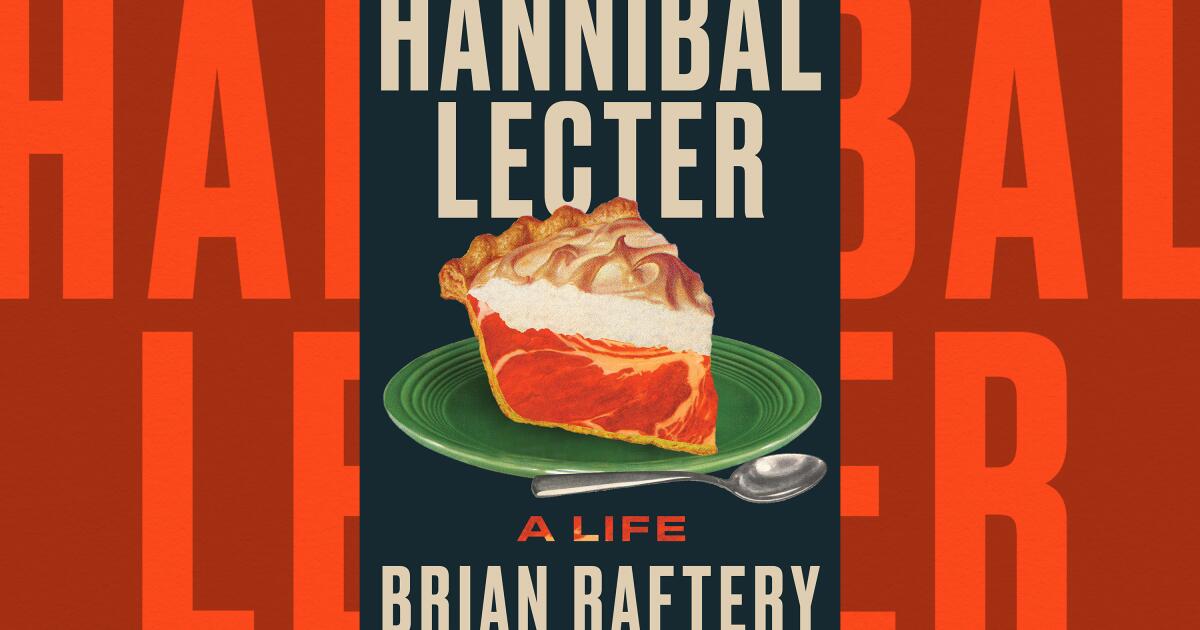
Book Review Hannibal Lecter: A Life Of all President Trump’s rather peculiar hyper-fixations — rigged elections, left-wing fake news and Rosie O’Donnell — there is one that particularly stands out, and his name is Hannibal Lecter. At times the president either compliments the serial killer or compares Lecter’s time in an asylum to that of immigrants seeking asylum — though the constant references to Hannibal the Cannibal might fall into comparison given the president’s own rather carnivorous-leaning diet. Brian Raftery cleverly opens his new biography, “Hannibal Lecter: A Life,” with this heightened focus on how the once side character became such a household name. In introducing Lecter to this culturally embalmed state only offered to a select golden group of characters, the Los Angeles-based author sets the stage to unravel the mysterious character’s origins through his elusive creator, Thomas Harris, and the real-life crimes and surprising interviews with the FBI that shaped the mythologized antihero. But how does one set out to write a biography about the creation of an author who not only can’t …

God and Science by Thomas G G Fournier

God and Science by Thomas G G Fournier

There is a quiet war being fought across pulpits and lecture halls, a war waged not with weapons but with assumptions. On one side stand the theologians who dismiss the sciences as threats to scripture. On the other, the scientists who wave away the Bible as ancient mythology. And caught in the middle are millions of ordinary people, told they must pick a side or be intellectually dishonest. Thomas G. Fournier refuses to accept that premise, and his book, God and Science by Thomas G G Fournier, makes a compelling case for why no one else should either. Published in 2025 by TGiF Publishing, this work is not a devotional or a science textbook. It occupies the rare space in between, written by a man whose career trained him to dig beneath the surface and follow evidence wherever it leads. The result is a book that challenges conventional thinking on both sides of the faith-science divide, inviting readers to examine the evidence with fresh eyes and honest hearts. The Author Behind the Argument Thomas G. …

A Real Live Socialist | Thomas Powers

A Real Live Socialist | Thomas Powers

Bernie Sanders’s last moment as a little-known American citizen probably occurred in early 1981 when he was knocking on doors in Burlington, Vermont, to say he was running for mayor. That January he knocked on the door at 258 Colchester Avenue, where the grandparents of nine-year-old Dan Chiasson lived. No one answered. Chiasson is the sort of guy who remembers everything that happened to him as a kid. What he remembers first about the unexpected knock forty-some years ago is the voice of his grandmother calling out to his grandfather, “There’s someone at the door.” His grandfather boomed out a command: “Don’t open the door—it’s Sanders!” Chiasson is in his fifties now, writes for The New York Review and The New Yorker, is a much-published poet, likes to nail things down, and years later checked what he remembered with Linda Niedweske, the aide who was at Sanders’s side in Burlington’s Ward 1 on that day back in 1981. By then Sanders had run and lost a number of Vermont campaigns, but a friend told him …