All posts tagged: Teach

Clavicular built a following humiliating women. What does that teach his fans?

Clavicular built a following humiliating women. What does that teach his fans?

You might first come across Clavicular in a clip about his jawline or his first, second, or eleventh plastic surgery. Stay a little longer, and you may find yourself watching him assess women’s appearances, discuss their sexual availability, or reduce them (along with men) to categories in an online hierarchy of attractiveness. For viewers, it all arrives in the same feed, packaged as entertainment. For the women involved, appearing in that content can carry consequences that extend long after the livestream ends. Clavicular, whose real name is Braden Peters, is a 20-year-old influencer known for “looksmaxxing” content, an online trend centered on making yourself more physically attractive. On his livestreams, primarily on Kick, he compares his appearance with other men’s and rates women’s looks. YouTube banned his original channel in November 2025 and later removed two replacement channels. He has become one of the most recognizable figures in a corner of the internet where physical appearance is treated as a measure of status and worth. SEE ALSO: Who is Clavicular, and why is he everywhere …

What Your Regrets Can Teach You

What Your Regrets Can Teach You

We all have regrets. You look back on your life and can still feel the sting of that hurtful remark you made to your high school girlfriend, or you replay, unexpectedly at 3 a.m. while lying in bed, that time you had too much to drink at a friend’s party and acted like a jerk. These are isolated, yet regrettable events. Patterns But then there are regrets that are not one-time events but, instead, are part and parcel of a larger pattern. These are patterns that signal when our lives are going off course from our character, needs, and values. Here are some of the common patterns of regret that I’ve heard from clients over the years: Not listening to their gut or trusting their instincts Not being brave enough to take the harder, riskier path Quitting too soon—a job, a relationship—or not trying harder Holding grudges or not forgiving others Continuing to treat someone badly, taking them for granted, and not showing more appreciation Not being more open and letting others in Looking at …

What Six Umbrellas in Kyoto Teach Us About Kindness

What Six Umbrellas in Kyoto Teach Us About Kindness

Six umbrellas hang from a tree outside Marutamachi subway station in Kyoto, Japan. Beside them, a notice reads: ‘If you have any problems, please take one for free’. I should explain. It is September in Kyoto. The rain showers are short but unpredictable. Some people always carry an umbrella. Some don’t. Some people mind their umbrella with the greatest of care. Some people mislay their umbrella and get very, very wet. Some people borrow an umbrella and remember to give it back. Some forget. Kindness matters A single act of kindness can seem small, especially when the gesture itself is simple. But small acts of kindness tell another person: I noticed you, and your difficulty matters to me. That changes the emotional tone of an ordinary day. Kindness strengthens social connection. It tells us that we are not on our own, even among strangers. In a busy city, an umbrella left for someone you will never meet is a practical symbol of concern: Someone has a problem, someone else anticipated it, and nothing is expected …

What Grief Can Teach Us, if We’re Willing to Listen

What Grief Can Teach Us, if We’re Willing to Listen

A few weeks back, my husband walked into our vet’s office carrying a box of things we no longer needed — the little foam steps, the puppy pads, the small accommodations we’d built around our Chihuahua Jilly’s failing heart, which finally gave out. He was there to donate them to another family who might need them. He came home and said the front-desk staff cried when they saw the box. These are people who see loss every week. It’s part of the job. And still, holding Jilly’s steps in their hands, something in them broke open too. I’ve been sitting with that moment ever since — not just as a story about losing my dog, but as a window into something much bigger: one of the ancient, hard-wired emotional operating systems that run underneath everything we call feeling. This is where my work keeps landing lately. Not “why does loss hurt?” but “why do we have a system built to make it hurt, and what happens when we stop listening to it?” The System Has …

The Lesson Watergate Was Supposed to Teach

The Lesson Watergate Was Supposed to Teach

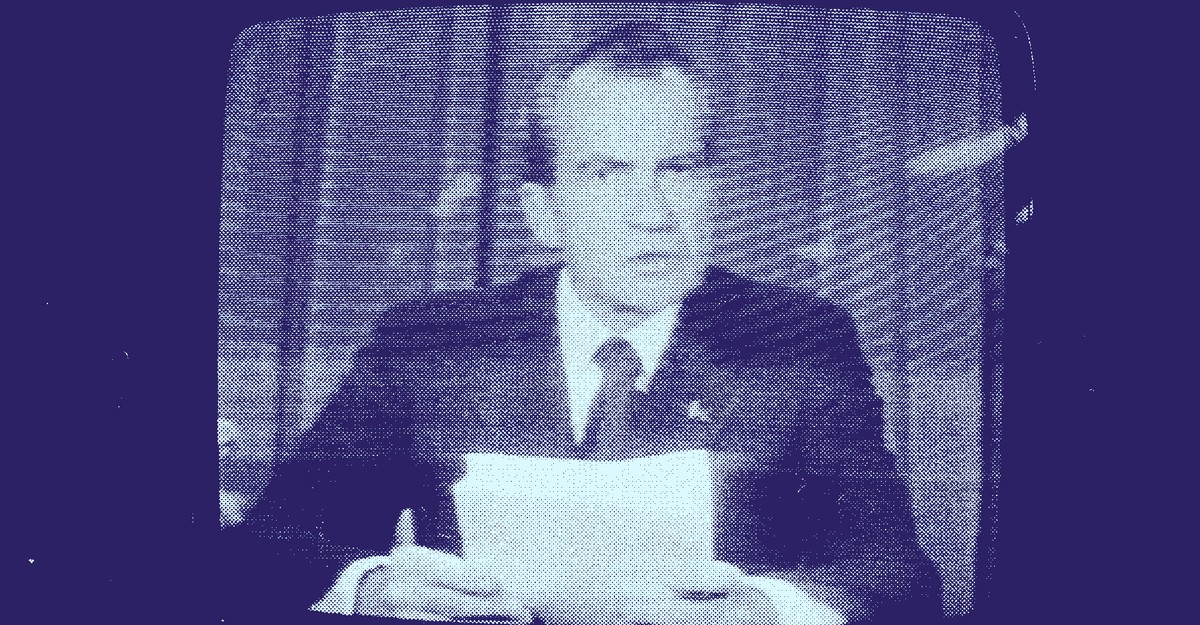
This is an edition of Time-Travel Thursdays, a journey through The Atlantic’s archives to contextualize the present. Sign up here. Historians are generally better off interpreting the past than predicting the future. By training, we’re meant to read sources, not tea leaves. In the fall of 1973, during the middle acts of Watergate’s Shakespearean drama, Arthur M. Schlesinger Jr. tried to do a little bit of both. In the cover story of The Atlantic’s November issue that year, “The Runaway Presidency,” Schlesinger cast President Richard Nixon’s abuses as the result of long-standing historical trends that had empowered the chief executive, and in the process offered a hopeful prognosis for what was to come. “Watergate,” Schlesinger wrote, “is potentially the best thing to have happened to the presidency in a long time. If the trails are followed to their end, many, many years will pass before another White House staff dares take the liberties with the Constitution and the laws the Nixon White House has taken.” Nixon resigned 52 years ago this month, marking an end …

What death doulas can teach us about dying well without religion

What death doulas can teach us about dying well without religion

In most western societies, death has always been the church’s job. Nearly everyone wanted last rites, deathbed prayers and a faith leader at their bedside. But for a growing number of people, that template for dying is no longer the only option. The death doula, a different kind of caregiver, is increasingly entering the scene. Some might have seen a death doula on the latest season of HBO’s medical drama The Pitt. Others may have recently heard Australian actress Nicole Kidman announce that she is training to become one. So what exactly is a death doula (sometimes also called an end-of-life doula, soul midwife or compassionate companion)? Much like a birth doula — a trained, non-medical professional who provides support to a person during childbirth — they help guide a person through life’s final chapter. Death doulas help the dying identify what matters most to them at the end of their lives and work out how to make it happen — what one might call a ‘good death’ (Getty Images) As researchers in the sociology …

What Dog-Parent Guilt Can Teach Us About Human-Animal Bonds

What Dog-Parent Guilt Can Teach Us About Human-Animal Bonds

A growing number of people live with and share their lives with a pet. It may be a cat, a dog, or less typical animals such as reptiles or small rodents. And these animals do not simply coexist in the household; people often develop very strong bonds with them. These relationships can have a significant impact on the decisions people make in their lives, including small everyday choices such as where to work, where to live, or where to travel. People’s lifestyles are sometimes adjusted to match the needs of the animal. But in some situations, people may also feel that they are not fully meeting their pet’s needs, whether because they work too much, struggle to provide enough physical activity or cognitive stimulation, or simply do not feel they are giving enough attention in everyday life. Exploring Guilt Among Pet Parents For some people, the perception that they are not meeting their expectations as pet parents can be associated with feelings of guilt and even a sense of inadequacy. And for people who have …

What Dogs Can Teach Us About Consciousness

What Dogs Can Teach Us About Consciousness

This is an edition of the Books Briefing, our editors’ weekly guide to the best in books. Sign up for it here. Humans used to spend a lot of time thinking about what separated us from animals. René Descartes, who wrote, “I think, therefore I am,” practiced vivisection on rabbits and dogs because he thought that they lacked consciousness. Then Charles Darwin argued convincingly that humans are indeed animals—and now, in the time of AI, we tend to think a lot more about what separates us from machines. I certainly have been, especially after reading Michael Pollan’s recent book on consciousness, A World Appears, and seeing his ideas reverberate in the Atlantic staff writer Judith Shulevitz’s article this week about the depiction of dogs in art. First, here are five stories from The Atlantic’s Books section: Shulevitz begins her essay, about Thomas W. Laqueur’s new book, The Dog’s Gaze: A Visual History, by describing a sensation familiar to most dog owners (and to me as I write this and my terrier gazes up from under …

What the 18th Century Can Teach the 21st

What the 18th Century Can Teach the 21st

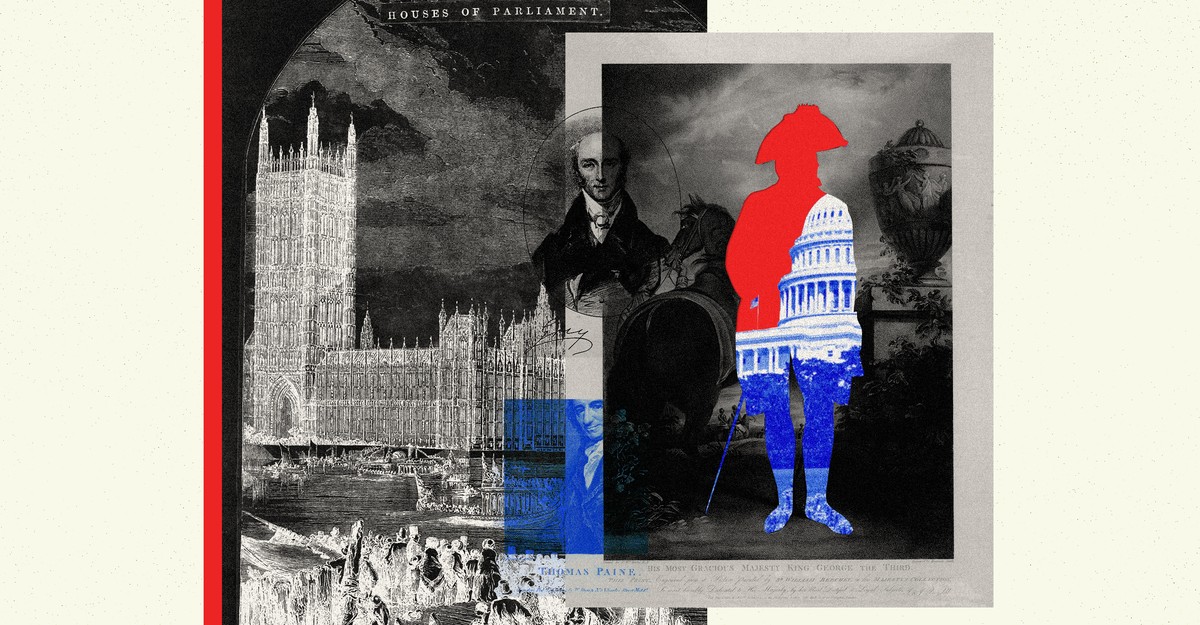
On the eve of the nation’s 250th anniversary, it might be tempting to assume that we’ve run out the clock on a democracy’s life expectancy. The catalog of ills is familiar. We have a president whose unilateral powers—over war making, over administration, over emergency authorities—would have astonished the founding generation; a legislature that has proved unable or unwilling to constrain the executive; and gerrymandered congressional districts that produce safe seats by the hundreds, and leave far too many voters without a meaningful voice. We’ve had two decades of wars whose ends remain elusive and whose costs are rarely tallied. Looking back to the Age of Revolution, and across the sea, can offer some useful perspective. Although the fact is often forgotten, the American colonists were not the only people who faced a political crisis in the late 18th century. The British people did too. And, ironically, the United States finds itself in a situation today very similar to the one Britain faced back then. The diagnostic checklist that an attentive observer might have drawn up …

How Crises Teach Us to Live and Why Ignoring Them Costs Us

How Crises Teach Us to Live and Why Ignoring Them Costs Us

I remember driving back from the university to my home in Miami. I was listening to music in the car and waiting as the first one in a long line for the green light to turn left at a huge intersection. I knew this traffic light took forever. On the opposite side of the road, there was a person holding a big canvas with writing on it. It said something like: “Jesus is coming to this planet soon.” I read that, and it got me thinking. About Jesus, religions, and why people stand on the street holding signs like that. What do they hope strangers will feel when they read those words? While I was flying in my thoughts, the green light had already turned on. I woke up to the sound of cars honking behind me, because I was the first one in line to turn left. Just as I realized what had happened and was about to press the gas pedal, I saw a car flying from the left side through a red …