


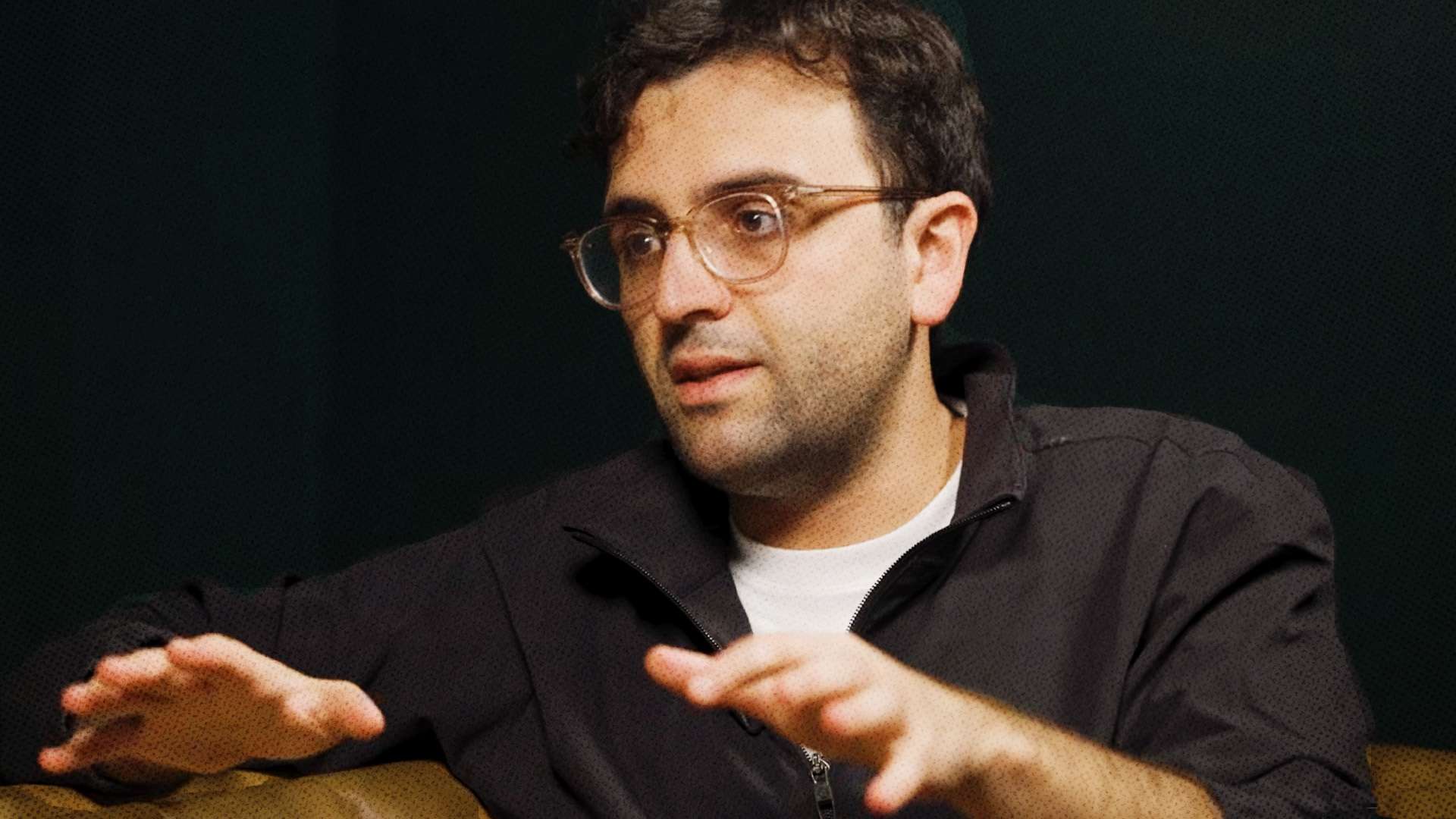
“I think capitalism is a good thing, but I think what we need to contend with and be aware of is that a lot of people are not part of it,” Tarek Mansour, co-founder and CEO of prediction market platform Kalshi, recently told Reason‘s Nick Gillespie. “They don’t feel like they’re part of it. And that’s a reality.”
Mansour has set out to change that by making it easier for consumers to experience and participate in financial markets. Kalshi’s premise is simple: Mansour says the platform matches traders with differing opinions on the outcome of future events, aggregating the “bits and pieces of information” siloed across the country, so long as that information isn’t privileged or obtained illegally.
He’s up against a rising number of federal and state lawmakers—not to mention the NFL, traditional sportsbooks, casinos, and other regulated gambling operations—who view Kalshi as yet another gambling app. “As of early 2026, more than 20 lawsuits and cease-and-desist actions are pending across the country, filed by state attorneys general, gaming regulators, tribal governments and private plaintiffs,” according to the National Conference of State Legislatures. This includes Utah, whose attorney general, Derek Brown, escalated an ongoing legal dispute with Kalshi on Tuesday by filing a complaint against the prediction market in state district court. In his complaint, Brown called Kalshi an “unconscionable and illegal gambling operation.” He accused the company of engaging in a “brazen pattern of unlawful conduct.”
At the federal level, Bloomberg Law reported last Friday that Sen. Ted Cruz (R–Texas) is preparing to introduce a bill after the midterm elections that would give state and tribal governments authority to regulate sports-related event contracts offered by prediction markets.
Cruz’s state-by-state regulatory regime is exactly the kind of scheme Mansour wants lawmakers to avoid. Mansour recently told Reason that, ideally, there’d be a “federal uniform set of rules that apply across all 50 states.” Those rules would then “promote and foster” a “multilateral, peer-to-peer idea,” where, for example, someone in California, Oregon, or Washington could trade on an event’s outcome based on information supplied by someone in Texas.
Data from the Pew Research Center show Kalshi is incredibly popular nationwide; however, the platform is facing headwinds in Congress from the likes of Reps. Alexandria Ocasio-Cortez (D–N.Y.) and James Comer (R–Ky.) and Sens. Adam Schiff (D–Calif.) and John Curtis (R–Utah), who have questioned whether prediction market platforms can indeed self-police insider trading and market manipulation.
Mansour, who calls insider trading an “unfair dynamic that over time dries up liquidity,” also argues that prediction markets are uniquely positioned to self-regulate because trades on Kalshi are “fully transparent,” making it “easy to flag” suspicious trading patterns. The platform’s users play a key role in that work. Mansour says that in February, when convicted fraudster and former Rep. George Santos (R–N.Y.) tried to engage in insider trading, Kalshi received “a hundred whistleblower complaints within a few minutes.”
The company’s public commitment to rooting out insider trading on its platform may be laudable. Still, it has done little to dispel the prevailing sentiment among state and federal regulators that Kalshi—and prediction market platforms writ large—is indistinguishable from traditional gambling markets.
Indeed, the legal cases against Kalshi are centered on state regulators’ belief that the platforms’ sports event contracts are the same as the bets offered by legal gambling operations like casinos and sportsbooks. Kalshi has argued that the U.S. Commodity Futures Trading Commission has exclusive jurisdiction to regulate the kinds of contracts it can offer under federal law, preempting states from exercising any gambling authority over prediction markets.
In March, Arizona became the first state to file criminal charges against Kalshi. Arizona Attorney General Kris Mayes accused the company of “running an illegal gambling operation and taking bets on Arizona elections, both of which violate Arizona law.” Not everyone in the state shares Mayes’ view. One Arizona resident, Zach, a 35-year-old man who makes a living trading sports-related event contracts on prediction markets, tells Reason he’d “move to another state” if Arizona succeeds in driving out prediction markets.
“There’s nothing that is excluding other people from the profits that I’m making right now,” he says. “I’m under no obligation to bet on Monday Night Football….I’m able to look at all the markets and decide which ones I want; I’m setting a limit order and just saying, ‘OK, if I get my price, then hooray.’ If I don’t, then that’s not something that I add to my portfolio.”
Of course, not everyone acts as responsibly. Mansour knows that in any competition, including trading, “some people are going to win,” while “some people lose.” He believes in “individual freedom” and in the idea that “people should be able to choose” which financial markets they engage in, with “some regulations on irresponsible use” so that companies can’t target people who exhibit addictive or destructive betting patterns.
The degree to which Kalshi and other prediction market platforms should be regulated will likely be a high priority for federal lawmakers after the midterm elections and in the next Congress. Mansour appears optimistic that there’s enough bipartisan support for what he calls “sensible guardrails.” He says there’s a “big group” on both sides of the aisle that’s “actually pro” prediction market platforms. There’s reason to be skeptical of Mansour’s claim, given that several members of Congress—such as Sen. Elizabeth Warren (D–Mass.), the ranking Democrat on the Senate Banking Committee—have said prediction markets need to be reined in.
In Mayes’ case, her antipathy toward prediction markets might cost her at least one vote in Arizona’s attorney general race. Zach says that with Mayes waging a legal battle against Kalshi, he’d have to take that into account “hypothetically, if someone knocked on my door tonight and they want me to vote for Kris Mayes to be reelected.”
“If I’m not gonna vote on my own behalf, then who is, right?” he says. (Mayes might not be a fan of Kalshi, but with the platform’s penchant for accurately predicting election winners, she can take solace in her current trading position, which shows an 84 percent chance she retains her position.)
Mansour says he’s a “free market guy” who wants everyone to “have a shot in the competition.” To succeed, he’ll have to withstand a host of paternalistic government officials hell-bent on controlling financial decisions made by consenting adults.