


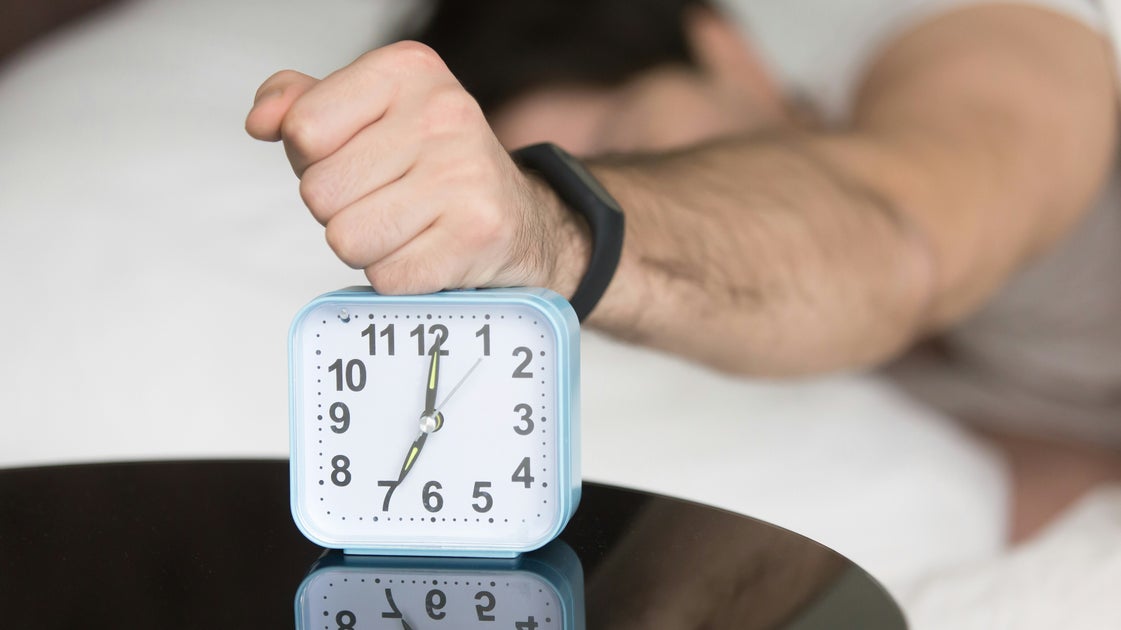
Even though tens of millions of people have attention deficit hyperactivity disorder (ADHD) worldwide, we still don’t understand the mechanisms behind it.
ADHD seems to be “highly heritable”, meaning parents often seem to pass it on to their children – but experts think environmental factors may play a role, too.
Some researchers think that our body’s Circadian rhythm (or body clock) could contribute to this “complex interplay”, too.
A 2025 paper, titled “ADHD as a circadian rhythm disorder”, highlighted that circadian rhythm dysfunction “is a clinically significant and highly prevalent phenotype in a substantial subgroup of individuals with ADHD”.
Here, we spoke to one of its authors, Dr Brandon Luu, to explain this further.
What might body clocks have to do with ADHD?
“There seems to be a strong relationship between ADHD and sleep problems, with many people with ADHD showing a preference for being night owls, with later sleep and wake times,” Dr Luu told us.
Roughly 80% of adults with ADHD seem to experience sleep disturbances and/or insomnia, while their dim-light melatonin onset – the time your body starts to release relaxing chemicals in darker conditions – is delayed by about 90 minutes.
In other words, for many people with ADHD, the signals that tell your brain it’s time to sleep run a full hour and a half late.
Not only that, but “some studies have also found differences in cortisol rhythms and the expression of genes involved in our biological clocks”, he said.
“While ADHD varies considerably between people, delayed body clocks seem to be a common phenomenon that may significantly affect people’s quality of life, particularly when their schedules don’t align with their internal clocks.”
Some research even suggests that the more disrupted the body clock of a person with ADHD is, the stronger their symptoms may be.
And these patterns can be seen as early as childhood – research suggests up to 50-70% of children with ADHD have sleep problems, with delayed sleep onset and bedtime resistance particularly common issues.
Does that mean a delayed body clock causes ADHD?
Dr Luu said we don’t have enough evidence to prove that. For his part, he suspects “the relationship is bidirectional and likely varies from person to person”.
For instance, “if someone is living with a delayed body clock but trying to function in a nine-to-five world, they may be chronically sleep-deprived or sleepy during the times they need to be most focused. This could worsen attention, emotional regulation, and potentially exacerbate ADHD symptoms.”
And, he continued, ADHD might itself contribute to factors that make our sleep off-kilter to begin with. This vicious cycle can feel hard to break.
Luckily, it’s not all bad news.
“What’s particularly promising is that some early studies have found that shifting late circadian rhythms earlier can be associated with improvements in ADHD symptoms,” the researcher told us.
“This raises the possibility that circadian dysfunction may be a contributing factor to symptoms in some people, rather than simply a consequence of ADHD.”
What might help the body clocks of people with ADHD?
When asked whether the stats about circadian rhythms should inform treatment for those with ADHD, Dr Luu’s answer was simple: “Yes, I think it should. The encouraging thing is that our body clocks can be shifted.”
“In night owls, other daily cues have also helped, such as regular meal times, avoiding late dinners, exercising earlier in the day, and cutting off caffeine by mid-afternoon,” Dr Luu added.
He hopes that research like his 2025 paper will encourage scientists to look further into sleep and circadian rhythms in people with ADHD to see who might benefit from body clock-based interventions – especially considering how low-risk and low-cost many of these potential therapies can be.
“Of course, these interventions aren’t a cure for ADHD or a replacement for established treatments, and not everyone with ADHD needs to shift their sleep schedule. However, if we can improve symptoms in some people through relatively safe and simple interventions, I think that’s an exciting possibility worth exploring more,” said Dr Luu.
The expert ended: “I’ve personally noticed a lot of benefit from shifting myself from being a very late night owl to more of a morning person, particularly with my focus and daytime energy, which was part of my motivation to explore this area of research further.
“Ultimately, the hope with our perspective piece was to raise more awareness and motivate more research into this area.”