


In May of 2025, news broke that Billy Evans, the partner of disgraced Theranos founder Elizabeth Holmes, was raising money for his own blood-testing startup, Haemanthus. At the time, Haemanthus stated explicitly on its official X account that it was “not Theranos 2.0.” Then, in Nathan Fielder and Lance Oppenheim’s blockbuster film You Can See Everything, which debuted in October, Evans point-blank described Haemanthus as “Theranos 2.0.”
Haemanthus has been shrouded in mystery since its inception. The glaring issue, of course, is that Evans’s plans sound distinctly similar to Holmes’s approach at Theranos, which led to her current sentence of 11 years in prison for defrauding investors. On social media, Haemanthus claims that “Elizabeth Holmes has zero involvement in Haemanthus,” while You Can See Everything paints a very different picture.
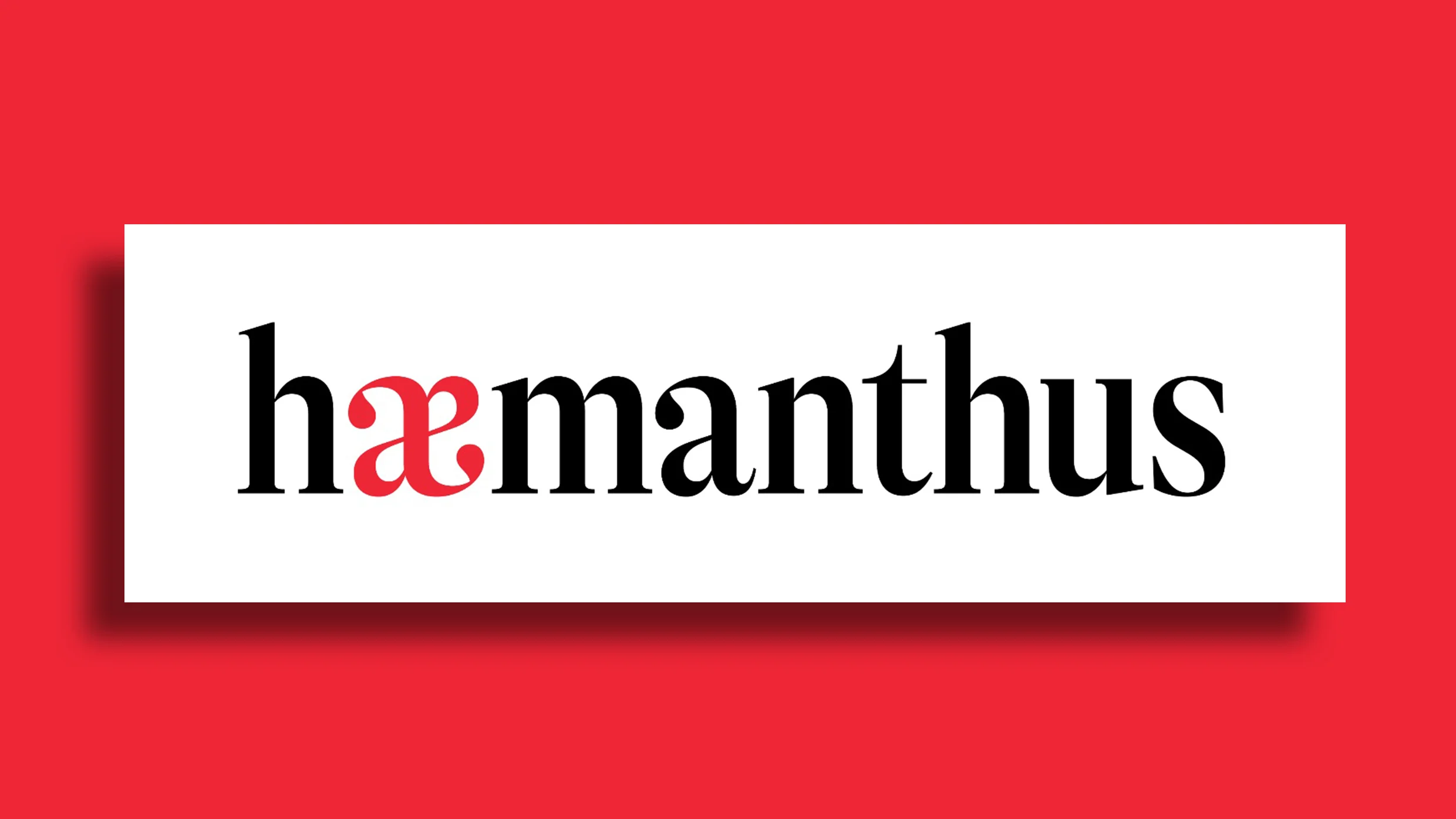
That’s led fans of the film to dig for any scraps of information that they can find about the company—which boil down to a few on-the-record statements, some patent applications, two defunct social media accounts, and one striking company wordmark.
We asked four designers what they make of the Haemanthus logo—the only element of a brand identity that the company has revealed thus far—and their responses paint a picture of a brand that’s uninterested in following the norms.
What we know about Haemanthus
Evans has been fairly tight-lipped about the workings of Haemanthus, stating in a May 2025 New York Times interview that the company is still in stealth mode.”
According to marketing materials reviewed by the Times for that piece, Haemanthus’s device will initially use a laser to scan blood, saliva, or urine from pets and analyze the samples on a molecular level. The company’s long-term goal is to develop a stamp-size, wearable version of the product for humans, which it predicted would take about three years and $70 million to develop. At the time of that story, the Times reported that Evans had raised about $18.5 million from investors.
As of this writing, the U.S. Patent and Trademark Office is examining the company’s request for a trademark. According to Google Patents, the company has submitted at least six patent requests for Raman spectroscopy systems (the diagnostic tool at the core of the company’s proposed technology), one of which has been granted.