


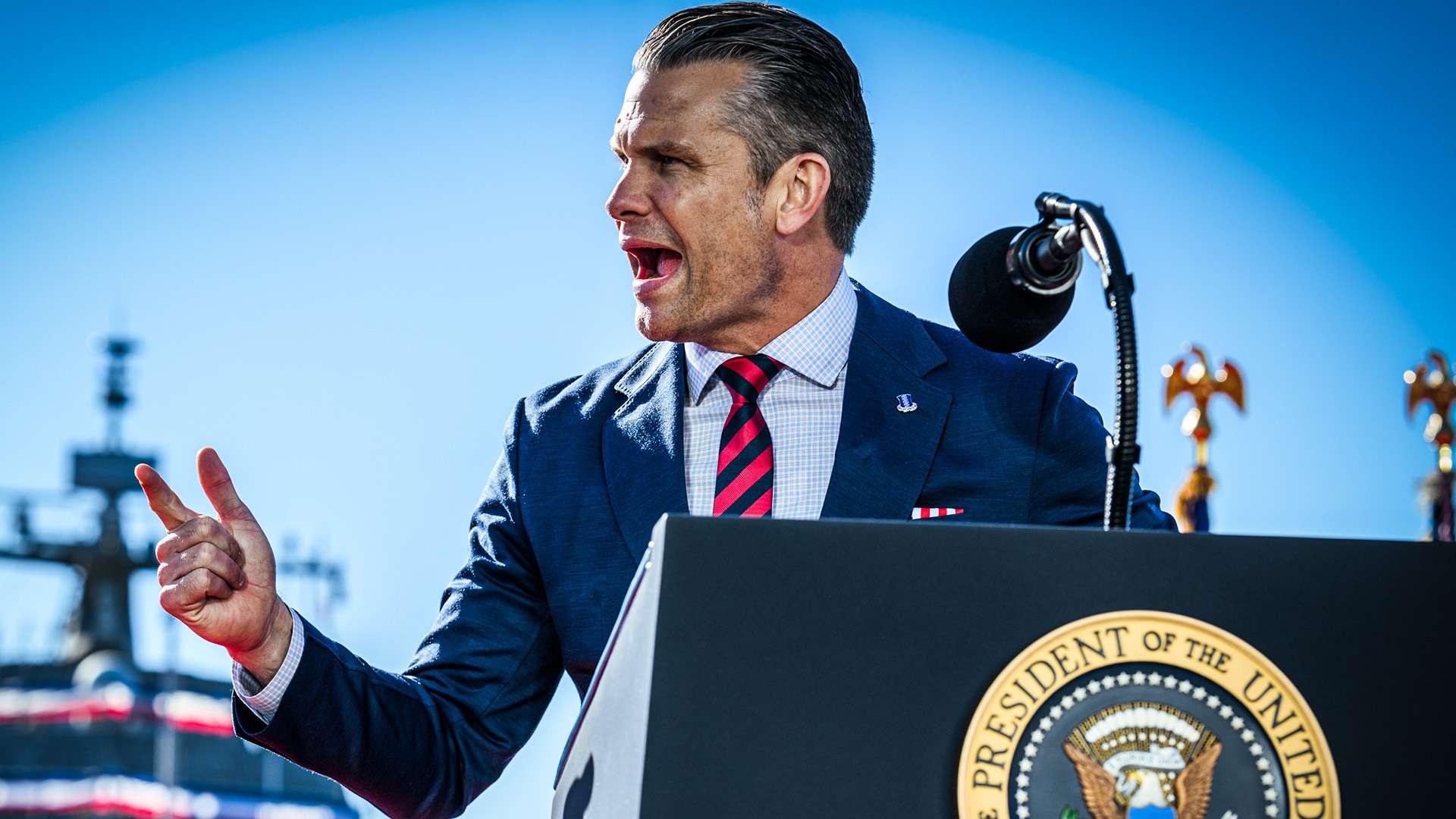
Outgoing GOP Representative Thomas Massie is planning to introduce an impeachment resolution against Secretary of Defense Pete Hegseth. Soon-to-be Democratic Speaker of the House Hakeem Jeffries says he’s a “hard yes” on the idea. That makes it very likely it will happen. If not now, then when Democrats take control of Congress in January, after their big win in the midterm election. Hegseth richly deserves it, and should be convicted on at least two major charges: his role in starting an unconstitutional war and over 200 cases of outright murder.
On September 15, Rep. Massie outlined eight articles of impeachment against Hegseth (see here for his more detailed description). The two most compelling are these:
Article I – Waging War in Contravention of the War Powers Resolution of 1973 Section 2(c): Charges Secretary Hegseth with waging the Iran war despite no declaration of war, statutory authorization, attack on the United States, or imminent threat. It establishes that the war was unlawful from its inception….
Article V – Extrajudicial Killings: Charges Secretary Hegseth with replacing maritime law enforcement with unauthorized lethal military targeting of suspected drug traffickers, resulting in at least 221 deaths. It also addresses denial of quarter, secondary strikes on survivors, failure to rescue shipwrecked persons, and the creation of artificial legal authorities for the campaign.
Massie’s Article V is the single most damning, in my view. Hegseth is a principal architect of the Trump Administration’s campaign of “drug boat” strikes in the Caribbean and the Pacific. It has now killed an estimated 244 people, virtually all of them civilians (Massie’s September figure of 221 is now somewhat outdated).
I have previously written about why these strikes are illegal (see here and here). But don’t take my word for it, or even that of other libertarian or left-liberal experts, like Brian Finucane. Take that of John Yoo, former Bush Administration official, and leading academic advocate of sweeping executive power over foreign policy and national security issues. If you illegally order the deliberate killing of civilians – especially outside the context of a war – that’s outright murder. And that’s exactly what Pete Hegseth has done.
This would be true even if those killed were all would-be drug dealers seeking to transport illegal drugs for sale in the US. I have previously explained why it is unjust and illegal to kill suspected drug dealers out of hand and why they are not the legal or moral equivalent of terrorists or enemy combatants in a war. As GOP Sen. Rand Paul pointed out when the drug boat strikes began, “The reason we have trials and we don’t automatically assume guilt is what if we make a mistake and they happen to be people fleeing the Venezuelan dictator? … off our coast it isn’t our policy just to blow people up … even the worst people in our country, they still get a trial.” But, in fact, the evidence indicates most were not on their way to the US and many were not transporting drugs at all. Some, for example, were just fishermen.
The Constitution allows impeachment and removal of executive branch officials for “high crimes and misdemeanors.” You don’t have to be a lawyer or legal scholar to figure out that complicity in over 200 murders qualifies as a “high crime.”
Hegseth is also a key architect of the disastrous Iran War. In previous writings, I have explained why that war is illegal, violating both the Constitution, and the War Powers Act of 1973. Such a war requires congressional authorization, and Trump and Hegseth did not even try to get it. The war’s illegality is one of the main reasons for its failure to this point, as failure to secure the broad public support needed to get congressional authorization ensured Trump lacked staying power to continue the fight effectively after the initial strikes didn’t achieve a quick, decisive victory.
Initiating and waging an illegal war isn’t a violation of criminal law (though perhaps it should be). But massive non-criminal illegal acts and abuses of power are impeachable under the history and original meaning of the Impeachment Clause of the Constitution. On that point, see analyses by Gene Healy of the Reason Foundation (formerly at the Cato Institute), and prominent conservative legal scholars Michael Stokes Paulsen (here, here, and here), and Keith Whittington. There are few bigger illegal abuses of power than starting a massive unconstitutional war.
In fairness, Trump and Hegseth are not alone in starting illegal wars. Barack Obama did it, too, with his unconstitutional wars against Libya and ISIS (which, for those keeping score, I condemned at the time). Obama likely deserved to be impeached, as well. But the fact that he got away with this illegality is no reason to spare Hegseth. To the contrary, past laxness is all the more reason to reestablish deterrence to prevent future wrongdoing. Furthermore, Trump and Hegseth’s illegal war is on a much larger scale than Obama’s were, and has had far worse results.
The only potentially valid objection to impeaching Hegseth is that it might fail, and backfire politically. But the Iran War is highly unpopular, and therefore impeachment on that basis is unlikely to backfire. The politics of the boat strikes is more debatable. The administration will surely try to defend them by arguing the victims deserved it because they were trying to sell dangerous drugs. But that can be countered by presenting the extensive evidence demonstrating that many were not on their way to the US or even transporting drugs at all. Testimony from members of the bereaved families of the victims can help make that point, and influence public opinion against Hegseth and the administration.
Hegseth is unpopular on Capitol Hill, which makes it potentially possible to secure the needed 11 or more GOP senators’ votes required for conviction (the Democrats are going to have 54-56 senators in the next Congress, depending on the results of still-ongoing vote counts in close races in Alaska and Mississippi). But even if he gets acquitted, the process of impeachment and trial can send a useful signal, and further publicize the administration’s massive criminality and wrongdoing.
Obviously, the ultimate perpetrator of these illegal acts is not Hegseth, but Trump. The former was following the latter’s illegal orders (though he likely also helped influence Trump to give those orders in the first place). But sanctioning officials for obeying illegal orders is still important. That’s one of the lessons of the Nuremberg trials. And, hopefully, the time will come for Trump to face sanctions for his many illegal actions, as well. As with Hegseth, the only plausible argument against impeaching him is political, not legal or moral.
Massie’s impeachment resolution also outlines several other charges against Hegseth. I think most of them have merit, but are less significant than those covered above. I will not attempt to assess these other charges here.
UPDATE: Back in 2020, I critiqued the “slippery slope” argument against impeaching presidents for abuses of power that aren’t technically crimes. My points apply with even greater force to any such argument against impeaching appointed officials, like Hegseth. In their case, there is no argument they have some kind of popular mandate from the electorate.