


In September, after the White House barred CNN journalists from its grounds, some of the top news organizations in the country suspended their pooled coverage there. The Department of Justice is now investigating them for this act of defiance. In a statement, a department spokesperson accused the networks of having “proudly boycotted covering White House events” and warned that “group boycotts among commercial competitors can violate the Sherman Act.”
This argument is not a new one. More than 40 years ago, I was a young lawyer working for the NAACP on a case that arose in Port Gibson, Mississippi. White southern business owners made an argument similarly flimsy to the one DOJ is making today—that state law prohibited people from organizing boycotts to restrain trade. In 1982, the Supreme Court declared that those business owners were wrong: The First Amendment protects the right of people to boycott. Under that decision—NAACP v. Claiborne Hardware Co.—DOJ is just as wrong today as those business owners were then.
Port Gibson was the town that General Ulysses S. Grant, during the Vicksburg campaign of the Civil War, reportedly proclaimed “too beautiful to burn.” Those words appear throughout the town even now, including on some police uniforms. Beautiful as it was, Port Gibson had an ugly side: a long history of pervasive racism. On the eve of the Civil War, the town’s enslaved residents outnumbered the free 3 to 1. More than a century later, dramatic racial inequality still persisted. As The Washington Post reported, “unemployment, inadequate housing, intimidation of voters were the order of the day” for Port Gibson’s Black residents.
In the 1960s, the NAACP organized economic boycotts of white merchants across Mississippi. In Port Gibson, it focused on businesses that refused to hire Black employees and call Black patrons by normal, respectful titles, such as “Mister,” rather than “Boy.” The boycotts had their intended effect. George Hudson, who owned the local Piggly Wiggly, the largest grocery store in town, complained to The New York Times, “We’re not getting any colored trade.”
[Garrett Epps: The important First Amendment principle now at risk]
Instead of acceding to the NAACP’s demands, Hudson and the other merchants fought back. Supported by the White Citizens Council (a country-club version of the Ku Klux Klan), a group of local businesses, including four grocery stores, two car dealers, and a gas station, filed a multimillion-dollar case against the NAACP and 146 individual picketers in 1969. Like DOJ going after journalists, the merchants argued that the boycott was an anticompetitive conspiracy that interfered with lawful business activity.
After years of delay and nearly eight months of trial and testimony from 144 witnesses, a state judge ruled that the boycott had unlawfully interfered with the merchants’ businesses. For their trouble, the judge awarded them $1.25 million, a financial hit that threatened the very existence of the NAACP. A New York Times editorial called the ruling “the judicial equivalent of an old-fashioned Mississippi lynching.” The verdict came as no surprise. The NAACP knew that it was doomed in the Mississippi courts, where many judges ran for election on openly racist platforms and socialized with the same merchants who’d filed suit. So it pinned its hopes on the U.S. Supreme Court, where it thought it could get a fairer hearing.
The problem was that to get the case to the Supreme Court, the NAACP had to first appeal to the state supreme court. Under Mississippi law, the NAACP could appeal only if it posted a bond equal to 125 percent of the judgment within 30 days. That meant it would have to put down more than $1.5 million in cash to exercise its right to judicial review. The NAACP didn’t have anything like that kind of money, even after a major public fundraising campaign, a $100,000 contribution from Muhammad Ali, and hundreds of envelopes—filled with a few dollars each—that had arrived in the mail from supporters. Running out of options, in 1976 the NAACP turned to the federal courts, where it filed a new lawsuit arguing that the state’s bond requirement prevented the group from defending its First Amendment right to boycott.
I was the NAACP’s lawyer for that challenge, and we won. Judge Orma Smith of the Northern District of Mississippi issued an order that excused the NAACP from posting the massive bond. Judge Smith was one of those principled and courageous southern judges who enforced the Constitution and the civil-rights laws even at great personal risk. He was also a good man. After observing me in the courtroom, he must have noticed that I was struggling with my vision. I have retinitis pigmentosa, a condition that leads to blindness. And although I wasn’t yet completely blind or using a mobility cane, the judge must have seen that a colleague helped me to the lectern and that I hadn’t used any written notes. So when he invited me back to his chambers to review some changes he’d made to a proposed order, he read the order out loud so I could hear the changes. That’s just the kind of person he was.
[Quinta Jurecic: The two-year temper tantrum to come]
As a consequence of the ruling, the NAACP and the boycotters were eventually able to appeal the state court’s judgment to the Supreme Court, which ruled in Claiborne Hardware that nonviolent boycotts are protected expression under the speech, assembly, and petition clauses of the First Amendment. “One of the foundations of our society,” wrote Justice John Paul Stevens for a unanimous Court consisting of justices appointed by presidents of both parties—imagine that—“is the right of individuals to combine with other persons in pursuit of a common goal by lawful means.” After all, that is exactly what the colonists did when they protested the Stamp Act of 1765 and threw tea into Boston Harbor in 1773. Like those Revolutionary protests, the Port Gibson boycott “included elements of criminality and elements of majesty,” as Stevens explained. But the boycott itself was constitutionally protected speech through and through.
The press pool’s boycott looks different from the one at issue in Claiborne Hardware. For one thing, it targeted the government, not private businesses. But the response is familiar. The Justice Department insists that “group boycotts among commercial competitors can violate the Sherman Act.” Perhaps, but not here. The networks were protesting the exclusion of fellow news organizations by the president of the United States. Doing so is political expression. It is exactly the kind of speech that the Constitution protects, as Claiborne Hardware makes clear. Like the merchants of Port Gibson, the administration is trying to turn antitrust laws against a protest it does not like. It will fail. Those laws, which were never designed to apply to that kind of activity, cannot override the Constitution.
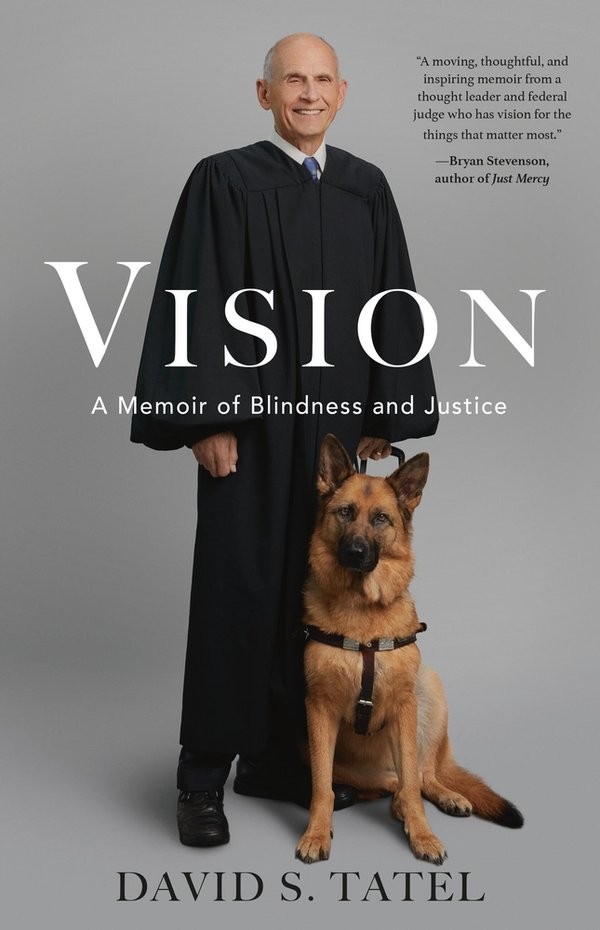
This essay is an adapted excerpt from Judge David Tatel’s book, Vision: A Memoir of Blindness and Justice.