All posts tagged: Waymo

Waymo Puts Toronto on the Map for Its Robotaxis

Waymo Puts Toronto on the Map for Its Robotaxis

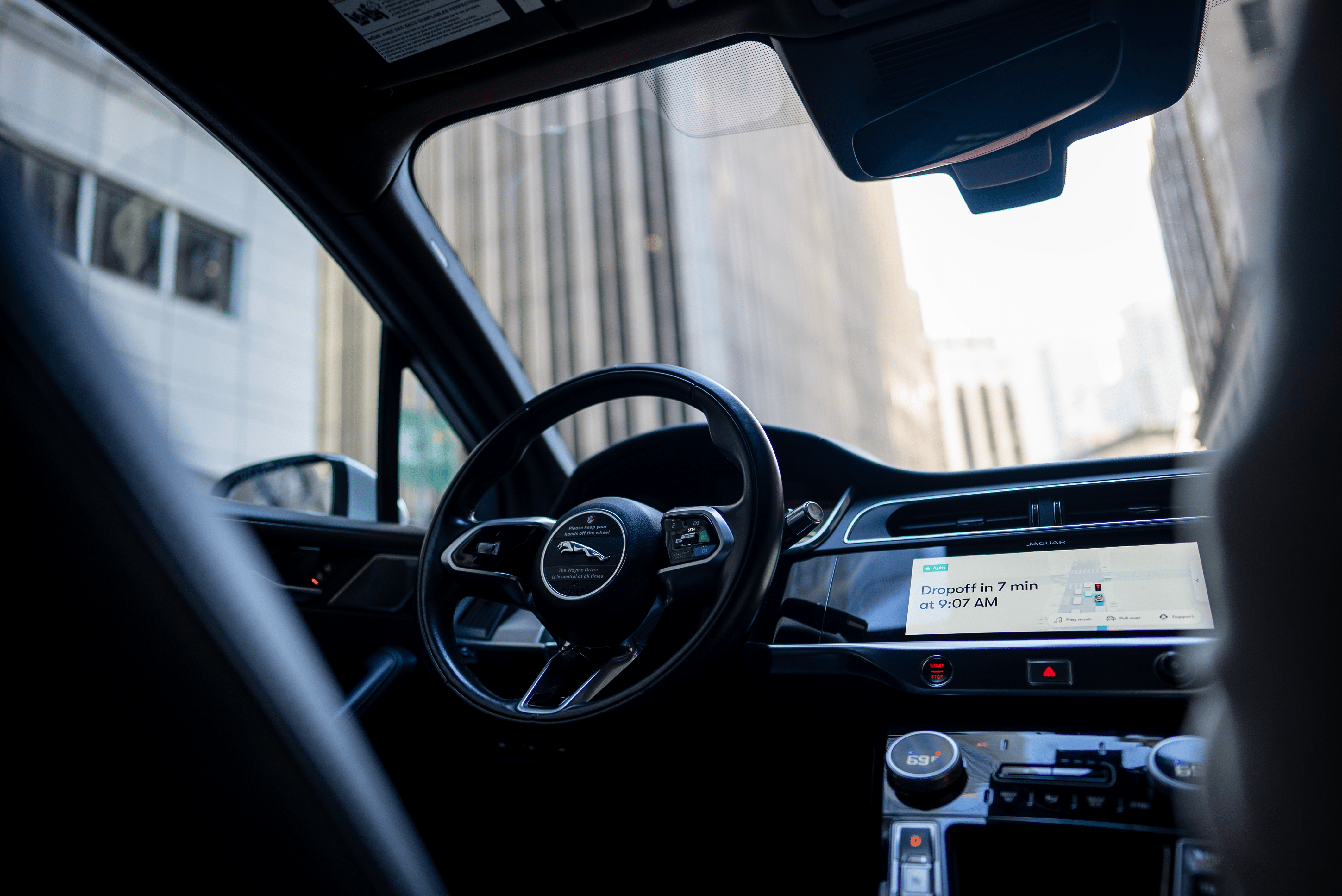
Waymo is bringing its autonomous ride services across the border to Canada for the first time.  The company said in a blog post on Friday that its robotaxis will be available for you to book rides in the app in the Toronto area in 2028. It will start with a limited number of its mainstay Jaguar I-Pace electric SUVs, and will add more over time.  But if you’re in Toronto, you can expect to see Waymo cars, driven by humans, in the coming days as the company maps local street networks and acclimates its autonomous technology to traffic patterns and driving conditions. Waymo will test in select Toronto neighborhoods, including Liberty Village, St. Lawrence Market and Yorkdale. It has also built a sixth-generation Waymo Driver autonomous driving system to navigate diverse environments, including the extreme winter weather Toronto faces in the colder months. A Waymo representative did not immediately respond to a request for further comment. The company is also partnering with Toronto-based Element Fleet Management for vehicle maintenance, validation driving and customer service. Waymo …

TechCrunch Mobility: Reining in robotaxis

TechCrunch Mobility: Reining in robotaxis

Welcome back to TechCrunch Mobility, your hub for the future of transportation and now, more than ever, the role AI is playing in it. To get this in your inbox, sign up here for free — just click TechCrunch Mobility! On an average day in San Francisco, you might see dozens (hundreds?) of Waymo robotaxis zipping around the city — and with little disruption. But, as TechCrunch has reported, there have been numerous incidents of robotaxis impeding traffic, driving into crime scenes, and interfering with first responders. And not just in the Bay Area. In some cases, companies have relied on first responders to move their robotaxis. These disruptions are occurring in the early stages of the robotaxi era. California has a new law hoping to get ahead of the problem before the next impending wave of robotaxis land.  Senate Bill 1246, which was signed into law by Governor Gavin Newsom this week, sets a series of new rules for AVs designed to improve safety and response times when they become disabled or interfere with …

Musk admits Tesla Robotaxi struggles to see pets at night. Lidar doesn’t

Musk admits Tesla Robotaxi struggles to see pets at night. Lidar doesn’t

Elon Musk says the main thing holding back Tesla Robotaxi’s night hours is that the cars have a hard time seeing pets in the dark. His example was “grey kittens on grey tarmac.” That’s a low-light, low-contrast detection problem, which is the textbook weakness of cameras and the exact thing lidar and radar handle. Musk has spent years calling those sensors a “crutch” and a “fool’s errand.” Robotaxi gets one more hour, and Musk explains why it’s only one Late Friday night, Tesla’s Robotaxi account announced that the Austin service is “now available until 11pm.” Until now, it shut down at 10 PM. Musk reposted the announcement and explained what’s keeping the cars off the road later than that: Advertisement – scroll for more content “The main thing we’re trying to solve is making sure that we don’t run over pets when they’re hard to see at night. Literally trying to avoid grey kittens on grey tarmac in the dark.” Robotaxi operating hours moved from 10pm to 11pm. The main thing we’re trying to solve …

Your Driverless Cab Is Spying on You

Your Driverless Cab Is Spying on You

One afternoon this past summer, a self-driving Waymo pulled into a parking lot in San Mateo County, California, and stayed there until the police arrived. Local cops had gotten a 911 call from Waymo staffers—humans, it should be said—who were viewing the car’s passengers through cameras installed inside the vehicle. It looked like two teens were shooting a black handgun out the window of the vehicle, playing with it and drinking between shots, a police report said. The story has a happy(ish) ending: The gun was shooting water-filled Orbeez, not bullets. But the incident drew attention to Waymo’s surveillance system. The cars are equipped with automated tech that can flag the presence of a firearm inside, the company said. The outsides of self-driving cars are studded with cameras, which help them “see” the world around them. (Most also use other sensors, including radar and lidar.) Less appreciated are the cameras inside the vehicles, which companies say are essential to keeping riders safe and enforcing their rules. Earlier this year, Waymo said it used its cabin …

Robotaxi operators will face fines for blocking first responders

Robotaxi operators will face fines for blocking first responders

Autonomous vehicle (AV) technology companies like Tesla, Waymo, and Zoox will have to provide first responders with local, on-the-ground support when their robotaxis cause problems under a new California law. The companies could also face penalties if a robotaxi blocks police or firefighters for more than 30 minutes. Senate Bill 1246, which was signed into law by Gov. Gavin Newsom, sets a series of new rules for AVs designed to improve safety and response times when they become disabled or interfere with emergency responders. The law also creates ways to hold these companies accountable if they don’t. The law follows a string of high-profile incidents in California in which robotaxis broke down and disrupted traffic, drove into crime scenes, or impeded first responders. The bulk of those incidents involved Waymo, the largest robotaxi operator in the U.S. , which has about 4,000 autonomous vehicles in its commercial fleet across the country. About 1,200 of those are in the San Francisco Bay Area. A TechCrunch investigation earlier this year identified a number of incidents in which …

TechCrunch Mobility: AV companies pick their lanes

TechCrunch Mobility: AV companies pick their lanes

Welcome back to TechCrunch Mobility, your hub for the future of transportation and now, more than ever, the role AI is playing in it. To get this in your inbox, sign up here for free — just click TechCrunch Mobility! Autonomous vehicle technology is not yet ubiquitous or mainstream. Readers here might shout, “It’s everywhere!” but I can tell you that it is not — although I understand why folks in the San Francisco Bay Area might disagree.  The tech is, however, being commercialized and that transition from testing to commercial product has me thinking about scale. A few strategies are emerging.  Scale through partnerships. A couple of announcements this week highlighted this strategy. Wayve locked in a commercial partnership with Mercedes-Benz to integrate the startup’s automated driving tech into at least one model set to be deployed within the next two years. This is a Level 2 type product, meaning it handles certain driving maneuvers but still requires the human driver to remain engaged. While this is not a Level 4, or fully driverless …

Waymo is scaling fast. Here’s what the fleet data shows.

Waymo is scaling fast. Here’s what the fleet data shows.

Waymo’s commercial robotaxi ramp-up looks expansive, both in geographic reach and in ridership. And by almost every measure, it is — until you pay attention to where the bulk of those robotaxis are actually showing up. The numbers over the past two years reflect the kind of commercial rollout you’d expect from a deep-pocketed company like Waymo, which spun out of Google and still counts Alphabet as its majority owner. In September 2024, Waymo was operating in just three cities — Phoenix, Los Angeles, and San Francisco. Today, it offers robotaxi service in 15 U.S. cities, with most of those commercial launches occurring in the past year. Ridership has skyrocketed, too with Waymo now averaging 500,000 paid robotaxi rides every week. But a closer look at its fleet shows a company concentrating its efforts in just two states. About 80% of Waymo’s roughly 4,000 robotaxis are in California and Texas, and Texas is where the action is now: Waymo’s fleet there has grown by nearly half in the past three weeks, fueled by a new …

Waymo says it has stopped 841 injuries in 271 million autonomous miles

Waymo says it has stopped 841 injuries in 271 million autonomous miles

Photo: Waymo Waymo has released new crash data which claims not only an 82% reduction in crashes, but for the first time says the number of injuries that have been avoided by its robotaxi operation. We’ve seen various Waymo crash data before, with Waymo claiming crash reductions. That’s all well and good when the company says it, but we’ve also seen independent data confirming similar (though lower) crash reduction numbers. So it does seem like Waymo has an advantage over human drivers, at least in the limited areas it operates in. The problem is, crashes are relatively rare, and crashes that cause injury even moreso. So even though Waymo’s millions of miles driven seems like a lot, human drivers drive 3 trillion miles per year in the US. So there’s still quite a gap in the data. Advertisement – scroll for more content Nevertheless, Waymo has enough miles that it’s ready to start quoting how many injuries it has prevented, and the number is pretty high. Its newest crash data states that it had operated …

Meet the Academics Trying to Stop You From Having Sex in Robotaxis

Meet the Academics Trying to Stop You From Having Sex in Robotaxis

Pavlo Bazilinskyy still can’t believe he was on PornHub for work. He’s an assistant professor at the Eindhoven University of Technology in the Netherlands, and has spent more than a decade researching AI-driven interactions between humans and robots. But he found himself typing “public transport” into the search bar of a very specific website’s “amateur section.” 297 hits. “People are hard to predict,” Bazilinskyy says. It’s why he researches what he does. So his prurient pursuit had a point. Robotaxis without cabbies behind the wheel have started picking up passengers in a handful of countries, including the US. Meanwhile, there’s a long history of people getting up to antisocial behavior inside the quasi-private or straight-up public spaces of trains, planes, and automobiles—think the prom night limo, the “Mile High Club,” Tom Cruise in slow motion aboard the Chicago L in Risky Business, the stuff he found on PornHub. What might riders do when there’s no authority figure inside a vehicle to say, “Hey, stop that!”? What do they do? Can people be convinced to stop …

Waymo is scaling fast. Here’s what the fleet data shows.

Waymo restarts San Antonio service 5 months after flooding troubles

Waymo has restarted its robotaxi service in San Antonio, Texas, five months after one of its vehicles was swept away during a flash flood. Multiple Waymo robotaxis got stuck during the heavy flooding in April. The vehicles slowed but did not stop as they approached waterlogged streets. Waymo ultimately issued a recall in May, and the company restricted its robotaxis from driving in areas with elevated risk of flooding. Waymo briefly paused operations around the same time in other cities in Texas but has since resumed those services. The company is now offering paid rides in 15 U.S. cities. The resumed service in San Antonio will involve dozens of vehicles covering a 60-mile area that includes downtown and the San Antonio International Airport, according to the San Antonio Express-News, which was first to report on Waymo starting back up. Waymo told the paper that it has made changes to its software that will help the robotaxis better detect and avoid standing water in the future. Source link