All posts tagged: understanding

Terance Tao: Understanding 6 essential mathematical concepts

Terance Tao: Understanding 6 essential mathematical concepts

Terence Tao has spent decades solving problems most people can’t even state, and he says he’s never had a single eureka moment. In this conversation, the UCLA mathematician and Fields Medalist breaks math down to six essential ideas: numbers, algebra, geometry, probability, analysis, and dynamics. This video Terance Tao: Understanding 6 essential mathematical concepts is featured on Big Think. Source link

The Key to Understanding the Traditionalists

The Key to Understanding the Traditionalists

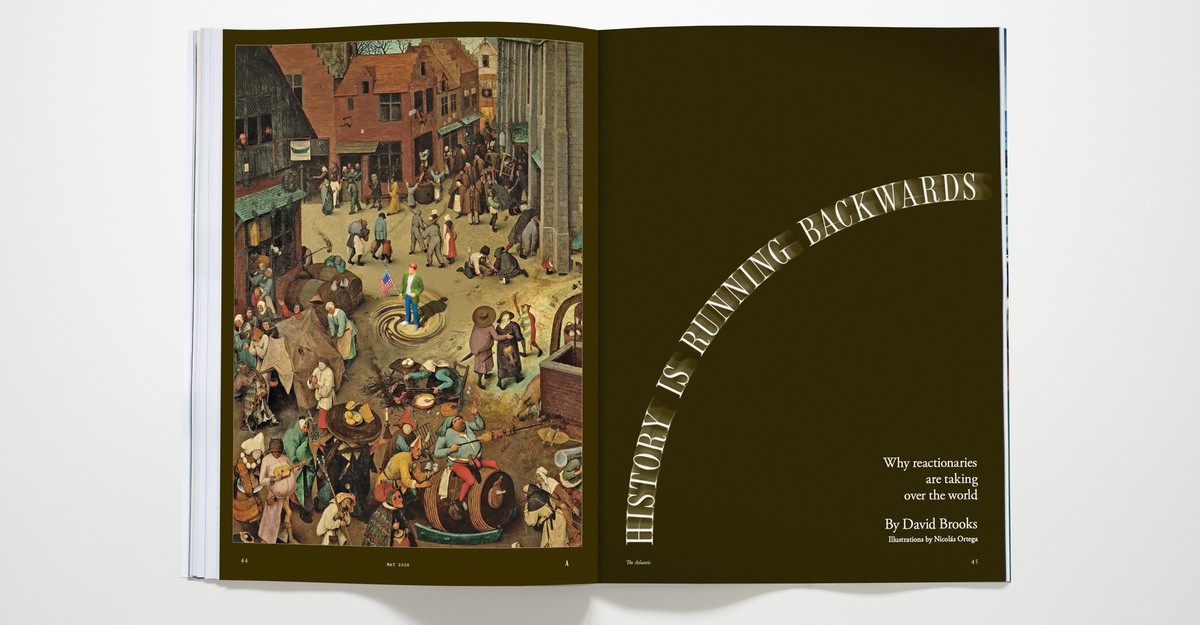
History Is Running Backwards In the May issue, David Brooks considered why reactionaries are taking over the world. Explore the September 2026 Issue Check out more from this issue and find your next story to read. View More “History Is Running Backwards” is a provocative article. But I think David Brooks errs in framing traditionalism and modernity as an either/or, when in fact they exist in a both/and context. One can be both a traditionalist and a modernist simultaneously. The key, as Brooks notes, is that “a well-adjusted life consists of daring explorations from a secure base.” Would that we all were so blessed to have that! Judy D. CottrellEugene, Ore. In dividing humanity into two neat psychological types—stability-seeking traditionalists and novelty-seeking progressives—Brooks misses an essential point: Psychology doesn’t exist in a vacuum; it constantly interacts with changing social factors. People who not long ago may have readily switched jobs and moved cities are now more likely to stay in place because of the scarcity of new positions and lack of affordable housing. Their psychology …

“Am I Crazy?” Understanding Out-of-Body Feelings

“Am I Crazy?” Understanding Out-of-Body Feelings

Last year, a woman told me about a tree she’d grown drawn to on her morning walks, episodes of merging with it, her sense of self dissolving into overwhelming love and tears, then eventually a full sense of leaving her body. She began hearing a guiding inner voice, distinct from her own thoughts, that once pushed her to approach a homeless man near the tree. She started reading meaning into small coincidences, as if the world were sending her messages. At her lowest point, she considered checking herself into a psychiatric hospital, hoping medication would let her feel “normal” again. Her experience touched several things at once—a felt merging with nature, a guiding inner voice, meaning seen in coincidence—but it was the last part, the sense of leaving her body, that eventually became the center of her fear. That’s also where this piece will focus: the disembodiment feeling, and the question of what it means, clinically, when the “self” seems to leave the body. I share her story because she is far from alone in …

Understanding and Navigating Prolonged Grief Disorder

Understanding and Navigating Prolonged Grief Disorder

Grief is the intense pain that follows a profound loss. Grieving is an unavoidable, painful, and profound reaction and process in the aftermath of the loss of someone or something deeply meaningful and loved. While we typically associate grief with the death of a loved one, we can also experience grief through other significant losses, like the loss of a job, the loss of a beloved pet, the loss of a significant relationship, a life-changing accident, or diagnosis (your own or of a loved one), and significant, definitive life-changing transitions, like the end of active parenting, when children leave the family home, retirement or the end of a career. At some point in our lives, we will all experience loss. How we process our loss can have a profound impact on our health, our relationships, and our ability to reintegrate and return to living a full and meaningful life. Grief and the grieving process In the 1960’s, psychiatrist Elizabeth Kübler-Ross introduced the five stages of loss, including denial, anger, bargaining, depression, and acceptance, a framework …

Capitalism has warped our understanding of ecology and life’s origins

Capitalism has warped our understanding of ecology and life’s origins

The phrase “survival of the fittest” is so closely associated with Darwinism that many people assume Charles Darwin himself wrote it. He didn’t – it was foisted on him by a contemporary, Herbert Spencer. It is true, however, that in On the Origin of Species, Darwin emphasised competition as the dominant process behind life – but, like all of us, he was shaped by his environment. Darwin presented an account of nature as a competitive struggle not so much because that is how he saw it, but because he sought to deliver in his book what he thought people wanted to hear. This was a time of empire, and also of the industrial revolution, when society was gripped by the ideas of Thomas Malthus and Thomas Hobbes; people were thought to be innately competitive and ruthless creatures. And he was right about the appeal: ever since, Darwinism has been invoked as scientific justification for the worst sins of humanity. But other lenses are worth exploring. Darwin also thought in ecological terms, even before the word …

Understanding the modern cybercrime landscape

Understanding the modern cybercrime landscape

3. Complex infrastructure operations The ongoing pursuit of digital transformation and consequent network reliance also drives the third factor. Ironically, there is another facet of enterprise protection and financial control wrapped up in this. The widespread move from one-stop shops (avoiding IT vendor lock-in in favor of more competitive pricing and autonomy) has created a more complex, multivendor environment. This is coupled with multiple IT domains required to handle many diverse functions and layers of IT infrastructure (e.g., cloud, on-prem), all connected to the network. Complex, mission-critical IT operations now need to be monitored and protected from increasingly sophisticated cyber breaches. 4. Unpredictable geopolitics and economics Shifting from the first three factors—all internal to an enterprise—the fourth is unquestionably external and without doubt the most intractable risk for any enterprise, individual, or industry group. Global uncertainty and tension are unavoidably putting even greater pressure on already-tight IT budgets, component supply chains and power costs. This can easily exacerbate existing constraints on cybersecurity budgets when vigilance and protection are more needed than ever. Unfortunately, in cyberspace …

The Secret to Understanding AI

The Secret to Understanding AI

In the before times—before machines could hallucinate, before compute was a noun—it was not uncommon to go several weeks without someone telling me the world was about to end. Similarly, a whole season might pass without anyone assuring me that it was also, simultaneously, about to become perfect. That particular luxury died on November 30, 2022, when OpenAI released ChatGPT to the public. What followed was less a news cycle than a weather event—a tropical depression that would not budge. Within weeks, millions of people had their first experience with generative AI. Within months, every major technology company had announced its own version of a large language model, or a partnership, or a pivot. Venture capital arrived drooling. Most people in tech think about money, but AI-profit projections are different—like CFO fan fiction, written in Excel. In 2023, the McKinsey Global Institute estimated that $4.4 trillion in annual corporate profits could be up for grabs from generative AI alone. Morgan Stanley estimated $40 trillion more in operational efficiencies. The words artificial intelligence went from obscurity …

DAMPE telescope reshapes understanding of cosmic rays

DAMPE telescope reshapes understanding of cosmic rays

A multinational team of scientists working with the Dark Matter Particle Explorer (DAMPE) space telescope has uncovered a consistent pattern in cosmic rays, offering new insight into their origin and behaviour. The research, involving experts from the University of Geneva, identifies a shared feature across multiple types of high-energy particles. The findings have been peer-reviewed and published in Nature. The study focuses on cosmic rays, which are highly energetic particles that travel through space and occasionally strike Earth. Despite being discovered over a century ago, their precise origins remain unresolved. By analysing detailed measurements from the DAMPE satellite, researchers have now observed a phenomenon known as “spectral softening” occurring consistently across different particle types. The result is significant: it strongly supports theories that the acceleration and movement of cosmic rays depend on a property called rigidity, rather than energy per particle. This narrows the field of viable explanations and marks a meaningful step toward understanding how these particles are generated and propagate through the galaxy. What are cosmic rays? Cosmic rays are among the most …

When the World Feels Too Much: Understanding “Oscillanguish”

When the World Feels Too Much: Understanding “Oscillanguish”

There are moments in history when emotional life cannot be understood at the level of the individual alone. We often ask, “What’s going on with me?” but a more accurate question might be: “What am I responding to?” Because right now, many people are not just dealing with personal stress. They are living inside a world that is moving faster, expanding further, and destabilizing at the same time. We are witnessing extraordinary advancements. Artificial intelligence is transforming medicine, research, and daily life, accelerating discoveries that once took years into months. Weight-loss medications are reshaping how we understand the body, even as new and unexpected side effects continue to emerge. Space exploration is expanding rapidly, with technologies pushing the boundaries of what is possible beyond Earth. We are building tools that can predict disease, simulate reality, and extend human reach far beyond what was imaginable just decades ago. At the same time, we are living through political polarization, wars in multiple regions, economic instability, job uncertainty, and a constant stream of conflicting information. One day, something …

Understanding Why Your Child Does Not Listen

Understanding Why Your Child Does Not Listen

If you’ve already said “Put your shoes on” five times today, you’re not alone. For many parents, daily life can feel like an endless loop of reminders, escalating frustration, and, eventually, raised voices. Somewhere between the third and tenth repetition, a familiar question arises: Why does my child only listen when I yell? The answer may be surprising—and relieving. In most cases, your child is not being defiant. They are not intentionally trying to disrespect you. And their behavior is not a sign that your child is “difficult.” More often, it’s a mismatch between what we expect and what children are developmentally able or motivated to do. Listening Is a Skill, Not a Trait One of the most important mindset shifts for parents is this: Listening is a learned skill. Children are not born knowing how to process instructions, prioritize tasks, or respond immediately. These abilities develop over time and require consistent teaching. When children don’t listen, it’s typically due to one (or more) of three reasons: 1. They didn’t fully process what you said. …