All posts tagged: Robotaxis

Waymo Puts Toronto on the Map for Its Robotaxis

Waymo Puts Toronto on the Map for Its Robotaxis

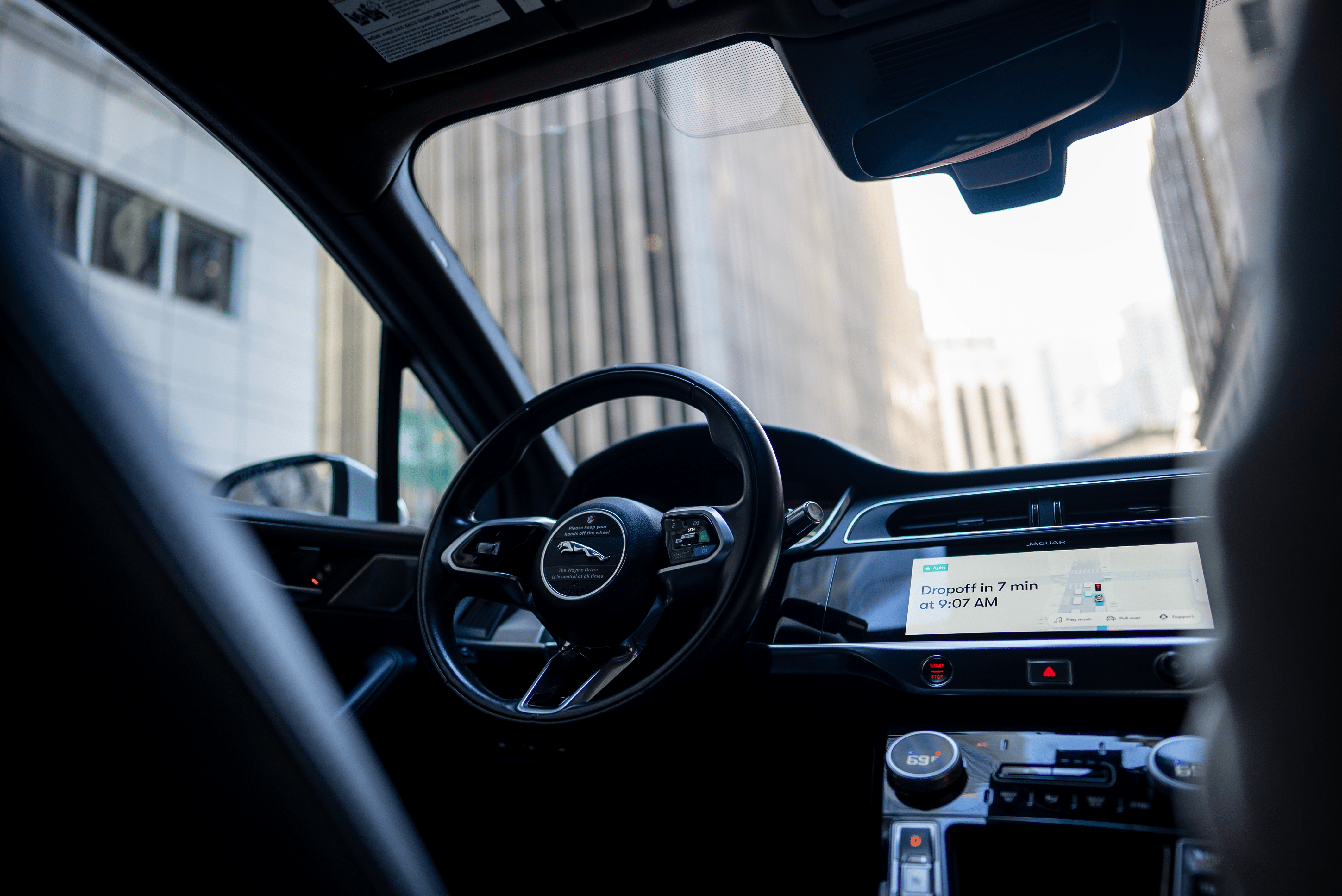
Waymo is bringing its autonomous ride services across the border to Canada for the first time.  The company said in a blog post on Friday that its robotaxis will be available for you to book rides in the app in the Toronto area in 2028. It will start with a limited number of its mainstay Jaguar I-Pace electric SUVs, and will add more over time.  But if you’re in Toronto, you can expect to see Waymo cars, driven by humans, in the coming days as the company maps local street networks and acclimates its autonomous technology to traffic patterns and driving conditions. Waymo will test in select Toronto neighborhoods, including Liberty Village, St. Lawrence Market and Yorkdale. It has also built a sixth-generation Waymo Driver autonomous driving system to navigate diverse environments, including the extreme winter weather Toronto faces in the colder months. A Waymo representative did not immediately respond to a request for further comment. The company is also partnering with Toronto-based Element Fleet Management for vehicle maintenance, validation driving and customer service. Waymo …

TechCrunch Mobility: Reining in robotaxis

TechCrunch Mobility: Reining in robotaxis

Welcome back to TechCrunch Mobility, your hub for the future of transportation and now, more than ever, the role AI is playing in it. To get this in your inbox, sign up here for free — just click TechCrunch Mobility! On an average day in San Francisco, you might see dozens (hundreds?) of Waymo robotaxis zipping around the city — and with little disruption. But, as TechCrunch has reported, there have been numerous incidents of robotaxis impeding traffic, driving into crime scenes, and interfering with first responders. And not just in the Bay Area. In some cases, companies have relied on first responders to move their robotaxis. These disruptions are occurring in the early stages of the robotaxi era. California has a new law hoping to get ahead of the problem before the next impending wave of robotaxis land.  Senate Bill 1246, which was signed into law by Governor Gavin Newsom this week, sets a series of new rules for AVs designed to improve safety and response times when they become disabled or interfere with …

Your Driverless Cab Is Spying on You

Your Driverless Cab Is Spying on You

One afternoon this past summer, a self-driving Waymo pulled into a parking lot in San Mateo County, California, and stayed there until the police arrived. Local cops had gotten a 911 call from Waymo staffers—humans, it should be said—who were viewing the car’s passengers through cameras installed inside the vehicle. It looked like two teens were shooting a black handgun out the window of the vehicle, playing with it and drinking between shots, a police report said. The story has a happy(ish) ending: The gun was shooting water-filled Orbeez, not bullets. But the incident drew attention to Waymo’s surveillance system. The cars are equipped with automated tech that can flag the presence of a firearm inside, the company said. The outsides of self-driving cars are studded with cameras, which help them “see” the world around them. (Most also use other sensors, including radar and lidar.) Less appreciated are the cameras inside the vehicles, which companies say are essential to keeping riders safe and enforcing their rules. Earlier this year, Waymo said it used its cabin …

Zoox grounds Atlanta test fleet after workers report toxic gas exposure symptoms

Zoox grounds Atlanta test fleet after workers report toxic gas exposure symptoms

Zoox has grounded its autonomous vehicle test fleet in Atlanta after safety drivers were potentially exposed to carbon monoxide, carbon dioxide, or hydrogen sulfide gas inside its vehicles last month, TechCrunch has learned. The repeated incidents led one worker to file a complaint with the Occupational Safety and Health Administration, which opened an inquiry and told Zoox to investigate the exposures.  As many as 40 workers were possibly exposed to the gases in the vehicles, according to a letter from OSHA to Zoox that TechCrunch viewed, though the Amazon-owned company says the number is lower.   Zoox put at least one group of workers back on the road in a different car after one vomited and the rest reported exposure symptoms, a contractor told TechCrunch. That second car may have also contained potentially toxic gases, he said, because the workers experienced another bout of exposure symptoms later that day.  “They made us go right back in the field after we said we were throwing up,” Jay Davis, one of the contractors who got sick in mid-August, …

Meet the Academics Trying to Stop You From Having Sex in Robotaxis

Meet the Academics Trying to Stop You From Having Sex in Robotaxis

Pavlo Bazilinskyy still can’t believe he was on PornHub for work. He’s an assistant professor at the Eindhoven University of Technology in the Netherlands, and has spent more than a decade researching AI-driven interactions between humans and robots. But he found himself typing “public transport” into the search bar of a very specific website’s “amateur section.” 297 hits. “People are hard to predict,” Bazilinskyy says. It’s why he researches what he does. So his prurient pursuit had a point. Robotaxis without cabbies behind the wheel have started picking up passengers in a handful of countries, including the US. Meanwhile, there’s a long history of people getting up to antisocial behavior inside the quasi-private or straight-up public spaces of trains, planes, and automobiles—think the prom night limo, the “Mile High Club,” Tom Cruise in slow motion aboard the Chicago L in Risky Business, the stuff he found on PornHub. What might riders do when there’s no authority figure inside a vehicle to say, “Hey, stop that!”? What do they do? Can people be convinced to stop …

Waymo restarts San Antonio service 5 months after flooding troubles

Waymo restarts San Antonio service 5 months after flooding troubles

Waymo has restarted its robotaxi service in San Antonio, Texas, five months after one of its vehicles was swept away during a flash flood. Multiple Waymo robotaxis got stuck during the heavy flooding in April. The vehicles slowed but did not stop as they approached waterlogged streets. Waymo ultimately issued a recall in May, and the company restricted its robotaxis from driving in areas with elevated risk of flooding. Waymo briefly paused operations around the same time in other cities in Texas but has since resumed those services. The company is now offering paid rides in 15 U.S. cities. The resumed service in San Antonio will involve dozens of vehicles covering a 60-mile area that includes downtown and the San Antonio International Airport, according to the San Antonio Express-News, which was first to report on Waymo starting back up. Waymo told the paper that it has made changes to its software that will help the robotaxis better detect and avoid standing water in the future. Source link

May Mobility is going public in a .4B SPAC deal

May Mobility is going public in a $1.4B SPAC deal

Autonomous vehicle company May Mobility is merging with a special purpose acquisition company (SPAC) and will become a publicly traded company. It’s a deal that could raise more than $300 million for May Mobility at a valuation of $1.4 billion, the company said Wednesday. Once the merger is complete, May Mobility said it will be the first public company in the U.S. that is focused entirely on autonomous ride-hailing vehicles. This is meant to differentiate it from a number of other public companies working on autonomy, including Tesla, Rivian, Alphabet (with Waymo), and trucking-focused Aurora and Kodiak. The move sets up May Mobility to be a test of the stock market’s appetite for pure-play robotaxi ventures. It will also be a test of May Mobility’s approach to autonomy, which it pitches as “asset-light” and “partnership-first.” Instead of owning and operating the robotaxis, May Mobility’s business revolves around selling its autonomous vehicles to its fleet partners over time while maintaining control of any remote supervision and software updates. In exchange, May Mobility receives either fixed fees …

How Self-Driving Cars Might Change Crash Testing Forever

How Self-Driving Cars Might Change Crash Testing Forever

In a video posted on X, a Tesla enthusiast hops into what was once the driver’s seat of a new matte gold Cybercab. “Once” because the vehicle, which officially hit the streets earlier this month as part of Tesla’s Robotaxi ride-hail service, doesn’t have a steering wheel or brake pedals. For the person in the front seat, this opens up new possibilities. Eat, game, watch, work. Or doze. To help you catch some z’s, the enthusiast demonstrates that the Cybercab’s seats can recline. “You can really go back,” he says. “You can really just sleep here.” Or maybe don’t. In the official Cybercab rider guide, Tesla says passengers in its autonomous vehicles should keep their seat backs reclined no more than 35 degrees from vertical, with their seatbelts snug across their hips and their feet flat on the floor. Doing so “reduces the risk of injury in a collision or sudden stop.” (Tesla did not respond to WIRED’s questions for this story.) Safety researchers say Tesla’s right here. In fact, passengers sitting in less-than-standard positions …

TechCrunch Mobility: Lyft has entered the robotaxi chat

TechCrunch Mobility: Lyft has entered the robotaxi chat

Welcome back to TechCrunch Mobility, your hub for the future of transportation, and now, more than ever, the role AI is playing in it. To get this in your inbox, sign up here for free — just click TechCrunch Mobility! Lyft reached a new milestone this week when Waymo robotaxis landed on its app in Nashville. Under the partnership, Lyft handles fleet services, such as vehicle readiness and maintenance, as well as infrastructure and depot operations through its wholly owned subsidiary Flexdrive.  In Nashville, customers can hail a Waymo robotaxi directly from the Waymo app, or try their luck on the Lyft app, which will match riders with a Waymo depending on availability.  Lyft has more than dabbled in autonomous vehicle technology over the years, including through partnerships with Aptiv (now Motional) in Las Vegas, May Mobility in Atlanta, Baidu in London, and Waymo in Phoenix. But this week is notable because it marks Lyft’s first true entry into commercial robotaxi services using driverless vehicles without a human operator behind the wheel. Lest you forget, …

Lyft Sees a Future for Its Drivers in a Driverless World: Servicing Waymos

Lyft Sees a Future for Its Drivers in a Driverless World: Servicing Waymos

This week, Lyft riders in Nashville, Tennessee, who request a ride on the app might get matched with a new driver: a robot. A new partnership between the ride-hail company and Waymo, the self-driving-vehicle developer, will integrate self-driving rides into Lyft’s platform. (Riders can also request a driverless ride through Waymo’s own app; service there started in April.) The rollout marks a new milestone for Lyft, which has worked with other, smaller self-driving vehicle companies in the US, but never with a partner as big as Waymo, which operates in 14 US metros. Lyft executives also see the partnership as a continuation of a conversation the ride-hail company has been having for a few years now with its hundreds of thousands of US drivers. Lyft, like its competitor Uber, insists that its platform will be a “hybrid network” for a long while yet, as human drivers work alongside robot ones. But it’s hard to imagine the transition won’t upend life for some of the millions of professional drivers who work in the US today. “We’ve …