All posts tagged: ignorance

6 Fake-Smart Phrases Clueless People Who Want To Sound Impressive Often Say

6 Fake-Smart Phrases Clueless People Who Want To Sound Impressive Often Say

Whether someone lacks the right words or it’s outside their expertise, it can be humiliating not to know exactly what to say. In fact, they may settle for one of the many fake-smart phrases that make people appear like they know what they’re talking about even when they don’t have a damn clue. Clueless people who want to sound smart often use these phrases: 1. ‘It’s a bit more nuanced than that’ fizkes | Shutterstock According to a study published in the Journal of Neuroscience, the human brain is more susceptible to placing added value on the opinions of confident people. So, if someone sounds confident, those around them are more likely to value their opinion. That said, while sounding confident is great, it’s better to talk about what you know than to pretend to know something you don’t quite grasp — and that’s where a phrase like this comes in. It sounds like something a smart person would say, but it doesn’t really say anything at all.  RELATED: People Who Don’t Know What They’re Doing …

People Who Are Ridiculously Privileged And Out Of Touch Say 11 Phrases

People Who Are Ridiculously Privileged And Out Of Touch Say 11 Phrases

We all know at least one person who leads a privileged life. They seem out of touch with reality and constantly contradict themselves. It can be hard for the average person to be around them and tolerate this kind of behavior, especially since they think there’s nothing wrong with how they act. According to scholar and anti-racism activist Peggy McIntosh, “Access to privilege doesn’t determine one’s outcomes, but it is an asset that makes it more likely that whatever talent, ability, and aspirations a person with privilege has will result in something positive for them.” Unfortunately, privileged people don’t think of themselves that way, and will say bizarre things as a result. People who use these phrases seem extremely privileged and out of touch 1. ‘I worked hard to get to where I am’ insta_photos | Shutterstock A privileged person will often stand by the misconception that they went through a lot of hard work to get where they are, so nobody else should be handed anything. Glossing over all of the things that made …

Contributor: The wealth tax debate exposes the economic ignorance of politicians

Contributor: The wealth tax debate exposes the economic ignorance of politicians

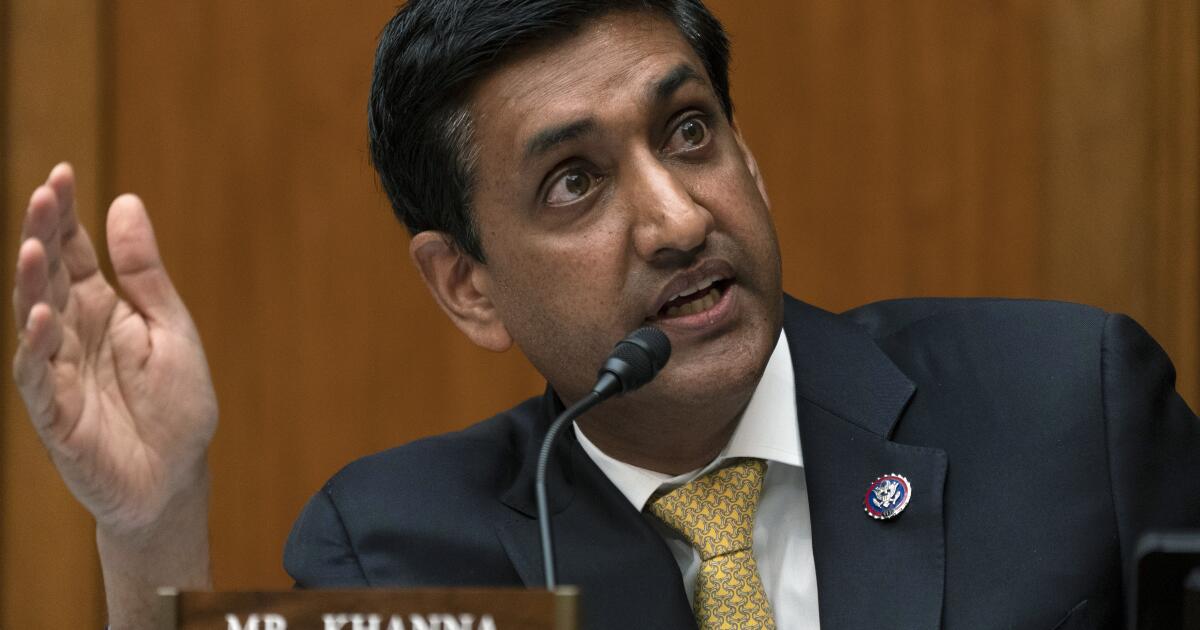
There’s an old saying: Those who can, do; those who can’t, teach. A similar idea underscores the debate over wealth taxes in California and elsewhere: Those who can, build companies. Those who can’t, devise ways for the government to take shares in what others have built. This new version might sound unfair until you listen to Rep. Ro Khanna (D-Fremont)’s pitch for an allegedly one-time, 5% wealth tax on California billionaires, tied to November’s vote on Proposition 40. Space constraints prevent us from surveying all that’s wrong with wealth taxes here. But as a reminder, they raise very little income for the government, are an administrative nightmare, could be unconstitutional and create enormous disincentives to build the kind of wealth that creates jobs and funds government services through other taxes in the first place. A recent dust-up on X between Khanna and entrepreneurs like Mark Cuban exposes the level of economic ignorance that makes U.S. wealth taxes so tempting to politicians. The issue at hand is implementing California’s version when a founder looks like a …

Harmful Ignorance | Blog of the APA

Harmful Ignorance | Blog of the APA

“We haven’t got closure, we haven’t been able to mourn properly, close that chapter and live our lives in memory of Dad and build our family back up. … We’re still in this grey zone where we have no idea what happened, how he lost his life, so we can’t put that to rest.” This testimony is from a family member of a maintenance engineer, Kevin Holding, killed in an accident at work, crushed by machinery that he was working on. His family do not know the cause of the accident, nor do they know why it took a long time for rescue equipment to arrive to try, unsuccessfully, to save him. The situation faced by Holding’s family members is obviously extremely painful. They desperately want to know what happened to their loved one. And it is striking that as individuals and as societies we expend enormous amounts of effort to find out the truth. These kinds of cases point to a plausible candidate for a basic prudential bad or detractor from well-being. What would …

Humanism and the Veil of Ignorance

Humanism and the Veil of Ignorance

A more humorous version of this essay is presented here: In Which Rawls Buys A Veil of Ignorance at Victoria’s Secret Humanism has many virtues. It defends science in an age of conspiracy theories, secular government in an age of religious nationalism and critical thinking in an age of algorithmic hysteria. But modern humanism faces a challenge. Unlike many philosophical and religious traditions, it lacks a single moral image that immediately captures its ethical vision. A secular Golden Rule. Christianity has “love thy neighbor.” Buddhism has compassion and interconnectedness. Ubuntu has “I am because we are.” What does humanism have? Quite a lot, actually. Human rights. Human dignity. Scientific skepticism. Democracy. Compassion. What it lacks is not values. It lacks a single image that ties those values together. That may sound unfair, but it points to something important. Humanism often excels at explaining what it opposes: superstition, dogma, pseudoscience, authoritarian religion and tribal irrationality. It is less clear about a single moral image that emotionally organizes its ethical vision. Yet humanism already possesses one of …

Is Mediocrity More Dangerous Than Ignorance?

Is Mediocrity More Dangerous Than Ignorance?

In a previous post about why educators who promote critical thinking shouldn’t burden themselves with the insurmountable task of getting everyone to think better, I made the point that academics and researchers are not celebrities, regardless of how large their contribution(s) to society. This, of course, is sad when you consider that there are actual celebrities out there who believe the Earth is flat or that rubbing themselves with some gemstone is key to a healthier body. It’s laughable, yes, but at the same time, it’s something of which we should be collectively ashamed. These are the people to whom we’ve provided a platform. Sure, there are a handful of modern academics out there who’ve “made it,” somewhat, in pop culture. For example, I admire the work of Neil DeGrasse Tyson and Brian Cox in bringing their expertise and love of science to the mainstream. But, I wonder, how many people outside of academia could actually name a credible academic? Simply, we need more academic role models. Now, I’m not sure if being smart was …

10 Specific Ways To Spot A Fake Intellectual Within Three Minutes Of Meeting Them

10 Specific Ways To Spot A Fake Intellectual Within Three Minutes Of Meeting Them

Most people are experiencing an “illusion of intelligence” when they’re overconfident. They overpromise and underdeliver because they have an inflated idea of their own skills and knowledge, usually in search of praise or attention, but don’t think others will catch on to their pretending. Even though the outcomes of projects they work on are typically evidence enough of incompetence, there are also specific ways to spot a fake intellectual within just three minutes of meeting them. And once you end up talking to them, you’ll wonder why you ever waited to find out. Here are 10 specific ways to spot a fake intellectual within three minutes of meeting them 1. They pick up their phone constantly Lightfield Studios | Shutterstock If someone doesn’t actually know the answer to something but is still trying to pretend they do, their phone is always going to be in their hand. According to a study published in the Journal of Experimental Psychology, access to the internet and search engines tends to always affect a person’s overconfidence, as if the wealth of …

The important role of ignorance in building a better society

The important role of ignorance in building a better society

Excerpted from Ignorance: What We Do Not Know, Cannot Know, Must Not Know, and Refuse to Know by George G. Szpiro. Published by Columbia University Press. Copyright © 2026. All rights reserved. Imagine that you live in total freedom among a group of people unencumbered by traditions, customs, and any other restrictions. Would that be the pinnacle of joy? Maybe not so much. There would be no government, no police, no fire department, no traffic laws, no court of justice; life would be totally free but totally lawless. As the political philosopher Thomas Hobbes (1588–1679) wrote in his magnum opus Leviathan, there would be no culture, no navigation, no knowledge of the face of the earth, no arts, no letters, no society; instead, there would be rapes, thefts, murders, and continual fear of violence. Human life would be “solitary, poor, nasty, brutish and short.” As more and more people began to live in close proximity, they realized the need for some sort of arrangement among themselves as an alternative to the chaotic state of nature. …

People Who Have No Clue How Real Life Works Almost Always Use 11 Phrases In Casual Conversations

People Who Have No Clue How Real Life Works Almost Always Use 11 Phrases In Casual Conversations

While wealthy, advantaged people in society today often try to cover up and hide their privilege to protect their image and social perceptions, most actually have little knowledge about the reality of the world for marginalized, low-income, or disadvantaged individuals around them.  While their behaviors might be easy to conceal, people who have no clue how real life works almost always use phrases in casual conversations that give them away. Whether it’s a kind of selfishness that only people who have been spoiled adopt or a passiveness that overlooks empathy toward those who are struggling, these groups of people are clearly ignorant and privileged in a way that narrows their perspective of the world. People who have no clue how real life works almost always use 11 phrases in casual conversations 1. ‘That’s not fair’ fizkes | Shutterstock Many entitled people operate with a misguided view of fairness in their lives, believing that anything that’s not accommodating, convenient, or comfortable for them is immediately “unfair.” However, accepting that the world isn’t fair all the time gives people …