All posts tagged: Hype

The AI Hype Index: AI gets booed in graduation season

The AI Hype Index: AI gets booed in graduation season

It is one thing to say AI will change the world. It is another to expect the class of 2026 to applaud it. In fact, when former Google CEO Eric Schmidt told University of Arizona graduates that their task is to help shape AI, he was met with a resounding chorus of boos. “I can hear you,” he said, before conceding that fears about disappearing jobs and a broken future were “rational.” This is not exactly the message one hopes to hear while sweating under a polyester gown and tallying student loan payments. Graduates have been jeering at AI pep talks at other commencements too, including ceremonies at the University of Central Florida and Middle Tennessee State University. Still, increasingly loud skepticism hasn’t stopped OpenAI from winning court cases, raising enormous sums of money, and launching new partnerships. And AI is even earning some unlikely cheerleaders: Reese Witherspoon has warned women to embrace it or be replaced by it. Source link
How Some People Became So Averse to Hype

How Some People Became So Averse to Hype

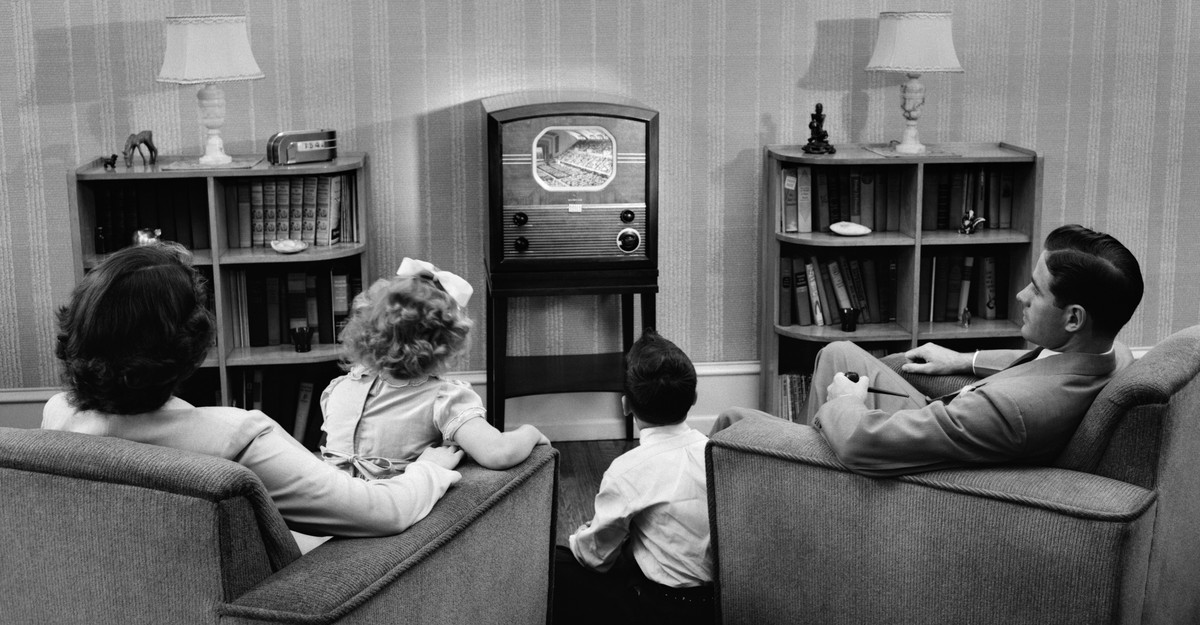
This is an edition of The Wonder Reader, a newsletter in which our editors recommend a set of stories to spark your curiosity and fill you with delight. Sign up here to get it every Saturday morning. The more popular something gets, the less appealing it can start to feel. Take The Pitt: Suddenly, everyone’s watching it and everyone’s talking about it. At a certain point, the excitement starts to make you feel like you should be into it—and just like that, you don’t want to watch it anymore. Anna Holmes calls this feeling “hype aversion”—not quite contrarianism, but a reflex against being told what to like, even indirectly. Popularity, after all, doesn’t just signal quality. It can also feel like pressure. When something is everywhere, opting out can start to feel like a way to hold on to your independence—to make sure your taste is still your own. What looks like lack of interest, Holmes suggests, may actually be something more deliberate: not rejecting culture, but resisting the “overidentification” with it. So when you …

The AI Hype Index: AI goes to war

The AI Hype Index: AI goes to war

AI is at war. Anthropic and the Pentagon feuded over how to weaponize Anthropic’s AI model Claude; then OpenAI swept the Pentagon off its feet with an “opportunistic and sloppy” deal. Users quit ChatGPT in droves. People marched through London in the biggest protest against AI to date. If you’re keeping score, Anthropic—the company founded to be ethical—is now turbocharging US strikes on Iran.  On the lighter side, AI agents are now going viral online. OpenAI hired the creator of OpenClaw, a popular AI agent. Meta snapped up Moltbook, where AI agents seem to ponder their own existence and invent new religions like Crustafarianism. And on RentAHuman, bots are hiring people to deliver CBD gummies. The future isn’t AI taking your job. It’s AI becoming your boss and finding God. Source link

Why I Can’t Stand the Hype

Why I Can’t Stand the Hype

These days, everyone seems to be watching The Pitt—but not me. I hear it’s really good. I have to believe it’s good, in fact, because people in my social circle—and Emmy Award voters—won’t stop saying it’s really good. “I’m riveted,” one friend said. “It’s addictive,” another said. “I’m surprised you haven’t seen it,” yet another said. But honestly, the more people who recommend the show, the less likely I am to watch it. I’ve been this way for a while now. It was the same back in the early aughts, with The Wire, and in the later aughts, with Breaking Bad. Though eventually I succumbed and watched both shows—and loved them enough to rewatch them years later—my unwillingness to engage with literally popular culture in the moment that it’s popular seems only to have intensified in the ensuing years. “But have you seen Severance?” you might ask. No. Slow Horses? The Night Manager? No and no. I also haven’t seen Sinners—even though I love a period piece and a good fright, and everybody I know …

In 2026, AI will move from hype to pragmatism

In 2026, AI will move from hype to pragmatism

If 2025 was the year AI got a vibe check, 2026 will be the year the tech gets practical. The focus is already shifting away from building ever-larger language models and toward the harder work of making AI usable. In practice, that involves deploying smaller models where they fit, embedding intelligence into physical devices, and designing systems that integrate cleanly into human workflows.  The experts TechCrunch spoke to see 2026 as a year of transition, one that evolves from brute-force scaling to researching new architectures, from flashy demos to targeted deployments, and from agents that promise autonomy to ones that actually augment how people work.  The party isn’t over, but the industry is starting to sober up. Scaling laws won’t cut it In 2012, Alex Krizhevsky, Ilya Sutskever, and Geoffrey Hinton’s ImageNet paper showed how AI systems could “learn” to recognize objects in pictures by looking at millions of examples. The approach was computationally expensive, but made possible with GPUs. The result? A decade of hardcore AI research as scientists worked to invent new architectures …

De-extinction was big news in 2025 – but didn’t live up to the hype

De-extinction was big news in 2025 – but didn’t live up to the hype

Colossal Biosciences, which calls itself “the world’s first and only de-extinction company”, generated a lot of headlines this year. The hype, however, bore little relation to reality. First, the US-based firm made a splash with woolly mice “engineered to express multiple key mammoth-like traits”. Victoria Herridge at the University of Sheffield, UK, pointed out on Bluesky the long hair of the mice whose photos were splashed all over the media wasn’t a result of gene edits based on mammoth DNA, and that geneticists have been creating long-haired mice for decades. The mice with more mammoth-related gene edits looked less mammoth-like. Then came the big one: the world’s first de-extinction, according to the company’s press release. Colossal claimed it had brought back the dire wolf (Aenocyon dirus), a wolf-like beast that lived in the Americas before going extinct around 10,000 years ago. In fact, what Colossal did was make 20 small changes to the genome of grey wolf (Canis lupus) cells, only 15 of which were based on the genome of dire wolves, and then cloned …