


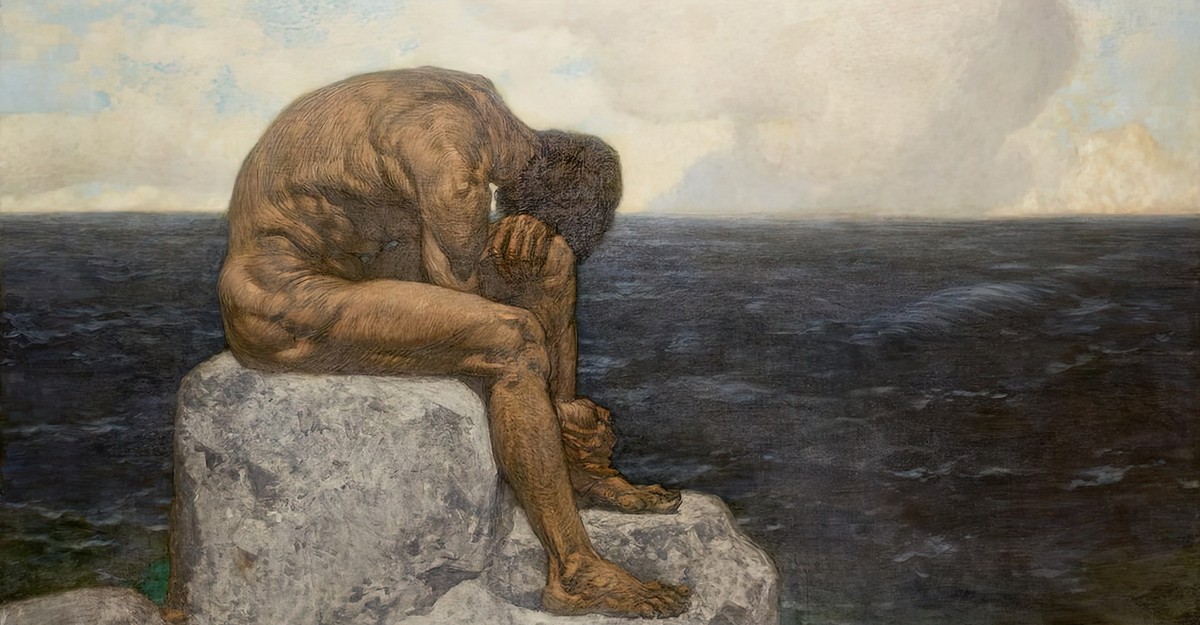
“The Odyssey” Was Never About the Gods
If you lived in the Bronze Age and were sailing the wine-dark sea, you’d soon understand the need for gods. You don’t know about low-pressure systems or atmospheric circulation, about ocean currents or the contours of the seafloor. You know only that the sky has darkened, the wind has shifted, and the waters have begun to rise. The sudden appearance of thunder, lightning, and towering waves crashing against the hull demand an explanation: gods. Zeus and Poseidon are at it again—one hurling thunderbolts, the other whipping the sea into a frenzy. Or perhaps Athena has withdrawn her protection. You offered sacrifice before setting sail. Maybe one bull wasn’t enough? The randomness and unpredictability of existence, the mindless violence of it, necessitated myth. This early religion was a kind of technology, an attempt to make order out of chaos. There are so many reasons why the stories of ancient Greece endure, why they are some of the first narratives I remember from elementary school, why my daughter’s graphic-novel version of The Odyssey is so tattered. Yes, …

