All posts tagged: disease

There’s a New Link Between Gut Health and Alzheimer’s Disease

There’s a New Link Between Gut Health and Alzheimer’s Disease

For years, scientists have known that the gut microbiome of people with Alzheimer’s differs from that of healthy people. What remains unclear is whether these differences are a consequence of the disease, contribute to it, or simply accompany it. It is possible that part of the puzzle lies not in the gut bacteria themselves but in the molecules they produce, which end up circulating throughout the body. A team of scientists believes it has found one such molecule. In a study published in Nature Communications, the researchers identified imidazole propionate (ImP)—a compound produced by certain gut bacteria—as a possible link between the microbiome and Alzheimer’s disease. From the Gut to the Brain The hypothesis put forward by the researchers begins in the gut. Some bacteria use an amino acid called histidine, and by metabolizing it, produce ImP. Some of this molecule can enter the bloodstream and circulate throughout the body. The problem begins at the brain’s border. Experiments in the new study indicate that ImP can weaken the blood-brain barrier, which protects the brain and …
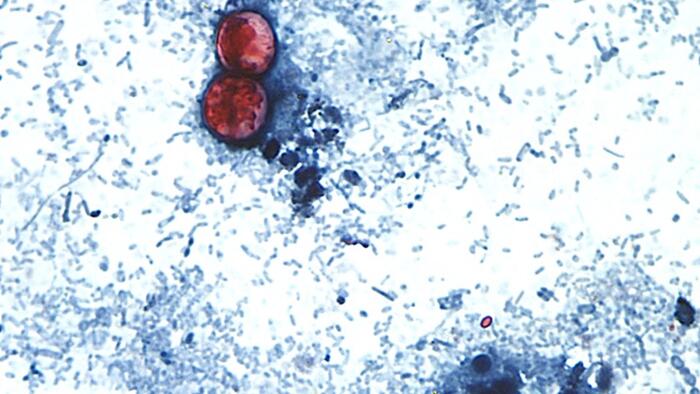
Disease Caused By Cyclospora Parasite Now In 45 States: CDC

Disease Caused By Cyclospora Parasite Now In 45 States: CDC

A disease caused by a parasite called Cyclospora has been recorded in 45 states this summer, the Centers for Disease Control and Prevention said in an update. Delaware, Oregon, South Dakota, and Vermont have now logged cases of cyclosporiasis, the disease, the CDC said on July 28. The CDC in its previous update had said 41 states had reported cases. The number of confirmed cases across the 45 states since May 1 is up to 6,707, according to the CDC. More than 11,500 other cases have been reported but are pending laboratory confirmation or “further investigation and analysis, such as ruling out international travel,” the CDC said. The agency is not counting cases involving international travel or probable cases. Patients have ranged in age from 1 to 98, with a median age of 44. “We estimate a 6-week reporting lag between illness onset and case reporting to CDC, so we anticipate that case counts will continue to rise as data are received,” the CDC said. As Zachary Steieber reports for The Epoch Times, cyclosporiasis typically …

Biohacker Bryan Johnson reveals he has incurable disease amid mission to ‘defeat death’

Biohacker Bryan Johnson reveals he has incurable disease amid mission to ‘defeat death’

Millionaire biohacker Bryan Johnson has hit a major obstacle in his yearslong quest to “defeat death.” The 48-year-old tech entrepreneur, who rose to fame for chronicling his extreme health routine curated to reduce his biological age, announced on social media last week that he has been diagnosed with an incurable autoimmune disease. “My stomach is eating itself,” Johnson wrote in a June 30 post on X. He explained that he has autoimmune gastritis, in which his immune system mistakenly attacks the healthy cells in his stomach lining. He wrote that for years, he had been unaware he was dealing with the disease, but said that it was likely caused by his diet of fast food and sugary beverages in the years before he started biohacking his health routine, which included changes to his diet and sleep habits. “As a kid, I ate sugar cereal, drank sugary soda, and gobbled down fast food,” Johnson said. “I had a few healthy years in my early 20s but then became a young father of three and began building …

The Jam bassist Bruce Foxton diagnosed with Parkinson’s disease

The Jam bassist Bruce Foxton diagnosed with Parkinson’s disease

Bruce Foxton, the acclaimed bass player for The Jam, has revealed he has been diagnosed with Parkinson’s disease. The news follows a period of cancelled UK shows last week, which the 70-year-old attributed to “illness” and which had led to “more speculation about my health”. Foxton, who had previously disclosed a cancer diagnosis in 2023, explained that the Parkinson’s diagnosis emerged during investigations into complications from his cancer treatment. In a post on Facebook, he stated: “It’s no secret that I’ve undergone treatment for cancer and am still having scans on a regular basis to keep an eye on that. However, what you don’t know is that the cancer treatment in itself caused some significant issues for me and investigations into all of that uncovered the fact that I’m now facing a future living with Parkinson’s disease, and I’m determined to do that as well as I possibly can.” He described the diagnosis as a “huge shock”, adding: “It’s taking a long time to let that sink in and for me to accept that my …

How the Nazis Stymied Alzheimer’s Disease Research

How the Nazis Stymied Alzheimer’s Disease Research

German psychiatrist Alois Alzheimer is widely credited with having identified the eponymous disease. However, a lesser-known Czech scientist, Oskar Fischer, separately identified the disease in a 1907 publication, the same year that Alzheimer’s findings were published. Why was Fischer not recognized for the discovery along with Alzheimer? Geopolitical factors in Europe between World War I and World War II led to Fischer’s marginalization because he was Jewish. Despite groundbreaking achievements in dementia research, he was fired from his position at the German University of Prague and cut off from the university’s laboratory resources. After the Nazi invasion of Czechoslovakia in 1939, he was arrested by the Gestapo, imprisoned, and eventually murdered. In addition to the tragedy that befell Fischer personally, the rise of authoritarianism stymied crucial scientific research that could have brought us closer to treating this disease. Alois Alzheimer Alzheimer, the eccentric German psychiatrist, had a fencing scar on the left side of his face and kept a pet monkey (Karlawish, 2021). In 1907, he published a case report of a patient, Augusta D. …

If a Lyme disease vaccine gets approved, would hunters take it?

If a Lyme disease vaccine gets approved, would hunters take it?

Matthew Mealer holds up his targets at the Busch Shooting Range in Weldon Spring, Missouri, in May. Mealer said he’s generally skeptical of new vaccines but might consider one for Lyme disease if it proves safe and effective. Kyle Pyatt for KFF Health News hide caption toggle caption Kyle Pyatt for KFF Health News It’s tick season, possibly the worst in a decade. More and more Americans are being exposed to these parasites as climate change expands the range where they can survive. That means more people are also exposed to the bevy of health conditions they can cause, such as Rocky Mountain spotted fever, the alpha-gal-triggered red meat allergy, and, most common of all, Lyme disease. For the latter, there may be some additional protection on the horizon. Pharmaceutical companies Pfizer and Valneva announced this spring that they plan to seek regulatory approval for a vaccine to protect against Lyme disease. A previous vaccine for Lyme became available in the late 1990s but was pulled only three years later due to lawsuits, public fear …

Huntington’s Disease and Schrödinger’s Cat

Huntington’s Disease and Schrödinger’s Cat

“Don’t spend a lot of time imagining the worst-case scenario. It rarely goes down as you imagine it will, and if by some fluke it does, you will have lived it twice.” —Michael J. Fox A Rainy Day I suspect it’s not the easiest job in the world to tell someone they’re going to die. It was a rainy day in March when I sat in a room with a neurologist tasked with doing just that. I’d been waiting for weeks to receive the results of the genetic testing I’d undergone, so he didn’t hesitate or keep me in suspense. He just walked in the room, sat down, and came out with it: “You are gene-positive for Huntington’s Disease.” That was a little over four years ago. Since then, I’ve met with the same neurologist every six months. I go because of one very small, microscopic problem: One of the genes on my chromosomes has a mutation. Specifically, my huntingtin gene (HTT, which is located on chromosome 4 and is responsible for healthy brain development …

Midlife hobbies like travel and music may offset genetic risk for Alzheimer’s disease

Midlife hobbies like travel and music may offset genetic risk for Alzheimer’s disease

Engaging in stimulating hobbies during middle age tends to protect brain health better than minimizing medical risks alone, providing evidence of a strong defense against cognitive decline. Activities like playing the piano, traveling abroad, and socializing with friends emerged as powerful ways to reduce the risk of memory disorders, according to new research from Trinity College Dublin. The study was published in the journal Alzheimer’s & Dementia: Diagnosis, Assessment & Disease Monitoring. Alzheimer’s disease is a progressive brain condition that slowly destroys memory, thinking skills, and the ability to carry out simple tasks. It is the most common cause of dementia, a broader term for a decline in mental ability severe enough to interfere with daily life. The physical changes in the brain associated with this condition begin decades before any visible symptoms appear, making middle age an important window for potential prevention. Dementia currently affects about 48 million people worldwide, including nearly 1 million people in the United Kingdom and 65,000 in Ireland. Globally, dementia cases are projected to reach 150 million by the …

Why Are There So Many Disease Outbreaks On Cruise Ships?

Why Are There So Many Disease Outbreaks On Cruise Ships?

A recent outbreak of deadly hantavirus, a disease usually spread via rats, has been tied to cruise ship travel by the World Health Organisation. And France confined over 1,700 people to a cruise ship after a suspected norovirus outbreak occurred on board, though passengers have since been released. The thought of being stuck on a ship filled with a contaqgious virus is a pretty scary one. But how likely is it? We asked Professor of Medicine in Norwich Medical School, Prof Paul Hunter (whose research interests include the spread of infectious disease), whether and why cruise ships might be a hotbed for illnesses. “Cruises are well known to be associated with outbreaks [of] infectious disease” Professor Hunter told HuffPost UK that there’s a long-established link between cruise ships and the spread of infectious disease. America’s Centre for Disease Control and Prevention (CDC) Yellow Book said the form of travel “presents a unique combination of health concerns”. Most commonly, Prof Hunter said, these diseases include norovirus and the ’flu. But outbreaks can include “a range of …

Unlocking lithium’s hidden effects on Alzheimer’s disease at the cellular level

Unlocking lithium’s hidden effects on Alzheimer’s disease at the cellular level

Lithium salts have shown promise in treating Alzheimer’s disease by preventing certain proteins in the brain from clumping together, but how they affect cells on a broader scale remains largely unexplored. A recent study published in the journal Biomedicine & Pharmacotherapy reveals that lithium chloride alters multiple cellular pathways beyond its primary target, changing the activity of various enzymes and structural proteins linked to dementia. These results suggest that modifying the type of lithium used in medical treatments could improve outcomes for patients experiencing memory loss and cognitive decline. Alzheimer’s disease is the most common form of dementia, characterized by two main physical features in the brain. The first is the buildup of amyloid-beta, a protein that forms sticky plaques between nerve cells. The second involves a protein called Tau, which normally helps stabilize the internal structure of brain cells. In people with dementia, Tau undergoes a chemical alteration called hyperphosphorylation. Phosphorylation is a normal chemical reaction where enzymes called kinases attach small chemical tags, known as phosphate groups, to a protein. These tags act …