


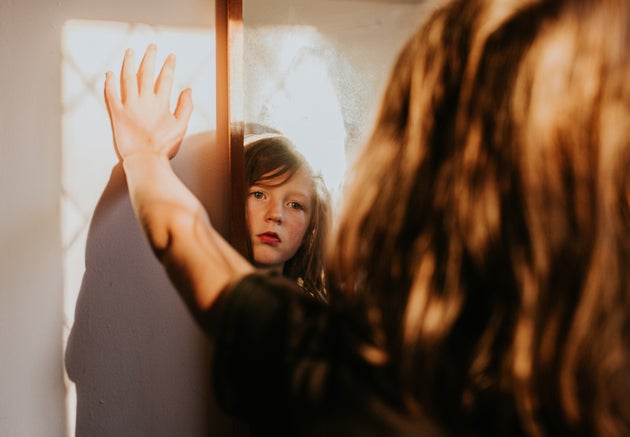
The other morning, while we were cleaning her teeth, my four-year-old declared she was “fat”.
It came completely out of the blue and I was taken aback by the comment. Weight or body size isn’t something we tend to talk about in our household. I don’t comment on my body, or other people’s bodies, and we try to keep the focus on helping our become bodies strong and healthy when talking about food and activity.
But despite all of that, here we were. She claimed a boy at school had said it to her the day before. All of a sudden, we were rushing to get ready and entering a conversation I felt woefully unprepared for.
My mind was racing: What did it mean to her? Had she understood it as an insult? In the space of a few seconds, I realised I wasn’t just answering a question about bodies – I was trying to shape the way she might think about hers for years to come.
I’ve always been naturally petite. That doesn’t mean I’ve been exempt from annoying comments from others on my body over the years, but equally I’m aware I’ve not had to face nearly half as much scrutinity as other women.
I grew up in the 90s, when magazines gleefully scrutinised bodies that didn’t look a certain way, and today we’re living through another era obsessed with shrinking ourselves, this time fuelled by weight loss drugs. So, I’m well aware of how certain messages can seep into our day-to-day lives and influence how we feel about ourselves.
Part of the challenge is that ‘fat’ isn’t inherently a bad word – many people use it as a body descriptor. Some people are actively reclaiming the word and using it to describe themselves. But what makes some parents panic (from the conversations I’ve had) is that children may be exposed to it as an insult rather than a neutral description, and where this might then lead to.
Even on the playground, I’d be naive to think it was being used by four- and five-year-olds as a signifier of someone’s body fat levels, rather than a chance to say something mean.
So, when my daughter said she was fat, I genuinely was stumped. I waffled something about all bodies being different and tried to bustle her out of the bathroom as we were running very late.
When I spoke to my friend (who also has young kids) later that day, she revealed she wouldn’t know how to tackle the conversation either. So, I reached out to Dr Helena Lewis-Smith, a body image expert and research psychologist, about how’s best to navigate this topic with little ones.
What NOT to say when a child say they’re fat
Dr Lewis-Smith, who is Associate Professor of Psychology at the Centre for Appearance Research at the University of the West of England, said four is a normal age for this to come up, as “children pick up appearance messages from the world around them far earlier than most parents expect”.
If a child says they’re ‘fat’, you might respond with something along the lines of, “no you’re not” or even “no, you’re beautiful”.
But Dr Lewis-Smith advises to steer clear of this response as “it teaches a child that being fat would be a bad thing if it were true”. It also keeps the conversation tied to appearance and reassurance, rather than moving away from it.
What to say instead
The body image expert recommends for parents to say something like: “Bodies come in all shapes and sizes, and that’s just how people are. It doesn’t tell us anything about whether someone is kind, funny, or a good friend.”
Saying this “gently detaches size from worth” without denying or dwelling on the comment, she added.
Speaking to Parents, experts recommended other responses that might help for parents of young children, including: “There’s nothing wrong with being fat – all bodies are good bodies!” or “Your body is the perfect size for you!”
It can also be useful to stay curious and ask why your child thinks they are fat, or where this thought is coming from? Is it something they’ve seen on TV, social media, or a comment from someone at school? How did it make them feel?
Unfortunately, some children might face teasing or bullying at school over their weight and appearance, so it’s crucial to try and get to the bottom of whether this is happening frequently or if it was a one-off comment.
If it is something that’s been said on more than one occasion – and it’s making your child feel sad, judged or singled out – speak to your child’s teacher or school, who should offer extra support, especially as weight-shaming can lead to negative outcomes, including poor mental health.
Advice for parents going forward
More generally, Dr Lewis-Smith advises parents to be mindful of the things they say at home about their own bodies. Steer clear of commenting on your own body in front of children, especially anything critical. For example, saying things like “I feel fat today” or “I shouldn’t have eaten that”.
“Children absorb these scripts early and repeat them,” she said. Studies have found kids whose parents – especially their mothers – talk about their weight and dieting are more likely to have disordered eating.
Similarly she urges parents to avoid tying food to morality – this means not branding foods as “good” or “bad” or talking about “earning a treat” because you’ve been for a run that day.
The psychologist also advises against over-praising appearance generally and focusing instead on praising character and effort. “Constantly telling a child how pretty or handsome they are teaches them that their looks are what adults notice first and value most,” she explained.
It’s also well worth being mindful of social media exposure – even if your child isn’t necessarily on these platforms. “Even young children pick up on appearance ideals through what they see over a parent’s shoulder or on a sibling’s phone, and as children get a little older, time spent on image-heavy platforms is consistently linked to greater body dissatisfaction,” the expert added.
While parents don’t need to be policing every minute, they do need to be aware of what their child is seeing and how much time they’re spending online. This is a “meaningful piece of prevention” for body image struggles, she added.
Red flags to be aware of
While the odd comment about being fat is not a cause for concern, if children make repeated comments about weight and appearance – and these comments exist alongside other changes – it’s worth paying a bit more attention.
Dr Lewis-Smith suggests some of the signs worth taking seriously include:
- Changes in eating, skipping meals, cutting out entire food groups, unusual secrecy around food, or comments about needing to earn or burn off food.
- Avoidance of activities they used to enjoy because of how their body looks or feels, or avoiding getting changed in front of others.
- Increasing distress, low mood, or anxiety attached to their body, rather than a passing comment.
- Seeking frequent reassurance about their appearance, or checking their body in mirrors repeatedly.
- Withdrawal, secrecy, or a shift in how open they are generally, not just about their body.
Building positive body image at home
There are plenty of things we can be doing as parents to help build positive body image at home. Some of these include:
- Talking about bodies in terms of what they let us do (running, hugging, dancing, climbing), rather than how they look.
- Praising character and effort as readily as you’d normally praise appearance. Noticing kindness, curiosity, and persistence out loud.
- Modelling body acceptance yourself.
- Keep the conversation open rather than treating it as a one-off.
“These moments will come up again, and each calm, unfazed response teaches a child that their body is not something to be anxious about,” Dr Lewis-Smith added.
Now I feel a little more confident that it’s the conversations we have over time – not one rushed exchange while brushing teeth at 8am before a school day – that help shape how our kids feel about their bodies.
Help and support:
-
Beat: Adult Helpline: 0808 801 0677 and Youthline: 0808 801 0711, or email [email protected] (adults) [email protected] (youth support)
-
Samaritans: Open 24 hours a day, on 116 123
-
Mind: Open Monday to Friday, 9am-6pm on 0300 123 3393
Related…
 Some UK Schools Still Don’t Allow Sunscreen, Experts Call For Change
- Kids Calling Girls ‘Foids’ At School? You Need To Pull Them Up On It