


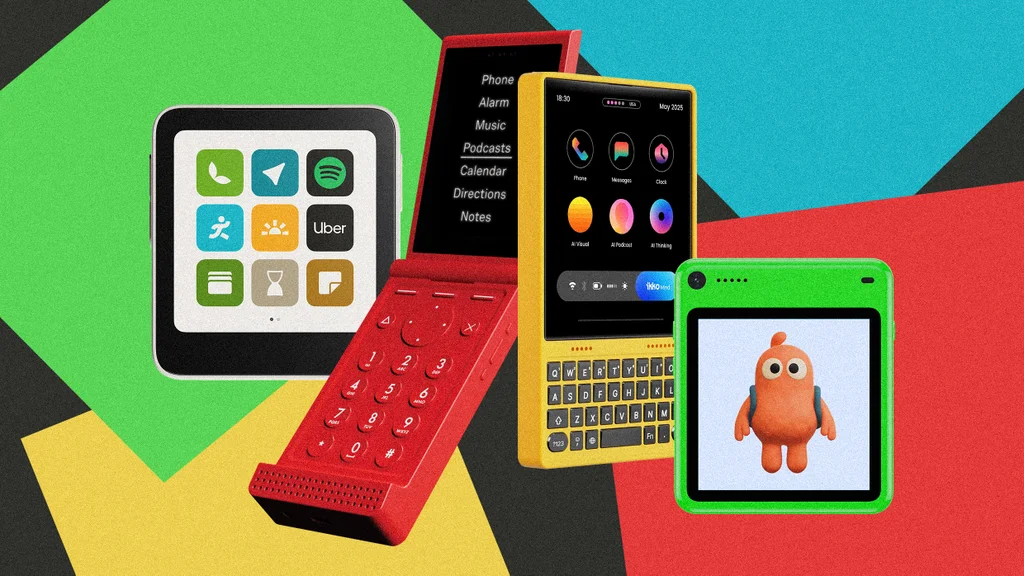
On our video call, Shreyas Narlanka holds up a 3-inch square screen called Meadow. It looks like a thick, equilateral iPhone 13 mini. It would easily fit in my jeans’ front pocket.
I instantly wanted one.
The Meadow is just one of a small but growing merry band of devices that want to help people cut their hyperdependency on their smartphones. There’s Ikko’s MindOne Pro, a kids’ phone called Freckle, the Light Flip phone, and even an aluminum case called RePod C1 designed to turn obsolete Apple Watches into iPhone-iPod hybrids.
These gadgets are coming at an opportune time because every day I hate my iPhone and my Mac a little more. I ache for a compact device that gives me the convenience of digital life that doesn’t take the life out of me. Which explains why I keep dreaming awake about ditching my iPhone only to end up doomscrolling Instagram (the irony!) so I can watch reels that show how people use these new gadgets to stop doomscrolling Instagram.
Plenty of others seem to be as tempted as I am. The Hong Kong startup that makes the RePod tells me that it has sold more than 50,000 units since July. Ikko’s MindOne drew 3,411 backers on Kickstarter, who pledged nearly $1.5 million. And Meadow’s first two preorder batches sold out, Narlanka tells me. Its second production run is now underway.
I like to believe that, eventually, there will be a flip in the gadget spacetime continuum. One in which a big silent majority of people, fed up with their own toxic digital stupor, decide that it’s time to get rid of the smartphone in favor of a new class of device. I don’t know what the final form of this device will be. Perhaps AI agents will enable something different, hopefully not tied to Google, Apple, or Meta? Maybe. For now, I look at these gadgets and I see promise.

Rethinking the user experience
Narlanka, 25, dropped out of University of California, San Diego, where he was studying cognitive science focused on human-computer interaction. He sold his previous startup, an e-commerce and inventory management platform built for sneaker and collectable resellers, and decided it was time to craft a phone designed to stop using your phone.