


Centuries before bookstores had shelves labeled ROMANCE and fictional hockey players locked eyes across the ice, the love story, with all of its attendant joys and sorrows, was an organizing principle of life—and of literature. The sentiment that another person might “complete” us enchanted both Plato and Jerry Maguire, and the search for that someone, along with the desire to understand why it can hurt so bad, has animated fiction from the beginning. The list below is an effort to name those love stories: novels, of course, but also poetry, plays, and short stories—that we consider to be the most enduring. We asked a jury of scholars, librarians, critics, and authors across genres, as well as many colleagues, to name their favorite titles that were originally written in English. We thought of our own personal touchstones, deliberated over the choices, and emerged with a group of standouts: 50 titles you won’t soon forget.
English is not reputed to be the most romantic language, but it is the most widely spoken. (Focusing on these particular love stories was also a practical way to narrow things down.) Since the end of the Renaissance, when modern English began to take shape, poets and playwrights wrote tales of wooing and marriage, infatuation and betrayal. Their words gave rise to some of our language’s most powerful aphorisms, idioms, and, yes, clichés—think of hearts on sleeves and matches made in heaven. Today, fictional love is associated with the romance genre and its proliferating subcategories, and you’ll find examples of those books here, but we aimed to think more expansively about its literary manifestations. The love story belongs as much to Arundhati Roy as to Jane Austen; its pulse beats as strongly in the knotty poetry of Anne Carson as it does in the steamy historicals of Beverly Jenkins. It is by turns ecstatic, tragic, cerebral, enthralling, and enlightening. For so many of us, it’s a reason to live and to read.
Explore the unforgettable love stories
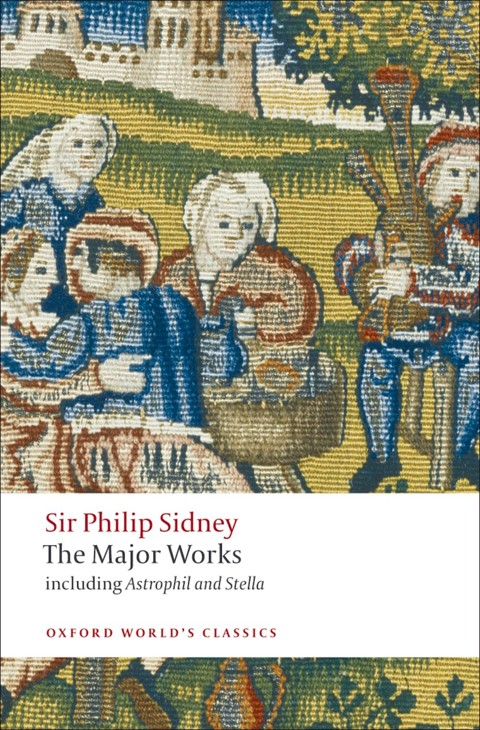
Astrophil and Stella
by Philip Sidney
1591
Well before the novel existed to plot out the course of infatuation and heartbreak, grand sequences of sonnets chronicled the rise and fall of great loves. One of the most radical of these was Sidney’s, which follows Astrophil (“star lover” in Greek) and his beloved, the celestial Stella, across 108 sonnets and a handful of songs. To woo her, Astrophil displays his wit via the wordplay that poets have long used to capture the messy states of the heart—and show off the dexterity of the writer. But Sidney’s sequence stands out because of his awareness that the formal devices peppered across his poems are “stol’n goods.” And he wrote a truly compelling story, one that keeps us in suspense until the middle of the series, when Astrophil’s eyes meet Stella’s. Although his paradoxical blandishments may not win him his star in the end, they are a triumph in their own right, seducing and amusing us in a portrait of love-tossed misery.
Walt Hunter
Romeo and Juliet
by William Shakespeare
1597
Shakespeare’s tragedy about young lovers from rival families remains, four centuries later, one of the most adapted plays in the English language. In just the past 30 years, Leonardo DiCaprio, Jet Li, Aaliyah, and Angelina Jolie have all played versions of Romeo or Juliet. There’s been a zombie version and several Bollywood ones. The play was even, if you’ll believe it, reinterpreted with gnomes. (His name becomes Gnomeo, obviously.) The story is inescapable but persists, I think, because of its tantalizing core premise: that you could find a love so passionate, so all-consuming, that you’d rather die than be without it.
Serena Dai
Love-Letters Between a Nobleman and His Sister

by Aphra Behn
1684
Behn, best known for her plays and her later novel Oroonoko, was the rare woman to make a living as a writer in the 17th century. This epistolary saga endures, in part, because of its salaciousness. The passion between the aptly named Philander and Silvia, his wife’s sister, is absolutely cursed; their most significant shared interest appears to be bringing upheaval and misery into the lives of everyone they meet. Although the central affair may be unenviable, the book is notable for the sheer range of romantic literary tropes that it helped enshrine—including the wayward lover who only wants what he can’t have, the once-pure soul corrupted by sexual liberty, and the fake relationship that gives rise to real feelings. Above all, it proves that swooning language, nonstop drama, and a tinge of the illicit can make a romance an addictive read, even (and sometimes especially) when its characters are offputting.
Talya Zax
Evelina
by Frances Burney
1778
Burney’s novel is a romance in every sense of the word. Yes, it’s a book about the golden-hearted young woman of the title, Evelina, falling in love with a wealthy, dashing young man—a preview of the marriage plots of Jane Austen, who counted Burney as one of her favorite authors. But it’s also a romantic novel in the older literary sense, the kind of mildly fantastical tale in which an impoverished Scottish poet considers turning to a life of crime, only to wed an heiress once it becomes apparent that she is not, as was previously suspected, his half sister. Evelina’s blissfully unrealistic quest for both love and personal recognition—spoiler: she turns out to be an heiress too—is both sharply observant and a lark. It deserves more love from a literary culture that adores Austen but often ignores her predecessors.
Talya Zax
Persuasion
by Jane Austen
1817
Austen is the empress of romance, and her work sets the bar for all of the love stories patterned after hers. Pride and Prejudice, Sense and Sensibility, and Emma each could rightfully claim a spot on this list. But Persuasion is Austen’s most mature and realistic novel. It tells the story of a single, not-so-young woman who is reunited after many years with the man she rejected at 19. Its prose is calmer and less intent on cleverness than Austen’s other works, and it is suffused with the disappointments and hardships that accompany any life lived past the age of 20. So the happy ending, when it inevitably comes—this is still a classic romance, after all—feels especially well-earned.
Eleanor Barkhorn
Jane Eyre
by Charlotte Brontë
1847
The full title of this coming-of-age novel is Jane Eyre: An Autobiography. That deliberate move emphasizes the authority of the titular heroine—a governess who is poor, orphaned, and unbeautiful—to narrate the story of her life. So it is impossible to discuss the soul-cracking love story between Jane and her employer, Edward Rochester of Thornfield Hall, without paying heed to Jane’s assertion of control when she learns, to her horror, that Rochester is already married to a Creole woman named Bertha Mason. Bertha is treated cruelly by both Rochester and the author, and Jane ultimately profits from her suffering. Whether one blames Jane is another topic. But this famous book’s famous line toward the end—“Reader, I married him”—states her case: Jane’s allegiance is not the passive sort. She owns her decision.
Rachel Vorona Cote
Wuthering Heights
by Emily Brontë
1847
Few, if any, books on this list should be read as a how-to guide for the romantically inclined. That said, you really, really, really shouldn’t model your affairs on the doomed relationship that propels Brontë’s only novel. Wuthering Heights conjures a vision of love as despair and longing, not a living thing to be nurtured but a cold, hard object clutched fervently to your chest. When Victorian-era social mores keep the childhood sweethearts Cathy and Heathcliff apart, Heathcliff decides that nobody in their vicinity should ever be happy, and drafts a revenge plot to upend an already-miserable family. Also, everyone is constantly dying of consumption or trying to kill a dog. Nonetheless, this is the stuff of messy myth, the sort of lifelong obsession that makes all other entanglements seem paltry and cheap. Naturally, the pair is reunited only in death, as their specters meet again on the windswept moorlands.
Jeremy Gordon
North and South
by Elizabeth Gaskell
1854
With the rise of industry in mid-19th-century England came the industrial novel, an improbably romantic genre. In Gaskell’s version, a rocky courtship mirrors the country’s labor wars. The cultured, genteel Margaret Hale is forced to leave a village in the agrarian south for a squalid city in the industrial north (a thinly disguised Manchester), where she gets caught up in the lives of desperately poor workers. Meanwhile, she is befriended by a Byronic, self-made cotton-mill owner, John Thornton. The novel tracks her sentimental education—and his—as they overcome class prejudices and hotly debate Thornton’s obligations to his employees. A strike and near riot lead to a shocking, at least by the standards of the day, public display of affection; the greater the threat of violence becomes, the more the book swoons. Imagine Pride and Prejudice updated for a more political age, and you’ll get a sense of the pleasures of North and South.
Judith Shulevitz
Middlemarch
by George Eliot
1871
Eliot wrote novels about marriages both good and bad, usually bad. In Middlemarch, these unions function as worlds unto themselves—created by, but larger than, the couples inside of them—and the bad ones crush the soul. Two of this novel’s several protagonists, Dorothea Brooke and Tertius Lydgate, suffer from romantic illusions, and each chooses an utterly unsuitable partner: The idealistic Dorothea thinks she’s marrying a great scholar, but he turns out to be spectacularly mediocre, so tyrannical and small-minded that his last name, Casaubon, has become shorthand for “pettifogging pedant.” Lydgate has a brilliant future as a doctor but falls for a beautiful, vain woman with expensive social aspirations. One of these two will be trapped for life, and the other freed only by an act of God. Eliot is willing to give characters a chance at love, though, and the horribleness of the bad marriages makes the good ones feel like a major spiritual achievement.
Judith Shulevitz
The Portrait of a Lady
by Henry James
1881
Should The Portrait of a Lady be considered one of James’s ghost stories? The characters are alive but their choices linger like a haunting, and when I think of this classic, I feel as though I’m encountering a phantom. The story of Isabel Archer, a young woman who wants to believe that her life is her own to determine, is classic James, down to its settings and psychological contradictions. The friends Isabel encounters are taken with who she is and ache to see her get what she wants, just as the reader will; the men and women who want to use her for their own needs are villains unlike any other—their machinations are what haunt me. This is all to say it’s the most romantic book I’ve ever read, one that understands how dangerous it is to be a woman who believes in love’s powers—and yet how necessary it is to retain that belief, no matter the fears that hang over us.
Haley Mlotek
Anne of the Island
by L. M. Montgomery
1915
When readers meet Anne Shirley, she’s an irresistible mess of contradictions: an 11-year-old tomboy who’s vain about her looks, an occasional liar who is also capable of searching honesty. These qualities make her unforgettable to those around her, not least to Gilbert Blythe, the boy in class who teases her, competes with her, befriends her, and ultimately becomes her lifelong love. The joy of the Anne of Green Gables series lies in the specific delights of watching Anne grow up—and in how affectionately it widens its lens to show us Gilbert growing up next to her. Anne of the Island, the third book, is where this happens in earnest, as the two head to college and wrestle with what they want from the wider world. As almost-adults, Anne and Gilbert look for love with other people, get jobs as teachers, and learn about sacrifice and (on one particular night) the possibility of loss. The twists and turns are classic, but you’ll thrill at seeing both of them wend their way toward the other, because you know how lively a partnership theirs will be: These two friends, who know each other better than anyone else, are idiosyncratic as individuals and will be no less so as a couple.
Jane Yong Kim
The Age of Innocence
by Edith Wharton
1920
Wharton’s magnum opus is a voyeur’s novel, written for those who love to gawk, by a woman who invited her readers to gape at New York’s “small and slippery pyramid” of Gilded Age high society. Among its velvet-caped, silver-spooned denizens, someone is always, always watching. The Age of Innocence is an agonizing tale of the rigors of unconsummated love. The dutiful Newland Archer is blissfully engaged to the demure May Welland until he spies her cousin, Ellen Olenska—who has just returned from a broken, ruinous marriage—at the opera. Ellen is everything Newland craves: cultured, candid, independent. She’s simultaneously drawn to him and hobbled by guilt. But being together would mean betraying May. So how will they exist—and coexist—in stifling, closely surveilled Manhattan? The novel’s last image, a gaze at a closing window, is as heartbreaking as any of literature’s most dramatic deaths.
Hillary Kelly
The Great Gatsby
by F. Scott Fitzgerald
1925
I know, I know: The Great Gatsby is a love story in the way that Jaws is a nature documentary. But the romance between Jay Gatsby and Daisy Buchanan—slow-burning, explosive, doomed—endures precisely because it is so richly unromantic. This affair, as it picks up speed, threatens everyone in its path. Gatsby pines for Daisy and waits for Daisy and reinvents himself for Daisy. He builds, and then takes residence in, a Daisy-centric universe. In another novel, that kind of devotion would be something to be celebrated—desire as a physical force, passion as the ultimate plot device. In Fitzgerald’s masterpiece, though, passion is also an omen; like Chekhov’s gun, or George Wilson’s, it is always lying in wait. But the novel, having stripped romance of its giddiness, offers something far more compelling in return: ambivalence. Is this devotion? Is it delusion? Or is it one more party, glittering and wild, that will have to come to an end?
Megan Garber
The Bridge of San Luis Rey
by Thornton Wilder
1927
When a rope bridge in Peru collapses in July 1714, killing five people, the Franciscan friar Brother Juniper wants to know: Why did these five souls perish—was it an accident or divine intention? This simple question propels Wilder’s Pulitzer Prize–winning novel into a brilliant exploration of attachment and its flawed, human expressions—the suffocating love of the Marquesa for her daughter; the self-sacrificing love of young Pepita for the abbess who raised her; the codependent love between the twin brothers Esteban and Manuel, which leaves no room for romance; and the manipulative love of Uncle Pio for the great actor La Perichole. Almost 100 years after The Bridge of San Luis Rey was first published, its last sentence still feels like a surprise ending, somehow striking a hopeful note: “There is a land of the living and a land of the dead and the bridge is love, the only survival, the only meaning.”
Molly Roden Winter
Their Eyes Were Watching God
by Zora Neale Hurston
1937
Janie Crawford is a freethinking Black woman who yearns for a steady love, but her quest for it ultimately leads her toward her own highest self. Marriage, in this novel, can be disfiguring, and it forces women to shrink parts of themselves. Before she’s 40, Janie has been through two painful relationships with men who harm her, belittle her, and control her. But even when she’s curled in on herself, Hurston’s microscopic gaze manages to show us the fine grooves of Janie’s heart. Finally, approaching middle age, she meets and marries a younger man named Tea Cake; her feelings for him are so intense that she experiences a “self-crushing love.” But the line that shook me is as follows: “So her soul crawled out from its hiding place.” She genuinely adores Tea Cake, but their marriage, too, will end—and, wisely, she’ll have saved an ounce more of that love for herself.
Jenisha Watts
Arabella
by Georgette Heyer
1949
Arabella is the blueprint for modern Regency romances—the whole etiquette-driven Bridgerton-esque subgenre. The title character is the eldest daughter of a poor country vicar, and she must marry well for the sake of her younger siblings. Mr. Beaumaris is the richest, most eligible local bachelor—and he’s committed to staying single and away from scheming women. To save her pride, Arabella tells Mr. Beaumaris a string of lies. Amused and intrigued, he stays in her endearing orbit, content to watch her navigate the ridiculous situations these lies get her into, until they both fall madly for each other. Hilarious and deeply romantic, the 1949 novel offers historical detail and sharp commentary on the era’s social conventions that make it feel as if Heyer was writing alongside Jane Austen in 1817.
Danica Nava
The End of the Affair
by Graham Greene
1951
The End of the Affair is the fourth and final of Greene’s “Catholic novels.” The book’s autofictional protagonist, Maurice Bendrix, has a passionate affair with the married Sarah Miles. Their union is plagued by his jealousy; after Bendrix’s London apartment is bombed during World War II, Sarah ends things abruptly. A private investigator reveals that Sarah had promised God that she would quit the affair if Bendrix survived. More drama ensues, but the book’s real accomplishment is its close examination of the nature of ardor. I first read it at 19, and although I am not a Catholic, I was raised by one, and I inherited something of his tormented relationship to devotion. The question the book left me with was one that I had wondered before, if cautiously: What if all love derives, ultimately, from the divine?
Melissa Febos
The Price of Salt
by Patricia Highsmith
1952
When Highsmith’s 1952 novel opens, the 19-year-old Therese Belivet is working the Christmas rush at a Manhattan department store. With its crowded workers’ canteen and lonely employees, the store is likened to a prison. One day, a blond woman with a fur coat and gray eyes approaches Therese’s counter, and Highsmith leaves the administered world of the department store for the open road. Compared with Todd Haynes’s ravishing 2015 film adaptation, Carol, the novel is spikier, more political, and attentive to the repression and surveillance of Cold War America. Highsmith’s eye for quotidian detail gives the writing a lived-in quality: When, two-thirds of the way through, the two women share their first kiss, Therese notices the lock of hair toppling over Carol’s scarf, the scratch on the toe of her moccasin. Their devotion is ordinary, anchored in everyday things—but it is this kind of love, the book suggests, that might set us free.
Charlie Tyson
Giovanni’s Room
by James Baldwin
1956
Giovanni’s Room is a novel of terrible romantic abjection. David, an idle American in Paris, frightened and ashamed of his attraction to men, meets Giovanni, an Italian who has fled his country and works at a gay bar. Their love is, from the beginning, doomed by David’s unremitting self-hatred—his imprisonment in his own “dirty body” and his fear of its uncontrollable, irresistible longings. Desire is always shadowed by disgust, which casts a tragic pall over these two lovers in the city of lights.
Merve Emre
Maurice
by E. M. Forster
1971
In 1913, Forster had a life-changing experience: A man touched his “backside—gently and just above the buttocks,” as he described it later. Forster was 34 years old and already established as one of England’s best novelists, but he had never come to terms with his homosexuality, much less written about it. Now he set to work on a love story about two men. What made Maurice revolutionary was Forster’s insistence that Maurice Hall, the repressed, middle-class protagonist, not meet with a tragic ending—the usual fate of gay characters in fiction at the time. Instead, he and Alec Scudder, a working-class gamekeeper, fall in love and, as Alec declares, decide that they “shan’t be parted no more, and that’s finished.” Even after completing the novel, Forster felt it was too radical to publish. When it finally appeared in 1971, after his death, Maurice already seemed a little old-fashioned to critics. But even today, there is great power in the novel’s undefended emotion—the tremulous happiness of a wish fulfilled.
Adam Kirsch
The Flame and the Flower
by Kathleen E. Woodiwiss
1972
This is the godmother of all bodice rippers. As might be expected of a ’70s novel set in antebellum Charleston, South Carolina, the modern reader may want a heads up: It includes sexual assault, slavery, and kidnapping—but contemporary objections can’t override its compelling central pairing. Heather Simmons, an innocent British orphan, and Brandon Birmingham, a stubborn American ship captain, overcome their harrowing first encounter and cultural differences to give themselves permission to love. Heather learns to take control of her life, and Brandon promises to spend the rest of his making up for any pain she’s suffered. Explicit sex scenes, rare in books of the time, reveal the intimacy usually elided by “fade to black” paragraphs, and their influence can still be found today in heaps of romantic subgenres. Woodiwiss’s detailed, lush prose inspires both wistful admiration and, however begrudging, real respect.
Nichole Perkins
Corregidora
by Gayl Jones
1975
Has Ursa Corregidora ever really been loved? She was a deeply wanted daughter, yes—in part so she could fill the role of a Corregidora woman. From a young age, she has known that her job is to remember the violence done to their family during slavery and to “make generations” that will pass down that memory. Her husband, Mutt, courted her, praised her, and bedded her—then he threw her down the stairs, leading to an emergency hysterectomy that left her childless. Men and women constantly paw at her, demanding affection, fidelity, and sex. So Ursa has a hard shell, and she knows how to hate. She’s scared, though, that she doesn’t know what love looks like. In the course of this short, bleak, transportive book, no one will sweep her off her feet to show her. But she’ll be able to recognize what it’s not: “You can’t kiss where you scratched anymore,” she resolves. “You don’t treat love that way.”
Emma Sarappo
Endless Love
by Scott Spencer
1979
After 45 years, I can still recite this novel’s intense opening lines. I wasn’t 17, as the narrator is—I read the novel during my junior year of college—but I wanted to be, like him, in full obedience to my heart’s most urgent commands. This is the kind of book that, if you allow it, will seize you from the first and never let you go, then consume your imagination long after you finish. Endless Love is an unashamed dive into the monomania of romantic obsession. It contains one of the most honest, longest, bloodiest sex scenes in all of literature. It also conveys the pain and sadness of being that young, wanting that much, and running up hard against the limits of your world and your self. I haven’t read Endless Love since I was 20. Today I might find it marred by its excesses, but that might be a sign of something lacking in myself.
George Packer
The Transit of Venus
by Shirley Hazzard
1980
Midway through The Transit of Venus, the awkward, brilliant scientist Ted Tice learns that Caroline Bell—the object of his unrequited passion and the heroine of the novel—has married. In his subsequent daze, he finds that “grief had a painter’s eye, assigning arbitrary meaning at random—like God.” Has personal tragedy ever sounded more enthralling? Hazzard’s masterpiece follows the orphaned Caroline and her sister, Grace, through the decades of profound change that followed World War II, as each discovers how love can circumscribe a life. Few of the relationships in this novel are happy, but all of them are so finely wrought that to read them is almost to live them—to feel, as Ted does, with an intensity that is both painful and enlightening.
Talya Zax
Love Medicine
by Louise Erdrich
1984
The titular potion in Love Medicine does not work as planned. In fact, the overriding theme of Erdrich’s debut novel, a prismatic saga following one Chippewa family, is that love can be neither predicted nor controlled. The Kashpaws form a giant tumbleweed of a family tree, whose complexity owes to a love triangle in the early 20th century. The progenitors are the handsome, passive Nector; his headstrong wife, Marie; and the wandering Lulu, who goes on to have a brood of children with different fathers. Erdrich’s panorama makes room for dozens of fascinating characters, but the love story sets everything in motion, and decades later it comes to a perfectly fitting conclusion. Love Medicine is, among many things, a brief against shame. As Lulu says when she gets to plead her case, “When they tell you that I was heartless, a shameless man-chaser, don’t ever forget this: I loved what I saw.”
Boris Kachka
Beloved
by Toni Morrison
1987
Beloved asks readers to imagine something as pure and perfect as love—a mother caring for her child; two broken people trying to make something beautiful—in the face of absolute misery and ugliness. That’s where the book’s potency comes from: the tension between the darkness and the light. Sethe, its main character, has committed unspeakable violence toward her own daughter, but she was motivated by maternal devotion. Having survived that transformational tragedy, she has to decide whether she can allow anyone to love her again. Beloved evokes both the peril of motherhood and its singular power. Reading it, I wanted to fold myself into the pages and then fall out of my skin. It’s painful, but what’s even more devastating is that the novel is one of the most banned books in America. How dare we rob the next generation of its greatness?
Jenisha Watts
The Remains of the Day
by Kazuo Ishiguro
1989
This novel is, to borrow a term from Saint Augustine, a story of disordered love. Stevens, the narrator, is an impeccably mannered British butler who loves his country, his profession, and his master—all worthy enough objects of devotion, in the abstract. His fidelity blinds him, however, to the cruelty and fecklesses that his nation and employer are capable of—and to just how humiliating some of his work can be. Even more tragically, his sense of duty compels him to deny love to the flesh-and-blood humans in his midst: He abandons his dying father so that he can better tend to a dinner his master is hosting; he refuses to acknowledge, let alone reciprocate, the clear affection of a fellow servant. The anguish of reading this novel lies in watching a man with such a deep capacity for love direct it to exactly the wrong places.
Eleanor Barkhorn
Possession
by A. S. Byatt
1990
Possession opens in 1986, in the reading room of the London Library, where mysterious letters discovered by a young academic jolt the plot into action. It ends in the 19th century, with a devastating scene in which the letters’ author stops to chat with a child. In between is a detective story about two sets of prospective lovers more than 100 years apart: In the 1980s, a dueling pair of scholars—one the careful, if old-fashioned, philologist who finds the letters and the other a glamorous, feminist critic—seek to understand a secret romance through notes and correspondence. In the past, we meet the Victorian poets who are the subjects of that search as they leave behind the traces that will be puzzled over and plumbed. The book is extravagant, high-concept, and a total tearjerker, distinctive for its empathy toward its characters and their sense of the possible—and for its many passages of people falling head over heels for each other’s writing.
Hillary Chute
Mating
by Norman Rush
1991
“Why do we yield” to love, asks this novel’s narrator, “when we don’t have to?” She’s an intellectually voracious anthropologist overwhelmed by a new romance—and she’d “like to know as a woman and a human being, both.” Mating is Rush’s effort to get to the bottom of that unanswerable question: Why is it that sex and love make the smartest, most confident, and most in-control of us fall apart? But the novel isn’t just intellectual; far from it. Rush gives his book every possible kind of drama, from the erotic to the geopolitical—and, what’s more, he imbues his writing with a real (if wry) optimism that has turned Mating into a cult classic of our sometimes-pessimistic age.
Lily Meyer
The Blue Flower
by Penelope Fitzgerald
1995
When the German Romantic poet Novalis, real name Friedrich “Fritz” von Hardenburg, was in his early 20s, he fell in love with a 12-year-old named Sophie von Kühn. (This utterly inappropriate match was thankfully never consummated, owing to her early death.) In his grief, Novalis wrote a fragmentary novel about a man who longs to see a mysterious “blue flower,” which would provide the material for Fitzgerald’s gently comic, subtly insightful book. Here, Fritz’s idolization of the distinctly ordinary Sophie, whom he calls “my wisdom” and “my Philosophy,” is clearly the ridiculous acting-out of a young man who wants drama—but in Fitzgerald’s skillful hands, it’s also an idealistic, even beautiful, pursuit of the self-abnegation that can come with love.
Lily Meyer
“Brokeback Mountain”
by Annie Proulx
1997
The source material for the film that won Ang Lee an Oscar and became pop-culture shorthand is only about 10,000 words long. How, in just one short story, did Proulx manage to fit in one of the most stirring depictions of romantic ecstasy that I’ve ever read? Her measured, inventive sentences follow Jack and Ennis, who meet in the summer of 1963 while herding sheep on Brokeback Mountain, in Wyoming, and experience a lightning-strike intimacy that keeps them tied together for decades. Proulx wrote what became the film’s most memorable line—“I wish I knew how to quit you”—but much of the story’s prose should be equally famous. Chronology is dictated here only by desire—years go by in a paragraph; a single embrace oozes across a page. Love, Proulx shows, warps the minutes: Every meeting both lasts forever and ends in an agonizing second.
Valerie Trapp
The God of Small Things
by Arundhati Roy
1997
In her Booker Prize–winning novel about the tragic fallout of a taboo-breaking liaison, Roy repeats a few distinct phrases again and again. One is the image of a “hole in the Universe” that takes various shapes: a person, or a cat, or “History.” Although The God of Small Things overflows with monsoon-drenched flora, industrial pollutants, bitterness, and scheming, it has a love-shaped hole in its center that is filled only at the very end. From the first pages, we know that Estha and Rahel, fraternal twins in a prosperous but dissipated family in India’s Kerala region, have seen their lives ruined after a blurry sequence of events that led to death and exile. Slowly, inevitably, Roy closes in on a brief, forbidden dalliance that defies India’s caste system. Romance, in this story, is usually defined by its absence, and yet passion is everywhere. Sometimes desire blooms beautifully; more often, it remains untended, left to rot.
Boris Kachka
I Love Dick
by Chris Kraus
1997
When this book was first published, the Dick of the title, a real-life sociologist, was quoted in New York magazine denigrating the work as “a bad review of my presence in the world.” This revealed his identity, even though Kraus had tried partly to obscure it—after all, the book isn’t a memoir. It’s instead a species of autofiction, a collection of billets-doux to Dick written by Kraus’s protagonist, also named Chris, with her husband, named Sylvère, like Kraus’s actual then-husband. Her aim is to “take an experience that was so completely female”—the private, abject state of unrequited romantic obsession—and treat it seriously, like material for academic study. What results is a genre-bending feminist work powered by the engine of infatuation. As Chris puts it: “Desire isn’t lack, it’s surplus energy.” Dick is right that he doesn’t come out looking so great, but the book is only nominally about him anyway.
Christina McCausland
Tipping the Velvet
by Sarah Waters
1998
Waters’s moving portrait of the anguish that follows falling in and out of love is as erotic as it is engrossing. After a young girl named Nan becomes smitten with Kitty, a “masher” (or male impersonator), she follows her new flame to London, only to endure a terrible betrayal. The Victorian capital has never been as alive as it is in Tipping the Velvet: The 19th-century theater world gives way to the city’s seedy underground before the book peeks in on socialist organizing. Every plot thread is loaded with commentary on class, sexuality, and gender. Beautiful, passionate, and historically clever, this is no ordinary bildungsroman.
Chinelo Okparanta
Autobiography of Red
by Anne Carson
1998
A little red monster with wings falls in love with the Greek hero Herakles. The two go to hell to visit Herakles’s grandmother, break up, and reunite years later at a Peruvian volcano. Autobiography of Red claims to have recovered this improbable plot from bits of writing by Stesichoros, a Greek poet from the sixth century B.C.E.; Carson begins with invented “fragments” from Stesichoros and three scholarly looking appendixes before starting her original, woozy love story in earnest. Early on, Geryon is 14, abused by his brother and adored by his mother. A chance encounter with Herakles at a bus station leads to a teenage romance and some of the most transcendent love poetry of the late 20th century. Geryon ultimately finds his calling as a photographer; the book concludes with a description of his snapshots, which arrest the characters in a state of longing—with “immortality on their faces, night at their back.”
Walt Hunter
Peel My Love Like an Onion
by Ana Castillo
1999
Flamenco isn’t just a dance for Carmen Santos, she reminds us frequently. It’s a way of life. It gave her the ability to walk without crutches when she was a child, her leg withered by polio; it gave her a living in her 20s; it allowed her to make art when no one believed that she could. And it introduced her to the two great loves of her life: her older mentor, Agustín, who brought her into his company and made her his mistress for 17 years, and the young dancer Manolo, who gave her a year of passion unlike any she’d known before. Now Carmen is approaching 40, living at home in Chicago, and unable to dance—post-polio syndrome is taking away her hard-earned dexterity. Her mother wishes she’d married and had children, but Carmen regrets nothing. And when both Agustín and Manolo come back into her life, she won’t pretend that her heart is closed—but she knows there are things she won’t give up for love.
Emma Sarappo
Atonement
by Ian McEwan
2001
In one sense, Atonement is a classic love story: a sweeping, romantic account of two people pulled to each other with inexplicable, magnetic force. Yet few interactions between Robbie Turner and Cecilia Tallis actually occur in these pages; their relationship is a specter, mostly present in the hovering question of what could have been. Early on, Briony—a precocious 13-year-old writer—walks in on Cecilia, her older sister, having sex with Robbie, their housekeeper’s son. Misunderstanding what she’s seen, or perhaps motivated to puppet-master reality as she does in her stories, Briony makes a false accusation that lands Robbie in prison. The rest of the book is about her decision’s ruinous repercussions. Some novels cast love as a type of fiction, a comforting yarn spun by humans who can never really access one another’s internal worlds. In Atonement, love is a fact—and the cruelest thing that a story can do is endanger it.
Faith Hill
Call Me by Your Name
by André Aciman
2007
Readers familiar only with the film might be surprised by the elegance and interiority of Aciman’s writing. No author since Proust has given readers such a nuanced understanding of the human heart—not just the forward arrow of reciprocated desire but also the insecurities, crossed signals, ambiguity, and doubt. Call Me By Your Name is a novel that, at last, tells the truth about love.
Andrew Sean Greer
The Song of Achilles
by Madeline Miller
2011
Almost 15 years after The Song of Achilles was first published, the bookstore I co-own, the Ripped Bodice, still sells dozens of copies every month. Few other books have this kind of staying power. Miller’s lyrical retelling of The Iliad, focused on Patroclus and Achilles’s romance, is tender, intimate, achingly sentimental, and—because readers know from the beginning where their story is headed—completely devastating. This is one of those rare stories that seems to become more beloved with every passing year.
Leah Koch
The Marriage Plot
by Jeffrey Eugenides
2011
Eugenides’s love triangle between three brilliant but naive recent college graduates captures the angst and tumult of having one’s ideals tested by disappointment. His characters exit school steeped in 19th-century novels, semiotics, and the academic-seminar trends of the 1980s, which give grammar and form to their fizzing fantasies but also set them up for hard lessons when they inevitably crash into reality. As both a fan of Eugenides and a recovering English major, I ate this up when it came out, in 2011, and revisit it every couple of years out of affectionate nostalgia.
Jon Hickey
Americanah
by Chimamanda Ngozi Adichie
2013
Ifemelu, a feisty, fiercely intelligent fellow at Princeton and a prolific blogger, is considering returning home, to Lagos, after living in America for many years. Her story is juxtaposed with that of her high-school sweetheart, Obinze, who is now married and a successful businessman. They had lost touch in their youth, when Ifemelu migrated to America and Obinze headed to London—but as the book fills us in on their formative years as a teenage couple and the diverging paths that followed, circumstances lead them back to Nigeria and back to each other. In the past, Adichie has objected to the book being classified as a love story, but even she admits that in the end, it is. I agree: Not only is this a love story; it’s an epic one.
Nicole Dennis-Benn
Fates and Furies
by Lauren Groff
2015
The best love stories suggest something about how all relationships function—even when they imply something dark. Fates and Furies concerns the charming and lucky Lotto and his reserved, mysterious wife, Mathilde. First, we hear Lotto’s account of their life together; it’s a compelling drama, if curiously devoid of details about Mathilde’s background. Then we get Mathilde’s version, which reveals how much Lotto never understood, how willing he was to accept a convenient, two-dimensional idea of his wife. Some of the plot details stretch credulity, resulting in a sort of twisted fable of matrimony. Even then, Groff leaves the reader with the chilling suspicion that every ordinary marriage will end, by death or divorce, with its two partners never having grasped the person they’re meant to know best.
Faith Hill
Forbidden
by Beverly Jenkins
2016
Jenkins is one of the most important voices in modern romance, and Forbidden is a perfect example of what she does best. Set during Reconstruction, the novel follows Black characters building lives, communities, and futures in the aftermath of slavery. Yet the weight of that history never overwhelms Rhine and Eddy’s sharp, funny courtship or the rich world that surrounds them. Jenkins has spent decades showing us that Black history is also a story of joy, ambition, and friendship. Forbidden expands our understanding of who gets to be at the center of the American conversation—and it’s also incredibly fun to read.
Leah Koch
Normal People
by Sally Rooney
2018
Rooney is a master of miscommunication. Her two protagonists here, Marianne and Connell, are as star-crossed as Shakespeare’s doomed lovers, and not only because they, too, come from tragically incompatible homes. The main problem, rather, is that they cannot speak plainly about their desires. A classic example: Connell asks Marianne if she wants to see other people, hoping she’ll say no; she thinks that he’s breaking up with her and coldly replies, “Sure.” Revisiting the book recently, I felt the desperate need to ask them to please use their words. But Normal People is about being young—really young—and navigating feelings that are more powerful than your expressive abilities. I found the novel painfully effective at transporting me back to my teens: a time when everything happens in high definition, someone can feel both made for you and completely inscrutable, and the stakes seem paralyzingly high even when they’re patently low. That’s a bit how falling in love feels at any age.
Faith Hill
An American Marriage
by Tayari Jones
2018
Jones’s breakout fourth novel is set in Atlanta—and, like much of her work, it’s an ode to her hometown. It also has more to say about the contemporary American justice system than almost any other novel written in this century. At the start of the book, Celestial, its artist heroine, is newly, happily married to a striver named Roy, a former small-town boy thrilled to take his place among Atlanta’s Black bourgeoisie. But when Roy is wrongfully arrested and incarcerated, Celestial discovers that even her family wants her to perform a stifling public role as his loyal wife that, no matter how much she loves him, leaves no room for the complexity of her grief and loneliness. When her longtime friendship with her childhood neighbor Andre turns romantic, the position that Roy’s imprisonment has put her in is revealed to be untenable—and Jones reveals Celestial to be a heroine for the ages.
Lily Meyer
This Is How You Lose the Time War
by Amal El-Mohtar and Max Gladstone
2019
In this otherworldly novella, love spans time—and then breaks it. Red and Blue are two futuristic agents embroiled in a war fought across universes and decades; their job is to warp world events in order to benefit their opposing governments. Their correspondence begins with taunts before morphing into mutual curiosity, fascination, and, finally, a passionate and forbidden alliance. Their letters explore yearning with such beauty that I challenge any reader to be unaffected. Red’s and Blue’s very essences are at odds, yet they find each other through battle, through centuries, and through twists in their own timelines that hint of betrayal—but are actually proof of a selfless commitment to a dreamed-of future. El-Mohtar and Gladstone’s deft epistolary romance is, in every sense of the word, timeless.
Ashley Herring Blake
Before I Let Go
by Kennedy Ryan
2022
When we first meet the central couple in Before I Let Go, they are already divorced. A series of tragedies have pushed Yasmen and Josiah apart, and they’re separately navigating grief while still co-parenting and working together. Heartbreak and second chances are familiar territory in romance novels, but Ryan’s novel transcends the commonplace. Her story starts with intense passion and adoration—and then, when the unrelenting stressors and crises of the real world interfere, Ryan asks: Is love alone enough to sustain a marriage? Through Yasmen and Josiah, the reader experiences tender moments of self-doubt and self-loathing, the pride of watching someone build themself up, and the spark of desire reigniting after years of being swept aside. Their reconciliation isn’t wrapped in a perfect bow; it’s messy, mercurial, and imperfect—as Ryan writes, “the stuff real happily ever afters were made of.”
Krystle Champagne-Norwood
You Made a Fool of Death With Your Beauty
by Akwaeke Emezi
2022
Feyi, a Nigerian American artist living in Brooklyn, is dealing with the death of her husband in complicated ways. She pushes for a risky hookup in a bathroom at a party; she paints canvases with animal blood. None of it stops her from having vivid nightmares about how Jonah died—but she’s still trying to move on. She has a not-quite-boyfriend, Nasir, who sweeps her off to his family’s luxurious Caribbean-island estate. Once there, she finds herself drawn to Nasir’s father, Alim, who recognizes Feyi’s sadness. The resulting entanglement is tense, chaotic, and, it must be said, pretty sexy. But the novel isn’t just about the thrill and devastation of an inconvenient attraction. Emezi considers the ways that loss can reshape desire—and the relief that comes from not only being wanted by someone, but also being understood by them.
Elise Hannum
Little Rabbit
by Alyssa Songsiridej
2022
That title is what he calls her—no real names here. He’s “the choreographer,” and she’s just “Rabbit.” They meet in Maine, at an artist’s residency, where nothing happens between them. When they catch up in New York, she’s pulled to him like a dowsing rod to water. She’s queer and hasn’t been with a man in ages. He’s an established artist—rich, powerful, and two decades her senior. At 30, she feels that she knows herself well enough, as a writer and a woman, to indulge her erotic curiosity. Then, before she realizes it, she’s caught in his rip current, being pulled further and further away from everything she knows. The only part that terrifies her: She likes it. Adores it, even. Their partnership remakes everything she’d taken for granted, and Little Rabbit is the story of a person learning to accept what her body’s already decided.
Emma Sarappo
The Safekeep
by Yael van der Wouden
2024
At the beginning of the 1960s, Isabel lives alone in her family home, a house she doesn’t own but has nonetheless burrowed into and absorbed as her whole way of life. One night at dinner, her brother and landlord, Louis, introduces Eva, his girlfriend, who repulses the tightly wound Isabel with her “violently peroxided bob” and overt sexuality. When Louis suggests that Eva move in with Isabel for the summer, Isabel’s furious suspicion turns into erotic obsession. Van der Wouden builds the revelations so elegantly that to spoil them would feel like critical malpractice. The house is more than a house; Isabel’s sour, anxious misanthropy is more than simple repression. And Eva is so much more than a vehicle for sexual awakening—she’s also a puzzle, and she inspires a reckoning. But the ferocious connection between the two women seems to incinerate all of the layers of history and conflict that engulf them, creating space for something new.
Sophie Gilbert