All posts tagged: telescope

PoET telescope makes first observations in exoplanet research

PoET telescope makes first observations in exoplanet research

The Paranal solar ESPRESSO Telescope (PoET) will collect sunlight and redirect it to ESO’s ESPRESSO instrument, which will obtain highly detailed spectra of both the entire Sun and specific regions such as sunspots. These observations will be key to understanding the ‘noise’ that similar features in other stars introduce in observations aimed at detecting exoplanets around them. PoET, installed at the European Southern Observatory’s (ESO’s) Paranal site in Chile, has made its first observations. The telescope will work with ESO’s ESPRESSO instrument to study the Sun in detail. Described as a solar telescope for planet hunters, PoET aims to understand how the variation in the light from stars like the Sun can mask the presence of planets orbiting them, helping us in our search for worlds outside the Solar System. PoET’s main telescope, seen above being lowered into its dome, has a 60-cm mirror. PoET also has a second smaller telescope that collects light from the entire disc of the Sun. “One of the greatest challenges for the detection of other Earths orbiting other Suns …

Hubble Telescope Entering “Death Spiral”

Hubble Telescope Entering “Death Spiral”

Sign up to see the future, today Can’t-miss innovations from the bleeding edge of science and tech For years now, NASA’s Hubble Space Telescope has had its fair share of brushes with death. The groundbreaking observatory launched into low-Earth orbit 36 years ago, and it’s now been operational two decades longer than its expected lifespan, delivering a treasure chest of invaluable scientific insights that have greatly expanded our understanding of the universe. But time hasn’t been kind to the telescope. It’s been in and out of “safe mode” several times, had computer glitches bring it to its knees, and even started teetering thanks to most of its six gyros designed to keep it stabilized breaking down. Most severely of all, its orbit has steadily decayed, foreshadowing its ultimate demise as much of it burns up in the Earth’s atmosphere and any remains plummet to the planet below. For decades, Hubble has circled our planet in a circular low-Earth orbit at an altitude of approximately 340 miles. But how much longer it will be able to …

Day 25 of the 2025 Space Telescope Advent Calendar: Dusty Pillars

Day 25 of the 2025 Space Telescope Advent Calendar: Dusty Pillars

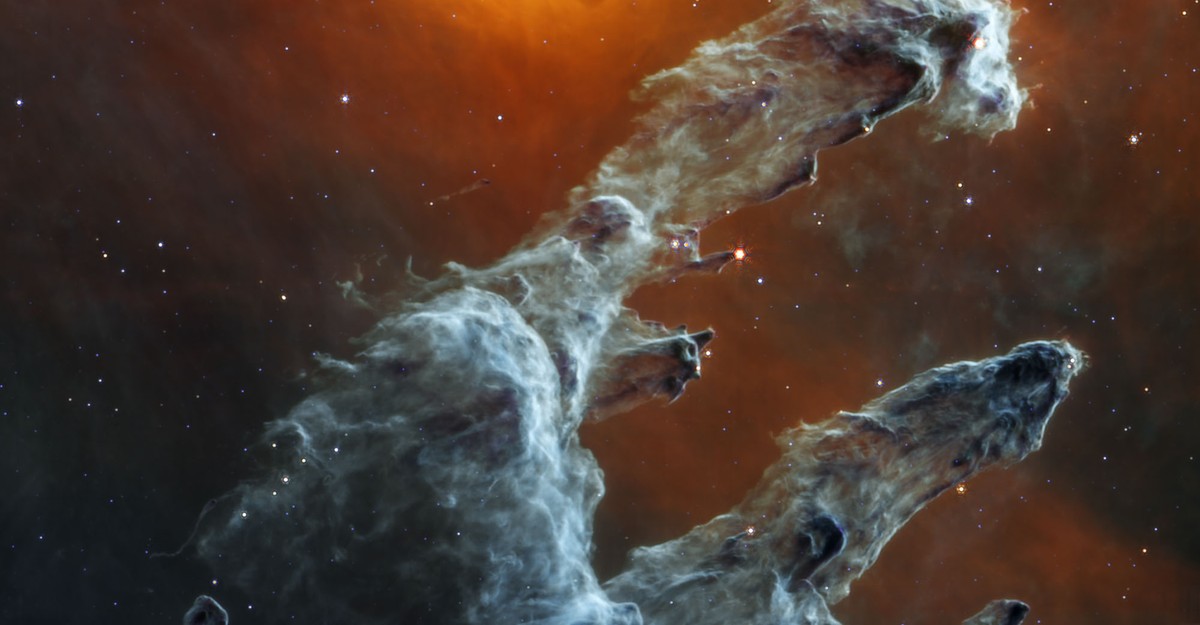
Day 25 of the 2025 Space Telescope Advent Calendar: Dusty Pillars. This is the James Webb Space Telescope’s mid-infrared view of the Pillars of Creation, trunks of interstellar gas and dust in the Eagle Nebula, about 7,000 light-years away. The mid-infrared view allows scientists to focus on the dense dust in the star-forming regions within these massive pillars. See the full advent calendar here. Merry Christmas! Source link

2025 Space Telescope Advent Calendar

2025 Space Telescope Advent Calendar

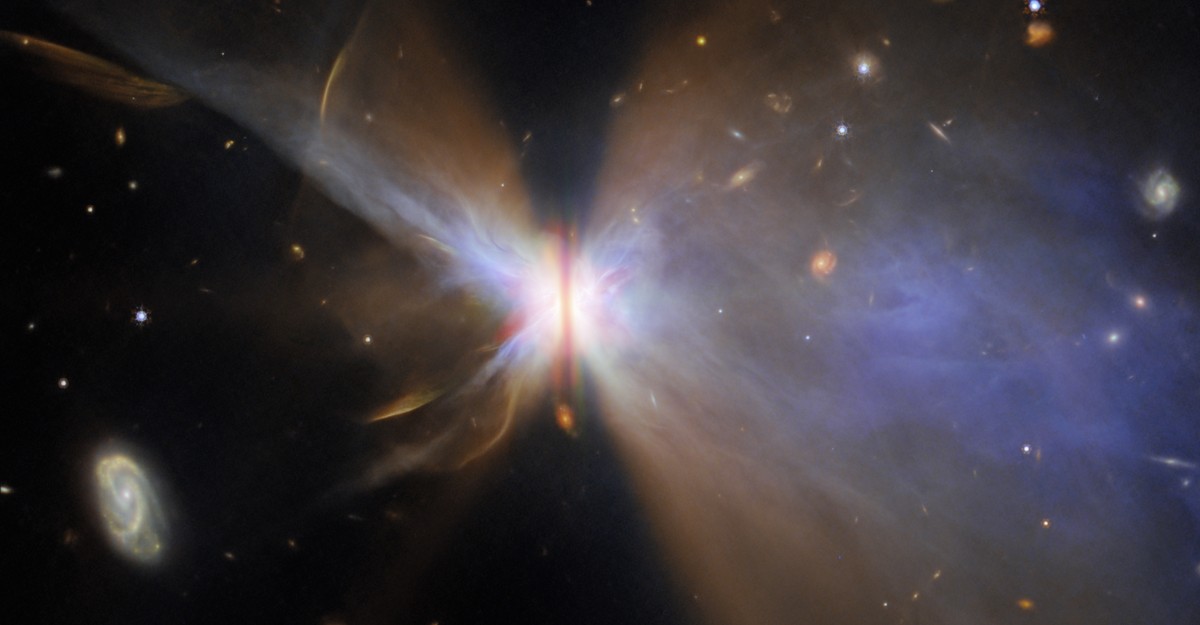
ESA / Webb, NASA & CSA, M. Villenave et al. A Cosmic Butterfly. In August, the James Webb Space Telescope provided this new view of IRAS 04302+2247, a planet-forming disk about 525 light-years away. This protoplanetary disk, a structure that is several times the diameter of our solar system, can be seen at center, encircling a protostar—a young star that is still gathering mass from its environment, possibly forming new planets. The dense disk of dusty gas blocks much of the protostar’s bright light, allowing a better look at the two gauzy nebulae on either side of the disk. These reflection nebulae, illuminated by the central protostar, give the star its nickname, the “Butterfly Star.” Source link