All posts tagged: Praise

In Praise of Adult Silliness

In Praise of Adult Silliness

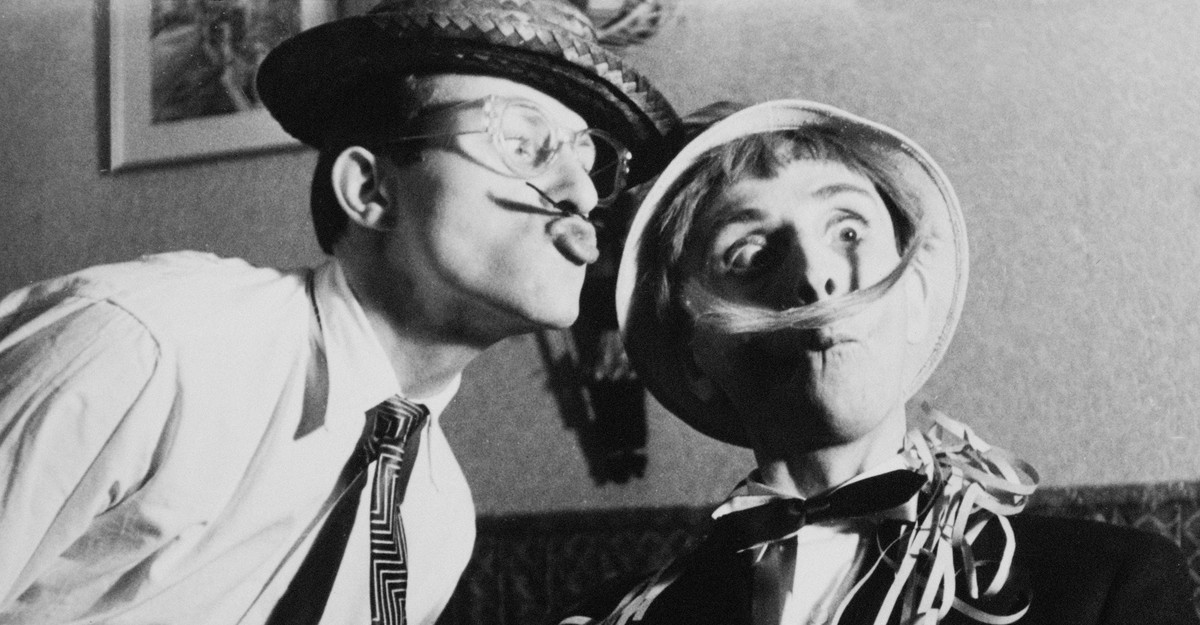
Silliness, in general, is not hard for me to come by: I have a toddler who is, as she declares often, a “silly person.” Still, the very pleasure I take in being silly with my child and her friends reveals to me its rarity in adult public life. Few social situations encourage or even allow unadulterated loopiness. In general, art made for adults tends to abide by this taboo. We get satire, scatological jokes, imitations, and absurdity, but rarely do we get silliness. A new play, Bocking, reminds us that this is a mistake. A wild, sometimes surreal, and ultimately tenderhearted farce that premiered last month at Baltimore Center Stage, Bocking does not suggest at the outset that it will be silly. It does, however, seem interested in provocation. It begins with a pair of glamorously behatted ladies moving through the crowd, thanking theatergoers for “coming to church.” When the show’s action begins, some of it is, indeed, a church service—but as a pastor delivers at the center of the stage a sermon that turns …

When Praise Is Not the Answer

When Praise Is Not the Answer

Praise. Universally good, right? Those of you who are fans of Alfie Kohn’s (2018) work know it isn’t. Praise comes with baggage. I (EB) was reminded of another downside by a young adult patient who sees praise as invalidating or dismissive of a person’s experience. What about this exchange? Person: “I can’t do it.” Response: “Yes, you can. You are so amazing and strong.” Generally, we would see the exchange above, especially if delivered with a warm and positive tone, as a wonderful thing to say. Is the message above an endorsement of the person’s strength? Or is the underlying message, “Stop your bellyaching and do it,” or “Since I don’t believe you can’t, I am not going to help you”? What about this exchange? Person: “I feel so ugly.” Response: “Don’t feel like that. You are beautiful.” This is a hard one. You would hardly expect a decent person to say, “Yeah, you are.” What if that is how the person truly feels? The response, though seemingly complimentary and kind, may actually be sending …

Praise be for holy sleuths

Praise be for holy sleuths

Add Grantchester to your watchlist How can there be so much murder in one otherwise quiet country parish? The answer, of course, is that there can’t. You may as well wonder how Grantchester’s vicar fits in any actual vicaring between all his crime-solving, or if any real-life cleric resembles a studio-system film star like Alphy, the ITV drama’s latest, and likely final, “Maigret of the manse”. Grantchester returns this week for series 10, with number 11 confirmed to be its last – sad news for a show that has always carried its profound messages deceptively lightly. For regardless of its comely setting, Grantchester goes a lot deeper than may at first appear. James Runcie, the creator of the original books, based his fictional vicar Sidney Chambers on the duties of his own father, a pre-Canterbury Robert Runcie, for whom “death did come to the door. There wasn’t any murder, but it was a life for my father that didn’t involve clocking off”. The author once told me he set out to write what he called …