All posts tagged: Muse

What does Meta’s Muse do that Spotify’s AI can’t?

What does Meta’s Muse do that Spotify’s AI can’t?

You can already ask Spotify’s AI to make you a playlist. But Meta’s new personal agent, Muse, wants to know what you’re doing with it. An example? Tell Muse about an upcoming road trip, and it can make a playlist inspired by your destination — then start playing it when it’s time to leave. That’s the idea behind Spotify’s connection to Muse. In a blog post Wednesday, the company said: “Your agent can play music on Spotify, save songs to your Library, build playlists, help you find a book or podcast.” You just have to link your Spotify account and ask. Credit: Screenshot/Spotify Newsroom And the road trip is only one example. Muse can pick up the podcast you left unfinished this morning, put your dinner playlist on a connected kitchen speaker, or find new songs and add them to a playlist. It can also turn your notes and daily briefings into a Personal Podcast saved to your Spotify Library. If you run every morning at 7 a.m., you can even ask it to start …
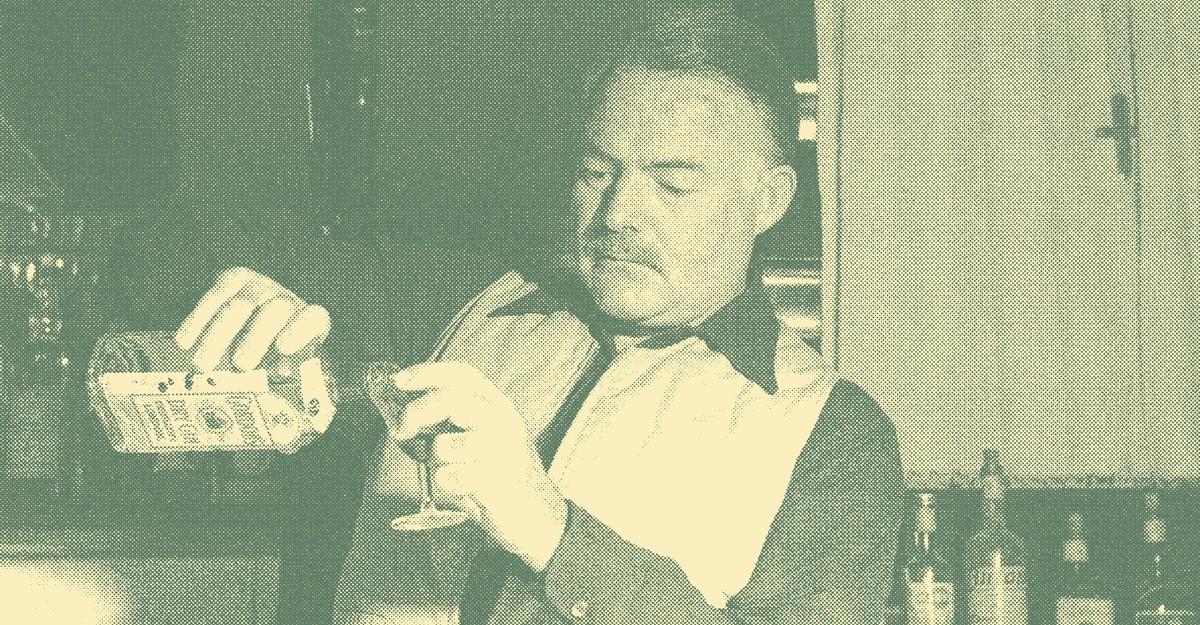
The Origins of Alcohol as a Muse

The Origins of Alcohol as a Muse

This is an edition of Time-Travel Thursdays, a journey through The Atlantic’s archives to contextualize the present. Sign up here. In 1973, a celebrated writer reportedly knocked on a new colleague’s door and held out a glass. “Pardon me,” he said by way of introduction. “I’m John Cheever. Could I borrow some scotch?” Raymond Carver did not share Cheever’s authorial renown at that time—that would come later. And he did not have scotch. He had only Smirnoff. In her 2013 book about writers and drinking, the British critic Olivia Laing describes how Cheever and Carver would drive to a nearby liquor store, stock up, and take alternating swigs of a bottle on their way to teach morning classes at the prestigious Iowa Writers’ Workshop. Stories about the use of excessive alcohol in the creative process can be found in The Atlantic’s earliest years. In 1868, for example, one article proposed that “artists, writers, and actors” were particularly prone to the “malady” of alcoholism “before they had any recognized place in the world.” Another noted that …

Reconnecting to the Muse

Reconnecting to the Muse

In addition to being a psychologist, I am a poet. I never consciously intend to write poems; the impulse just comes to me from time to time. Sometimes a line or a phrase of a poem comes into my head, or sometimes an idea or a framework for a whole poem. Then I sit down and start writing. It’s partly a process of crafting the raw material into a finished, structured whole and partly a process of remaining open, to allow other material to flow through and become part of the whole. If from anywhere, I would say that my poems come from “spiritual” states, moments of heightened awareness in which I feel connected to a deeper self, to nature, and to other people. I have noticed that I’m more likely to feel the impulse to write poems after a good meditation, after a quiet walk in the countryside, or just after a period of rest. This fits with research showing that meditation and other relaxed states of mind can enhance creativity. Many of the …