All posts tagged: it039s

I Just Learned Where Cumin Really Comes From, And It's Not A Seed

I Just Learned Where Cumin Really Comes From, And It's Not A Seed

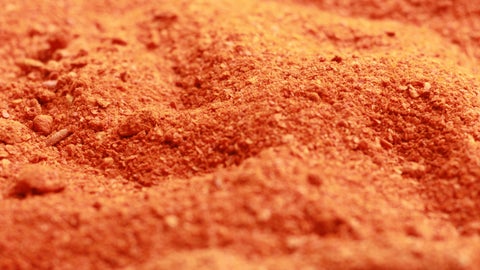
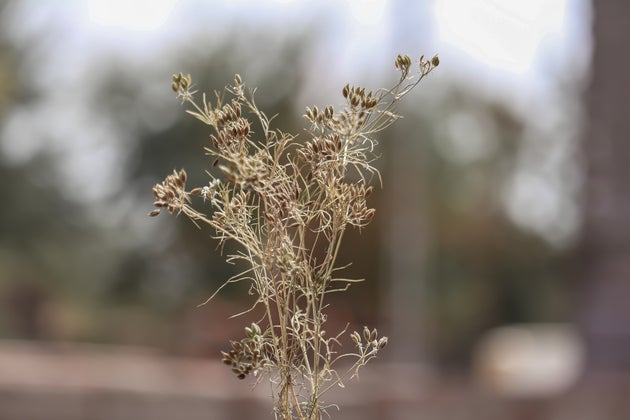
First, came the discovery that a lot of mass-produced paprika comes from a type of sweet bell pepper (Capsicum annuum), which offers next to no heat. Then, I found out that cloves are the dried buds and stems from clove tree branches and capers are actually flower buds, hand-picked, dried, salted, and sometimes brined before we eat them.  So, what about cumin, the deliciously earthy spice that’s key to dishes like falafel?  As it turns out, the spice starts its life as a fruit. What is cumin made from?  Perhaps surprisingly, the cumin plant (Cuminum cyminum) is part of the carrot and parsley family (Apiaceae). The parts that we use in cooking are its “seed-like” fruit, called schizocarps. A schizocarp is a type of dry fruit that is made up of lots of other little fruits. Once ripe, it splits up into many tiny segments (carpels), each containing a single seed. (By the way, pineapples are a kind of syncarp – a bunch of many flowers which fuse into a single fruit.)  The cumin’s schizocarps are shaped like long, …
I Baked Sweden's 30-Minute 'Sticky' Cake – It's Better Than Most Brownies

I Baked Sweden's 30-Minute 'Sticky' Cake – It's Better Than Most Brownies

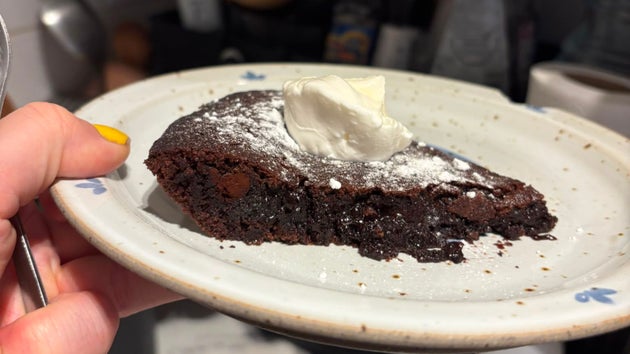
!function(n){if(!window.cnx){window.cnx={},window.cnx.cmd=[];var t=n.createElement(‘iframe’);t.display=’none’,t.onload=function(){var n=t.contentWindow.document,c=n.createElement(‘script’);c.src=”//cd.connatix.com/connatix.player.js”,c.setAttribute(‘async’,’1′),c.setAttribute(‘type’,’text/javascript’),n.body.appendChild(c)},n.head.appendChild(t)}}(document);(new Image()).src=”https://capi.connatix.com/tr/si?token=8b034f64-513c-4987-b16f-42d6008f7feb”;cnx.cmd.push(function(){cnx({“playerId”:”8b034f64-513c-4987-b16f-42d6008f7feb”,”mediaId”:”99490c2d-13c1-487f-a4a2-eccb588295ec”}).render(“6a4b8b5fe4b0a7adb6d682ac”);}); If you’ve ever heard me sound off about brownies, 1) I’m sorry and 2) you’ll know that I don’t see “fudgy vs cakey” as a valid debate.  IMO, the beloved bakes simply have to be gooey. Otherwise, they’re just a chocolate tray bake.  But I wasn’t thinking about brownies at all when I discovered Sweden’s kladdkaka, or “chocolate sticky cake”. Instead, I was searching for quick, empty-cupboard cake recipes that would go from mixing bowl to mouth in less than an hour.  The fact that kladdkaka’s runny base and shatteringly crisp top ended up delivering the perfect brownie texture with far fewer ingredients and a much shorter cook time was just a bonus.  Kladdkaka, Sweden’s “sticky” chocolate cake What is kladdkaka?  Sometimes described as Sweden’s “most famous” or “most beloved” bakes, it’s a five-ingredient “sticky” chocolate cake with a molten-style base. The texture is somewhere between a brownie and a chocolate lava cake. You’ll need cocoa, eggs, butter, flour, and sugar to make it. Kladdkaka takes about 15 minutes to bake …

'When you retire, it's challenging'

'When you retire, it's challenging'

What’s the view from your sofa? The TV is on the wall. I’ve got a big sofa, but I’ve got a bizarre habit of being all squidged up right at the end. Then I wonder why my neck hurts… What do you watch when you’re all squidged up? I started the second series of Running Point and I just watched The Other Bennet Sister, which was really cool. I’m a huge fan of Peaky Blinders; I’ve seen The Immortal Man five times. I tend to binge watch, so I could never start a series when I was in the England camp because I knew I’d end up sitting in my room till 4am. But if I get annoyed with a series, I’ll stop immediately. Even if you’re near the end of the whole show? Yes! I stopped watching The Great when Peter III [Nicholas Hoult] died in a frozen lake. I like my happy endings and his death ruined that possibility! Are you looking forward to this year’s World Cup? I can’t wait. I light …

I Just Learned What Capers Are Made From And It's Not What You'd Think

I Just Learned What Capers Are Made From And It's Not What You'd Think

!function(n){if(!window.cnx){window.cnx={},window.cnx.cmd=[];var t=n.createElement(‘iframe’);t.display=’none’,t.onload=function(){var n=t.contentWindow.document,c=n.createElement(‘script’);c.src=”//cd.connatix.com/connatix.player.js”,c.setAttribute(‘async’,’1′),c.setAttribute(‘type’,’text/javascript’),n.body.appendChild(c)},n.head.appendChild(t)}}(document);(new Image()).src=”https://capi.connatix.com/tr/si?token=8b034f64-513c-4987-b16f-42d6008f7feb”;cnx.cmd.push(function(){cnx({“playerId”:”8b034f64-513c-4987-b16f-42d6008f7feb”,”mediaId”:”4c2615b8-caae-4d5a-bab7-30953fac6785″}).render(“6a22913de4b0a18aef0b66f1”);}); We’ve written before at HuffPost UK about the fact that some paprika is made from a type of bell pepper called Capsicum annuum (more traditional kinds, however, usually contain Aleppo or various Hungarian varieties, among others). That made me wonder about the rest of the spices, condiments, and pickles in my cupboard.  This includes the small, briny flavour bombs, capers – which, as it turns out, are actually baby flowers. What are capers made from?  They’re made from the flower buds of the Mediterranean Capparis bush (yes, really). The small, unbloomed flowers are picked by hand, which is why they can run a little dear. Then, they’re dried, salted and/or pickled. These closed buds offer a nook-and-cranny-rich surface for salt to seep into, making the end product powerfully saline. But that’s not the only transformation that takes place: when capers are brined, salted, or pickled, they release mustard oil (glucocapparin), leading to their “intense” flavour. The University of Wisconsin-Madison added that “This enzymatic reaction leads to the formation of rutin, often seen as …

Do We Still Need To Take Vitamin D Now It's Sunnier?

Do We Still Need To Take Vitamin D Now It's Sunnier?

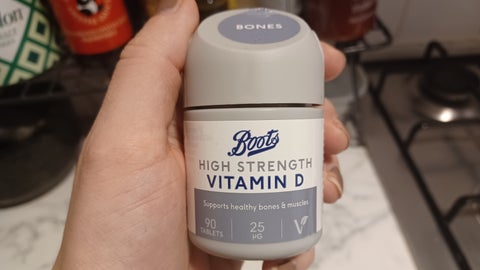
!function(n){if(!window.cnx){window.cnx={},window.cnx.cmd=[];var t=n.createElement(‘iframe’);t.display=’none’,t.onload=function(){var n=t.contentWindow.document,c=n.createElement(‘script’);c.src=”//cd.connatix.com/connatix.player.js”,c.setAttribute(‘async’,’1′),c.setAttribute(‘type’,’text/javascript’),n.body.appendChild(c)},n.head.appendChild(t)}}(document);(new Image()).src=”https://capi.connatix.com/tr/si?token=8b034f64-513c-4987-b16f-42d6008f7feb”;cnx.cmd.push(function(){cnx({“playerId”:”8b034f64-513c-4987-b16f-42d6008f7feb”,”mediaId”:”3c21f4be-9142-4c83-a2bf-3cbd316eb702″}).render(“69ce3634e4b0a891ea43ad25”);}); According to the NHS, most adults should consider taking vitamin D supplements from October to early March.  But now that the Easter eggs have been unwrapped and April Fool’s Day has passed, is it time to put the supplements down?  Not always, said Kyle Crowley, a chief product officer and nutritionist at Protein Works.  Who may still need vitamin D supplements in spring? “It’s suggested that optimal exposure to sunlight is between five and 30 minutes a day. Therefore, if you don’t hit these requirements each day, you may need to consider supplementing,” said Crowley. That rises to 25 minutes a day for people with darker skin tones. “In fact, studies show that nearly half of UK adults have below-optimal levels of vitamin D. Most surprisingly, adults aged 18–29 have the lowest average. So, if you’re a student studying indoors or working all day indoors, this lifestyle will limit your daily exposure and taking vitamin D would be recommended.”  The NHS said that “People at high risk of not getting enough vitamin D, …

'Chick lit? It's degrading'

'Chick lit? It's degrading'

Add The Walsh Sisters to your watchlist The award-winning Irish author Marian Keyes has sold millions of books in an internationally acclaimed career, but still behaves as if she has everything to prove. A few years back she was invited to be on the BBC arts programme Imagine. Her reaction? “You’ve rung me by mistake, it’s Roddy Doyle you want.” And despite the fact that two of her novels have now been adapted into a six-part series, The Walsh Sisters – a cracking, tragicomic saga of five sisters living it large in Dublin – she still doesn’t think she deserves it. “Well, it’s 30 years since my first book was published, and things have been suggested all the time, and nothing ever gets made, and it’s the hope that kills you,” she says. “So I just never bothered expecting it, because I felt there was no point.” When I ask why she’s so down on herself, she widens her green eyes and looks directly at me. “Because I write popular fiction. People were so keen to …