All posts tagged: Healing

Lessons on Healing 25 Years after 9/11

Lessons on Healing 25 Years after 9/11

Contributing authors: Cherie Castellano, CSW is Vice President for Survivor Services at TAPS and was a member of the New York Emergency Services 9/11 Delegation to England and Ireland Lisa Zucker, MSW is Senior Director of Education at TAPS Bonnie Carroll is the Founder and President of the Tragedy Assistance Program for Survivors (TAPS) and recipient of the Presidential Medal of Freedom from President Barack Obama in 2015 George S. Everly, Jr., PhD, MA is on the faculty of The Johns Hopkins School of Medicine and served on the NYPD and Columbia University initiatives at Ground Zero post 9/11 The pain of loss surely extends to time immemorial. It is safe to say that the experience of grief is a universal human experience extending far prior to written records. Societal and religious traditions of lamentation are legion. The earliest written records in Western civilization are replete with mentions of grief. Evidence from the Old Kingdom of Egypt (2600 BC) suggests the mourning of a loss was a public experience involving great pomp and circumstance, especially …

What Trauma Healing Looks Like

What Trauma Healing Looks Like

This is the concluding post in a 3-part series. Decades of research into human resilience after potentially traumatic events have shown repeatedly that two-thirds of us regain our resilience without any interventions required. No matter the type, duration, or severity of potentially traumatic events, we are twice as likely to return to resilient functioning as we are to require extended support. In part 2 of this series, we explored the flexibility mindset that resilience researchers have identified in the 66.6 percent of us who regain our resilience after traumatizing events: “At the core of the mindset are three interrelated beliefs: optimism about the future, confidence in our ability to cope, and a willingness to think about a threat as a challenge” (Bonanno, 2021). In part 2, I shared my concern that much of today’s trauma-healing industry, with its outdated concepts and neuromyths, tends to interfere with all three of these protective beliefs. However, the flexibility mindset can be cultivated, and George Bonanno’s book, The End of Trauma (2024), focuses on this mindset and the related …

An Experiment in Healing Attention

An Experiment in Healing Attention

Subscribe here: Apple Podcasts | Spotify | YouTube | Pocket Casts Of all the potential effects of using smartphones, the one that seems to inspire the most anxiety is what scrolling could be doing to people’s attention. On social media (ironically), many people express a desire to “heal” their attention spans from the damage they feel technology has done. They’re picking up on something real. In one 2025 study, researchers found that blocking the internet on people’s phones for two weeks led to improvements in sustained attention equivalent to reversing 10 years of cognitive decline. In this final episode of How to Touch Grass, host Julie Beck embarks on an experiment to see if she can heal her own attention span. Beck and co-host Natalie Brennan also hear from Jenny Odell, the author of How to Do Nothing and Saving Time, about how Odell’s antagonism for her phone actually helped her make peace with it, and how nature can teach us to pay deeper attention to the world around us. The following is a transcript …

Physician: The outdated mindset that gets in the way of our healing

Physician: The outdated mindset that gets in the way of our healing

Physician Giulia Enders spent years studying the gut before realizing no organ works alone. Here, she walks through 5 body parts — the lung, the immune system, the skin, the muscles, and the brain — and what each one reveals about how we work, heal, and recover. This video Physician: The outdated mindset that gets in the way of our healing is featured on Big Think. Source link

Bald eagle believed to be Jackie healing in Ojai

Bald eagle believed to be Jackie healing in Ojai

Get the Popular Science daily newsletter💡 Breakthroughs, discoveries, and DIY tips sent six days a week. By signing up, you confirm you are 16+, will receive newsletters and promotional content and agree to our Terms of Use and acknowledge the data practices in our Privacy Policy. You may unsubscribe at any time. The Ojai Raptor Center in Southern California is currently caring for Adult Bald Eagle 26-519, who is believed to be the internet-famous eagle mom named Jackie. On July 18, the San Dimas Raptor Rescue found the eagle weak, vulnerable, and unable to fly. The eagle was transferred to and is being evaluated by the Ojai Raptor Center’s veterinary team.  The bird is underweight but alert, and is even perching and eating with assistance. Test results should come back within the next few days to confirm or rule out any suspected issues. “Wildlife medicine is different from working with domestic animals in many ways. Our patients don’t have owners or caretakers who can tell us what happened to them or what symptoms they’ve been …

‘So healing’: can singing Miley Cyrus with strangers cure our spiritual malaise?

‘So healing’: can singing Miley Cyrus with strangers cure our spiritual malaise?

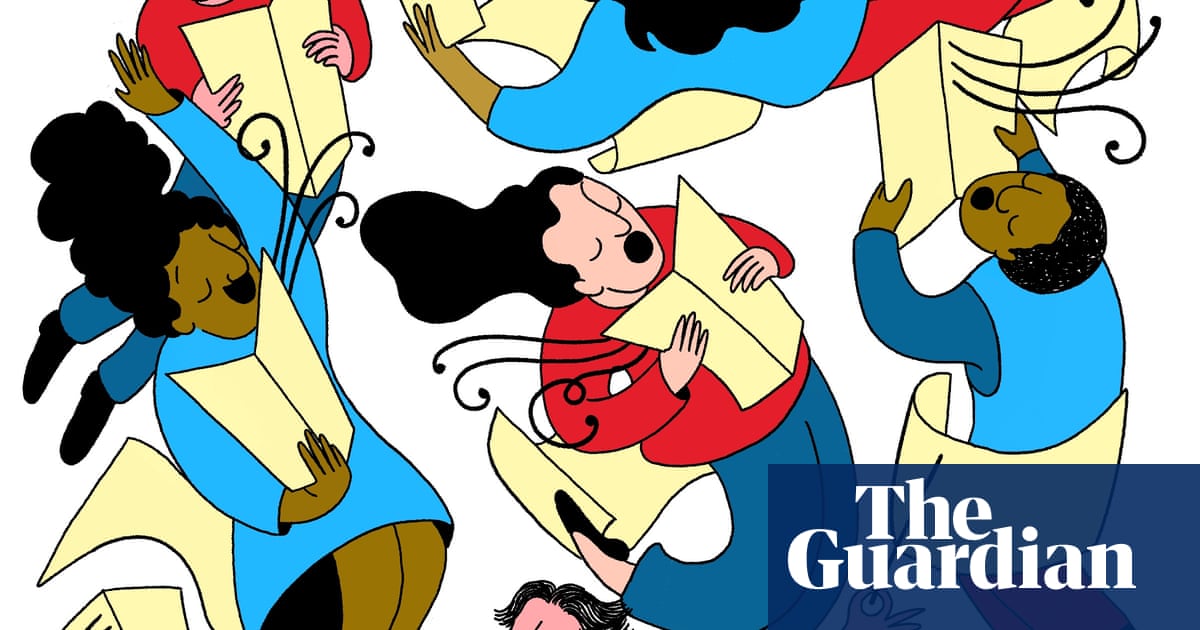
We met in a former synagogue, a vast room with hardwood floors where the sound could echo freely. All were strangers, many former choir nerds, united by a love for group singing. Our goal was to learn and perform, in a single day, a classic of our time: a song from the Hannah Montana movie. The event, near downtown Los Angeles, was a one-day choir hosted by the Gaia Music Collective – a three-hour gathering where more than 100 people rehearsed a choral arrangement of the song and sang it three times, with ourselves as the only audience. “There’s just something so ineffably spiritual about singing with such a large group of people,” said Kristen West, 29. “I think they call it collective effervescence. It’s basically what makes church so magical.” Gaia Music Collective members rehearse One-day choirs are growing in popularity, and not just in Los Angeles. In New York, Gaia, which launched in a Brooklyn apartment as an effort to create connection during the pandemic, has brought thousands of people together since. Similar …

Radical Healing: From the Clinic to the Classroom

Radical Healing: From the Clinic to the Classroom

Post by Janet Gu, Saleha Mian, Soe Young Lee, and Michael A. Medina (Boston University). For youth of color, psychological well-being is often a community effort. Whether they live in an ethnic enclave or attend a racially diverse school, a young person’s emotional health may depend largely on their engagement with the communities around them. Yet supporting this process may require educators to deviate from traditional teaching methods that focus primarily on avoiding discrimination or reducing harm. While necessary, these approaches rarely envision schools as sites of empowerment, agency, and joy. A potentially more positive alternative for educators may already exist in the counseling practice of radical healing. What Is Radical Healing? The radical healing framework defines psychological well-being and community advocacy as complementary (French et al., 2020). Initially applied in counseling psychology, this practice encourages clinical practitioners to guide youth in drawing strength, support, and well-being from their social connections during times of cultural trauma. For youth of color, this trauma can take many forms: experiences of discrimination, exposure to negative stereotypes, erasure or …

Hypnosis, Healing, and Consciousness

Hypnosis, Healing, and Consciousness

In India during the 1840s, a Scottish doctor named James Esdaile was frequently visited by men suffering from enormous tumours in the scrotum, caused by mosquito bites. The operation to remove the tumours was so painful that men would often postpone it for years. Esdaile had learned about hypnotism (or mesmerism, as it was usually referred to then) and decided to try the technique as a way of relaxing patients in collaboration with local Hindu and Muslim mesmerisers. To his surprise, he found that not only did the patients feel relaxed, but they also felt no pain during operations. Esdaile also noted that patients didn’t seem to display physiological signs of pain, such as changes to pulse rate and pupil size. Since then, evidence has accumulated showing that hypnosis can have an analgesic effect. A 2020 meta-analysis of 45 trials of the use of hypnosis for clinical pain found that 73 percent of hypnotised people experienced less pain than control groups (who didn’t have any pain interventions). Research over the past 20 years at the …

The Healing Power of Poetry

The Healing Power of Poetry

Poetry therapy is often used nowadays in mental health settings for healing and growth. Patients read and write poetry to find new ways of being mindful or relaxed. Poetry can point to the work they can do on themselves. Poetry can open them to new ways of coping. A poem can lead safely into realms of the unconscious that might be frightening ordinarily. Poems open the imagination to see alternatives to the status quo or to chronic suffering. In fact, every poem takes us into a parallel universe. The realization that poetry has healing power is ancient in the human psyche. Shamans intoned poems as prayers that could bring help to the tribe or to individuals. In Egypt, as early as the fourth millennium B.C., poetry was inscribed on papyrus, dissolved in a solution, and ingested by patients so that their illness might subside. We recall in the Hebrew Bible that David soothed the depression of King Saul with his singing of poems in the form of psalms. A Roman physician, Soranus, in the first …

Why You Can’t Rush Healing

Why You Can’t Rush Healing

I still remember the computer lab in undergrad, rows of bulky monitors, the hum of machines, and the quiet intensity that filled the room whenever we opened Adobe Illustrator. It was the late ’90s and early 2000s. We were using clunky mice and overly sensitive trackpads, trying to master Bézier curves with hands that cramped from the effort. What stands out most is not the software itself, but the people. Emerging adults, my peers, and even a few older adults would become visibly overwhelmed. I watched frustration turn into tears as they struggled to make a simple curve behave the way they intended. Illustrator demanded precision, patience, and a kind of embodied coordination that many of us had not yet developed. It was not just about learning a program. It was about tolerating the discomfort of not being good at something right away. At the time, I did not recognize this as anything more than a difficult class. I did not imagine myself becoming a therapist. But looking back, those moments, watching people hit their …