All posts tagged: glass

Through the Looking Glass | Leanne Shapton

Through the Looking Glass | Leanne Shapton

This jam-packed, supersized newsletter covers the art and illustrations in the May 14, May 28, June 11, and June 25 issues of the Review. It’s brought to you by Lewis Carroll’s Alice: The Photographs, Books, Papers and Personal Effects of Alice Liddell and Her Family, the catalog for a 2001 Sotheby’s auction that I recently found in my ex-husband’s basement, where I had left it many years ago after using it to research an old project. I enjoy reading history via auction catalogs, and, paging through this one anew, I was struck by a number of details I’d forgotten or missed the first time around. Alice’s lorgnettes and letters; that her sister Lorina Liddell was called “Ina”; that part of the lawn of the Deanery Garden where Carroll and Alice first met was a grass tennis court; that Alice was taught to draw by John Ruskin; and that she received a pearl horseshoe from Prince Leopold as a wedding present. The most interesting objects in the catalog, though, were Lewis Carroll’s glass negatives. Seeing those …


Too Close to Home by Seraphina Nova Glass

Too Close to Home by Seraphina Nova Glass

Seraphina Nova Glass returns with a three-POV thriller set in a lakefront community where a Labor Day car bomb cracks open every polite secret in the neighborhood. Sharp dialogue, a strong front half, and rich motherhood stakes carry the book. The back third gets crowded, but the voice work and book-club bait are real. The post Too Close to Home by Seraphina Nova Glass appeared first on The Bookish Elf. Source link

Dalia Stasevska conducts Philip Glass’ ‘Akhnaten’ at L.A. Opera

Dalia Stasevska conducts Philip Glass’ ‘Akhnaten’ at L.A. Opera

When Dalia Stasevska heard opera music for the first time, it was a moment of profound self-revelation. She was 13, growing up in the factory town of Tampere in the south of Finland, and her school librarian gave her a CD of Puccini’s “Madama Butterfly” along with a translation of its Italian libretto. “As a teenage girl, this dramatic story touched my soul,” Stasevska says, adding that she still remembers the experience and thinking, “ ‘This music understands me, this is exactly how I feel.’ And that was…when I knew that I wanted to become a musician.” Stasevska recently stepped down as the chief conductor of Finland’s Lahti Symphony Orchestra and is a prodigious conductor of orchestral music in all forms. A busy guest baton with companies around the globe, she will make her L.A. Opera debut this Saturday with a production of “Akhnaten” by Philip Glass, running through late March. John Holiday in the title role of L.A. Opera’s 2026 production of “Akhnaten.” (Cory Weaver) The seminal work by Glass lands at L.A. Opera …

Consciousness… a Computer or a Magnifying Glass?

Consciousness… a Computer or a Magnifying Glass?

ID the Future host Andrew McDiarmid has been talking to psychologist Alexander Batthyány and neurosurgeon Michael Egnor about a deep mystery of the human mind: the way people deep in dementia can suddenly become lucid just before dying. Their minds break free from the years-long limitations of the brain. But how? Some sources offer “explanations” that wallpaper over the gap in our understanding. Shortage of oxygen, as discussed in the second video, is one: McDiarmid: Now, Mike, some have suggested that things like low oxygen or high carbon dioxide might explain episodes of clarity near death. As a neurosurgeon who’s treated those conditions, how convincing is that? [00:48] Egnor: It’s not convincing at all. I mean, I’ve seen thousands of patients who had cerebral hypoxia, low oxygen in the brain, and hypercarbia, which is high CO2 in the blood. And these can all happen as one’s heart and lungs and brain begin to fail. And there can be a variety of effects of these. But what they never do is, they never make you more …

Why Cola Tastes Different In Glass Bottles

Why Cola Tastes Different In Glass Bottles

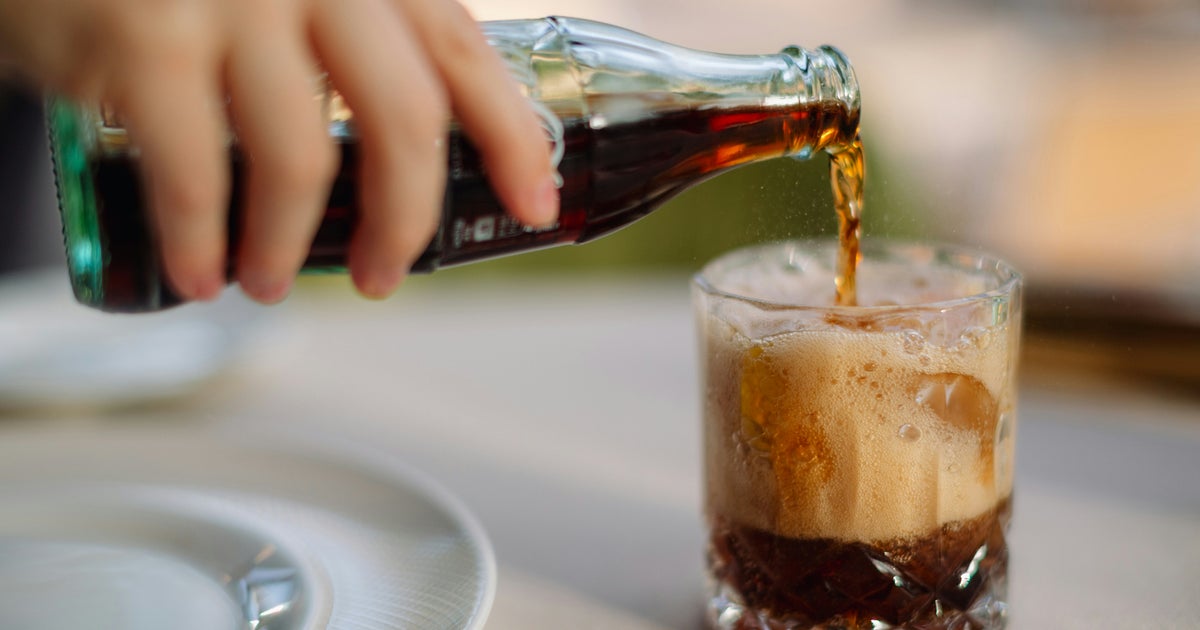
Did you know cola is made with a kola nut? The ingredient, which is from Africa, is where the fizzy drink gets its caffeine from. Of course, some cola brands keep the other parts of their recipe top-secret. But why do beverages made by the same company seem to taste different in a glass bottle, can, and plastic bottle? Well, according to Rowland King, a director at the glass bottles supplier, Quality Bottles, there’s real science behind the difference. Why does cola taste different in a glass bottle vs a can or plastic bottle? First, there’s the chemistry of each material to consider. “Glass is chemically inert and non-porous, which means it doesn’t react with the drink or absorb flavour compounds,” King said. “That helps keep the taste exactly as intended from the moment it’s filled to the moment it’s opened”. Some experts think the polymer lining of tinned fizzy drinks can lead to a milder taste, while it’s possible that acetaldehyde in plastic bottles could affect the flavour. And carbonation (bubbles) matter, too, King …

Scottish distillery wants to bottle whisky in aluminum, not glass

Scottish distillery wants to bottle whisky in aluminum, not glass

Get the Popular Science daily newsletter💡 Breakthroughs, discoveries, and DIY tips sent six days a week. Scotland’s smallest whisky distillery also hopes to be one of the most innovative in time for its first batch’s debut. But with only around two years until Sterling Distillery’s inaugural liquor matures, it remains to be seen if the company can ditch traditional glass bottles for a material associated more with cheap beer than fine whisky—aluminum. Any serious distillery uses glass bottles for the good stuff. The reason is as much about aesthetics as it is about chemistry. From a psychological standpoint, the hefty, translucent glass implies the painstaking artisanal craft required to produce an elevated batch of whisky (the “whiskey” spelling is generally only used by Irish and American distillers). The material also is guaranteed to not interact with a whisky’s delicate flavor profile, that can only be achieved after years or even decades of aging. There are serious sustainability problems with the industry’s reliance on glass. Most glass manufacturing still requires vast amounts of energy at a …

PFAS-free versatile coatings for metals, plastics and glass

PFAS-free versatile coatings for metals, plastics and glass

Nanize patented technology creates durable, functional PFAS-free coatings that are fully cross-linked and covalently bound to the substrate in under one minute at temperatures below 70°C. Nanize have developed patented coating and curing technology for hydrolysing polysilazanes containing functional nano-additives to create glass-like, fully cross-linked and covalently bound surfaces. Our PFAS-free solutions for a wide range of applications deliver unmatched durability, ultra-low friction, and sub-minute curing at temperatures below 70°C without catalysts. Coatings without compromise proven by testing Having made over 20,000 individual tests, extensive lab validation of Nanize coatings has been undertaken, including by FTIR (Fourier-transform infrared spectroscopy), to verify polymer crosslinking, hard curing, durability and performance. Test results confirm: Full curing in < 1 minute at temperatures below 70°C No catalyst required – minimising process complexity Dense crosslinked network confirmed by FTIR Proven covalent substrate bonding across a broad range of metals, plastics and glass Nanize ultra-rapidly cured polysilazane coatings are proven to create hard, durable, glass-like and dense 3-dimensional Si-O-Si dominant cross-linked structures that are covalently bonded to the substrate. Nanize: Coating …