All posts tagged: Genius

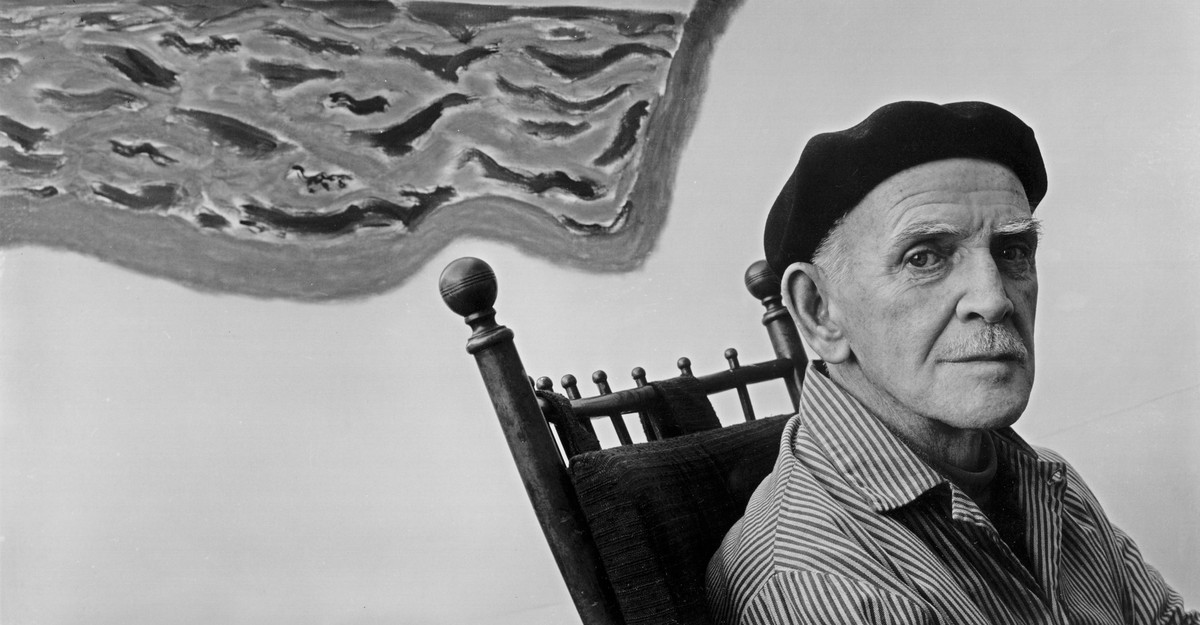
Milton Avery, the Genius Colorist Who Shaped Rothko

Milton Avery, the Genius Colorist Who Shaped Rothko

The evolution of European modern art can be explained as a story of susceptible young people falling under others’ spells and then asking, What can I do with this? How can I convert it to my purposes? What’s remarkable is how often the main chapters of this story have unfolded in coastal or mountain retreats. Think of Claude Monet on the Normandy coast, wrestling with the influence of his mentor Eugène Boudin. Or Henri Matisse staying in Saint-Tropez with his mentor Paul Signac, before breaking with Signac’s neo-impressionist style and co-inventing fauvism. Or Pablo Picasso, goaded into radicalism by the latest bizarre creations of Matisse, retreating to the Spanish mountain village of Gósol and, mere months later, beginning work on his proto-cubist masterpiece, Les Demoiselles d’Avignon. All of these key episodes happened in agreeable resorts, seaside ports, and villages, far from the sophisticated cities assumed to have been the cauldrons of modernism. Modern art in America is no different. Its story can scarcely be told without reference to artists summering on the Atlantic Coast, including …

Einstein wasn’t a “lone genius” after all

Einstein wasn’t a “lone genius” after all

Perhaps the most commonly told myth in all of science is that of the lone genius. The blueprint for it goes something like this. Once upon a time in history, someone with a towering intellect but no formal training wades into a field that’s new to them for the first time. Upon considering the field’s issues, they immediately see things that no one else has ever seen before. With just a little bit of hard work, they find solutions to puzzles that have stymied all of the greatest minds in the field that approached those problems previously. They wind up revolutionizing their field, and the world is never the same. It leaves one with a strong take-home message: that if you were that inexperienced person with a similarly towering intellect, and you had the good fortune of coming into a field just as that legend did, then you too could make those great breakthroughs that the world’s greatest professionals are all currently missing. That’s the myth we frequently tell ourselves about Albert Einstein. That he, …

Rick Rubin, Kant, and the Tasteful Genius

Rick Rubin, Kant, and the Tasteful Genius

What does it mean to be a creative genius? The following clip is from a 2023 60 Minutes interview with legendary music producer Rick Rubin. In it, Rubin describes his creative process and provides an excellent occasion to discuss the relationship of genius and taste in Immanuel Kant’s philosophy of art. In my Philosophy and the Arts course, we spend a significant amount of time reading Kant’s Critique of Judgment. I show this video on the day we discuss Kant’s theory of artistic genius. At this point, students are familiar with Kant’s account of taste, the ability to recognize and appreciate the aesthetic quality of beautiful art. In §46, Kant defines genius as “the inborn predisposition of the mind through which nature gives the rule to art” (5:307). Because beautiful art cannot be created according to fixed rules, the artistic genius is a kind of channel for the way beauty appears spontaneously in nature. (My slideshow includes Angelus Silesius’s “Die Rose” on this point: “The rose is without why.”) For Kant, genius has a talent …

Victor Hugo’s lesser-known genius: Decoration

Victor Hugo’s lesser-known genius: Decoration

The memory remained etched in her mind. At the age of seven, Marie Hugo took the boat with her parents from Weymouth, England, to discover the house of her illustrious ancestor, her great-great-grandfather, on the Anglo-Norman island of Guernsey, a strip of land battered by the ocean off the French coast. Victor Hugo lived there in exile from 1855 to 1870, and his home, now transformed into a museum, became part of the family’s heritage. At the time, Marie was struck by the two oak trees framing the double doors and by the French flag waving in the wind. About 50 years later, after becoming a visual artist, she devoted a book to the house, titled Hauteville House, Victor Hugo décorateur (“Hauteville House, Victor Hugo the Decorator,” 2016, untranslated), in collaboration with her brother Jean-Baptiste Hugo, a photographer, and her daughter Laura Hugo, an editor. The book unveils the author’s lesser-known talent for interior design. This is also the central theme of the exhibition, running until April 26 at his former residence on Place des …