All posts tagged: False

A False Pretense of Judicial Modesty

A False Pretense of Judicial Modesty

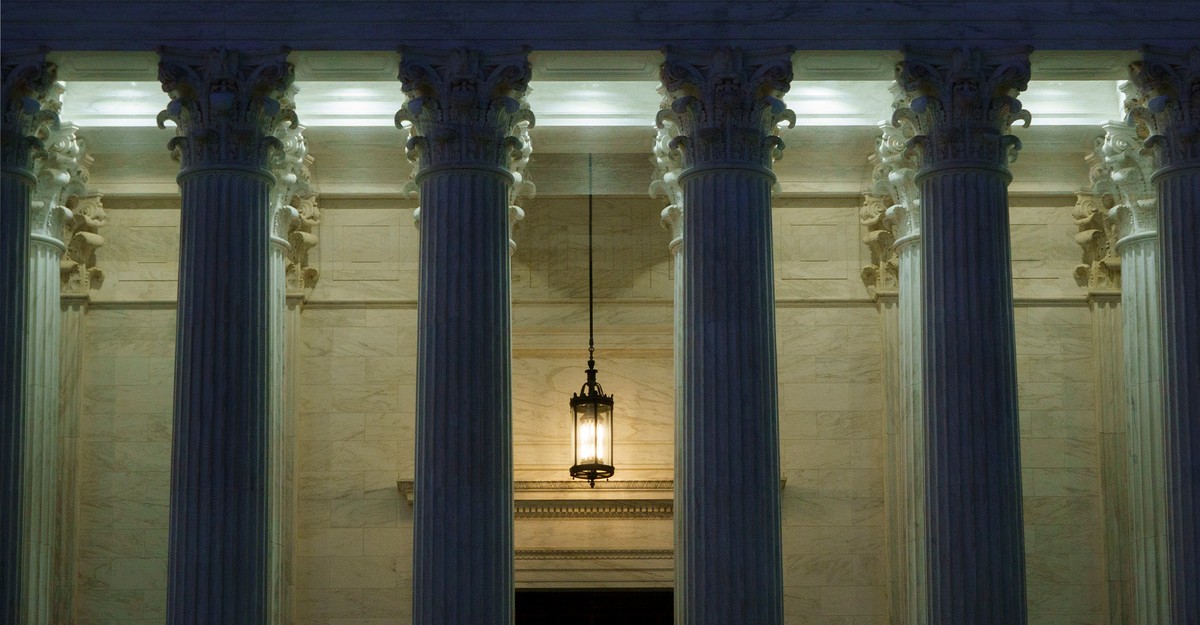
“As societies grow decadent, the language grows decadent, too,” Gore Vidal wrote in 1986. “Words are used to disguise, not to illuminate, action: you liberate a city by destroying it.” In recent days, the Court’s conservatives have issued one ambitious opinion after another. They expanded President Trump’s powers to fire independent regulators, rescind deportation protections, and turn away asylum seekers; weakened state authority to enact gun control; narrowed the ability of religious minorities to vindicate their free-exercise rights; eroded the due-process rights of green-card holders; and handed big wins to multinational oil and tech companies. Yet anyone not paying close attention would likely miss the Court’s radicalism. The justices’ language in most cases obscured their opinions’ effects; the word decadent fits. Using invocations of precedent to disguise rather than illuminate, the conservative justices pretend to preserve what they are overturning. This duality—sweeping remaking of law presented as continuity—has become a hallmark of the Roberts Court. Precedent matters. The idea is so axiomatic to the legal system that stating this risks condescension. But the basics are …

The false urgency myth, and why we confuse busyness with importance

The false urgency myth, and why we confuse busyness with importance

Excerpted from Anchored, Aligned, Accountable: A Framework for Transcending Bullsh*t and Transforming Our Lives and Work by Aiko Bethea. Published by Random House. Copyright © 2026. All rights reserved. You may have heard about our culture’s or workplace leaders’ strong action bias. We like to do things, not reflect on them. But a false sense of urgency is different, and the distinction is important. For one, action bias is not always bad — sometimes things genuinely need to get done, not waffled over. Project timelines are real, and deadlines and milestones are meaningful. If you don’t get that tax return in on April 15, the IRS is gonna want a word, right? But a false sense of urgency is never a positive, because it’s false. It’s built on empty ideas like “the earlier the better, the faster the better, the sooner the better.” None of these are honest declarations or conclusions drawn based on what a project or goal might actually need. In many ways, they’re grounded in a scarcity mindset about time. The result …

Why False Accusations Are So Disturbing

Why False Accusations Are So Disturbing

There are lies we find acceptable, depending on the circumstances. We may lie to protect someone, to spare a person’s feelings, to bypass complexity in explaining a difficult incident, or to avoid inconvenience. But only one kind of lie is momentous enough to be expressly forbidden in the Ten Commandments: Thou shalt not bear false witness. This post focuses on professional and personal false accusations in our daily lives, revealing general psychological principles that may apply to other, more fraught and complicated circumstances—in the justice system, in divorce confrontations, and with bullying. Why are false accusations so disturbing, and what can we do if we are falsely accused? The Just-World Hypothesis Many of us hold the sustaining belief that the world is just and that people get what they deserve. Some of us accept this belief explicitly. Most accept it implicitly. When we see others experiencing misfortune, our belief in a just world reduces anxiety by providing at least a partial explanation. In doing so, it benefits our own psychological well-being. But the just-world hypothesis …