All posts tagged: Classical

Shostakovich Symphony No 8 album review – composer’s cry of despair in a remarkable and resonant new recording

Shostakovich Symphony No 8 album review – composer’s cry of despair in a remarkable and resonant new recording

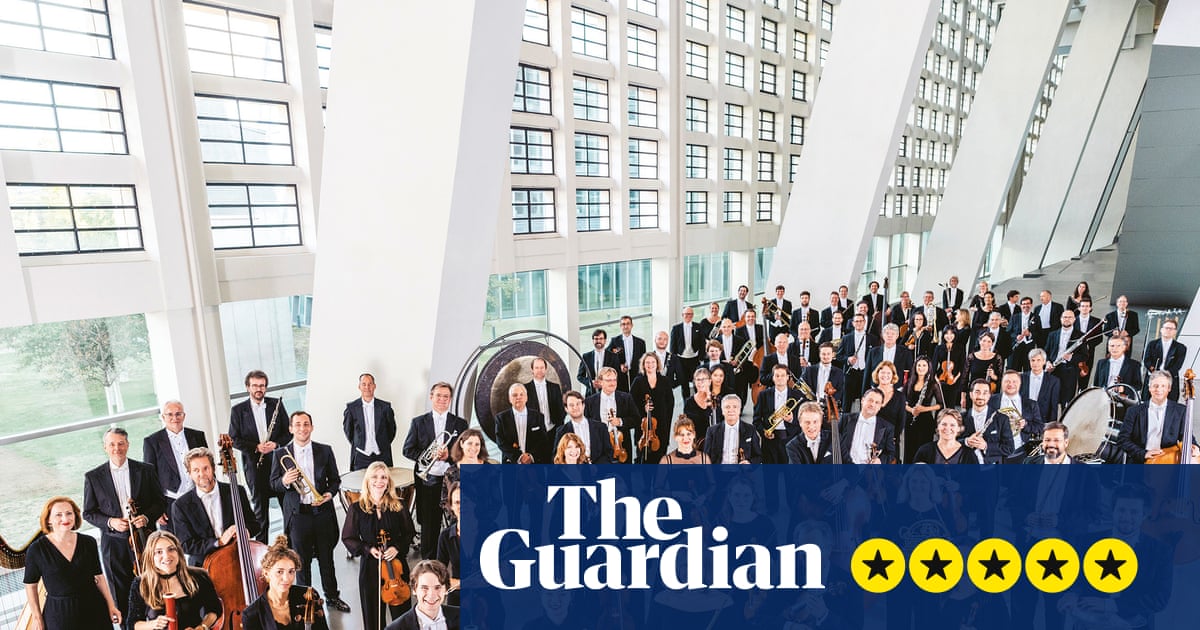
If the Leningrad was Shostakovich’s official response to the second world war, the Eighth Symphony was his answer to the question: “Will you tell us what you really think?” Written while the fighting was still under way, its immediacy remains striking today, a quality reflected in Alain Altinoglu’s purposeful interpretation with the Frankfurt Radio Symphony orchestra. Schostakovich Symphony No 8 album cover You hear that directness at once in the way the strings dig deep, bringing remarkable colours to a 26-minute Adagio that, in the wrong hands, can sound merely bleak and black. Not that Altinoglu shuns the horrors: his phrasing and textural dynamics bring fearsome weight and a sense of wide-eyed terror to the composer’s protracted cry of despair. The orchestra covers itself in glory with instrumental solos that are piquant and precise. Resonant details are captured by an outstanding German production team that manages to outdo the Berlin Philharmonic’s excellent 2020 account under Kirill Petrenko (Shostakovich fans will need both). The second movement, a portrait perhaps of the Nazi war machine, and the …
Paraorchestra; Sinfonietta/Jonny Greenwood review – Reich’s kaleidoscopic music bursts into life

Paraorchestra; Sinfonietta/Jonny Greenwood review – Reich’s kaleidoscopic music bursts into life

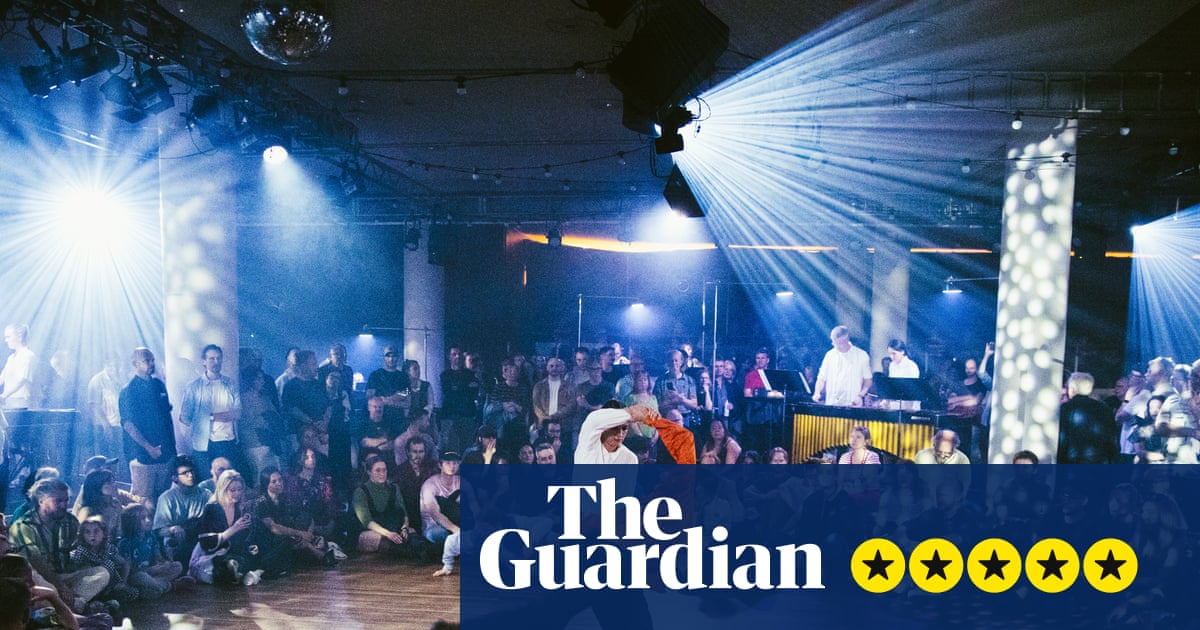
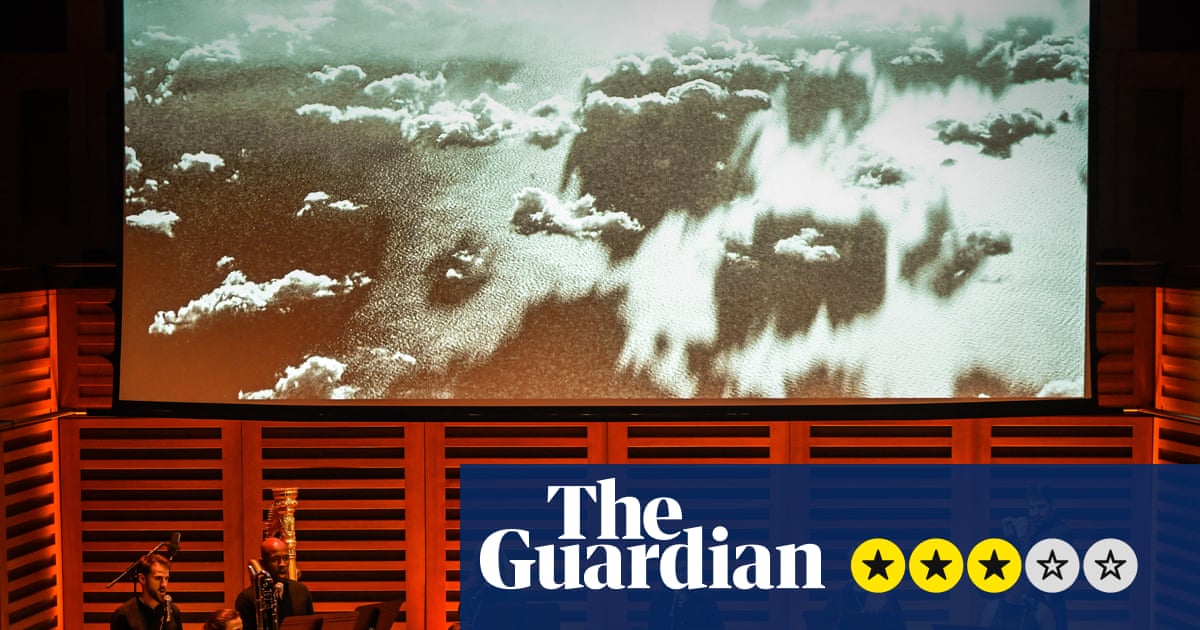
Two birthdays were celebrated at Southbank Centre’s Steve Reich-fest. First, the composer himself, a supremely influential artist who has shifted the classical music dial over decades with his evolving yet instantly recognisable soundworld. He turns 90 on 3 October. And then there was Music for 18 Musicians, one of his signature works, which notches up a half-century this year. An immersive performance of the latter invited the audience to mingle with an ensemble dotted around the Clore Ballroom, the collective grins on faces proof positive of the work’s enduring power to raise the spirits. ‘Clean-as-a-whistle technique’ … Jonny Greenwood alongside the London Sinfonietta. Photograph: seb.gardner/seb gardner Doing the honours was Paraorchestra, Charles Hazlewood’s enterprising collective of disabled and non-disabled musicians, who brought Reich’s kaleidoscopic music to life with ironclad discipline. Freed from fixed seats, the itinerant audience peered at musicians on podiums as if they were objects in an exhibition, marvelling at the precision of polyrhythmic marimba players, or grooving in a central mosh pit with a flexuous quintet of dancers who persuaded children and …

Phaedra Ensemble: The Music of Meredith Monk review – fleeting rough edges amid polished beauty

Phaedra Ensemble: The Music of Meredith Monk review – fleeting rough edges amid polished beauty

There’s no one quite like Meredith Monk. So often grouped with her lionised contemporaries Philip Glass, Steve Reich, Terry Riley and La Monte Young, she is 83 to their 90-odd years and sports long plaited hair as reliably as Reich wears a baseball cap. Yet she refuses the label “minimalism” for her music, and composition is just one element of a creative life that also takes in singing, choreography, film-making and drawing. Monk was not present at this performance marking the launch of Phaedra Ensemble’s new album of her music, though she did loom briefly over the audience on video, professing “it’s a dream of mine for this music to be recorded and played”. (Compare that to the fortunes of Glass’s works.) But she had been closely involved, having invited the group to record some of her music after hearing them play. It was therefore a shame that the ensemble on stage at Kings Place wasn’t quite the lineup of musicians that had joined Monk on her exploration of how voices might become instruments and …

Why We Love Performing Classical Music

Why We Love Performing Classical Music

I am an amateur pianist, and I love performing classical music. Reflecting on my willingness to follow the score written by the composers, I found it bizarre: I follow the score to such an extreme extent that I am willing to take the risk of ruining a public performance. Sometimes, the instructions on the score ask something that seems to be unnecessary for producing a certain acoustic effect; the same acoustic effect can be easily achieved by a different and much easier approach. Still, I strictly follow the score. I am not alone. The pianist Malcolm Bilson once discussed how to play the opening of Beethoven’s Piano Sonata No. 32 in C minor, op. 111, which has a very dangerous leap in the left hand that can be played much more easily with two hands. Bilson thinks pianists should play it only with the left hand: I say go out on the stage and be plenty nervous because it’s dangerous, and because that’s what Beethoven wrote. He wrote something that is potentially dangerous, and you …

Coleridge-Taylor and Dvořák Violin Concertos album review – shrewd pairing, with Gil Shaham fluid and imposing

Coleridge-Taylor and Dvořák Violin Concertos album review – shrewd pairing, with Gil Shaham fluid and imposing

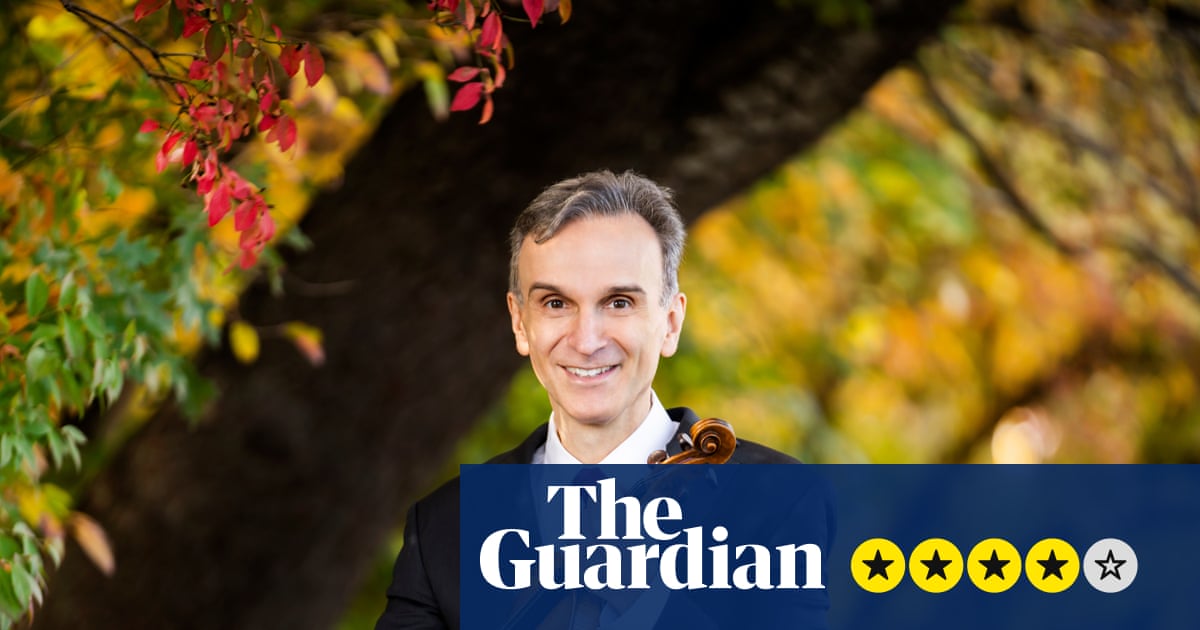
Pairing Samuel Coleridge-Taylor with his musical idol Dvořák is a shrewd idea. The British composer, of Sierra Leonean heritage, usually finds his Violin Concerto coupled with a little-known English work. Here, juxtaposed with one of the 19th century’s most popular concertos, it more than holds its own. Album cover art. Photograph: Canary Classics Coleridge-Taylor’s concerto premiered in Connecticut in 1912 (despite the original parts going down with the Titanic). Although he doesn’t quote actual spirituals, the harmonies and melodic contours are reminiscent of African folk music. Gil Shaham has the measure of the work, his plush tone and laser-focused intonation enriching the solo line in a generally more sumptuous performance than most rival recordings. Eric Jacobsen and the excellent Virginia Symphony Orchestra ensure the accompaniments remain sufficiently light on their feet. Dvořák took a similarly folk-oriented tack in his 1883 concerto, though his chosen idiom was Slavonic. Internalising the music of his homeland, the composer managed to squeeze both a dumka and a furiant into its breezy finale. Again, Shaham is fluid and imposing, especially …

Galilee String Quartet review – Palestinian ensemble improvise their signature east-west blend

Galilee String Quartet review – Palestinian ensemble improvise their signature east-west blend

‘We’ve done many concerts, but this is the first time I’m stressed,” the first violin confesses with a grin, lowering his instrument before a single note has sounded. But before he can launch into the story he’s interrupted by the cellist. “We’re actually supposed to play first!” she chides. A string quartet is often compared to a four-way marriage. But what if the dynamic was closer to four siblings? One group that doesn’t need to imagine the answer is the Saad family: brothers Omar, Mostafa and Gandhi, and sister Tibah – AKA the Galilee String Quartet. Formed in 2011, the Palestinian ensemble was forced into hiatus in 2013 when eldest brother Omar was summoned for military conscription by Israel’s IDF. Refusing to serve, he was imprisoned as a conscientious objector. The quartet are currently based in Paris, honing their signature blend of east-meets-west music-making. Webern’s lyrical love-letter Langsamer Satz was a strategic opener. The only classical work on the programme, it was as though the quartet wanted to prove they could play it straight, before …

Hear Classical Music Composed by Friedrich Nietzsche

Hear Classical Music Composed by Friedrich Nietzsche

A philoso­pher per­haps more wide­ly known for his prodi­gious mus­tache than for the vari­eties of his thought, Friedrich Niet­zsche often seems to be mis­read more than read. Even some­one like Michel Fou­cault could gloss over a cru­cial fact about Nietzsche’s body of work: Fou­cault remarked in an unpub­lished inter­view that Nietzsche’s “won­der­ful ideas” were “used by the Nazi Par­ty.” But that use, he neglect­ed to men­tion, came about through a scheme hatched by Nietzsche’s sis­ter, after his men­tal col­lapse and death, to edit, change, and oth­er­wise manip­u­late the thinker’s work in a way The Tele­graph deemed “crim­i­nal.” Fou­cault may not have known the full con­text, but Niet­zsche had about as much sym­pa­thy for fas­cism as he did for Christianity—both rea­sons for his break with com­pos­er Richard Wag­n­er. What Niet­zsche loved most was music. Even in the wake of this scan­dal, with Niet­zsche ful­ly reha­bil­i­tat­ed at the schol­ar­ly lev­el at least, the philoso­pher is gen­er­al­ly read piece­meal, used to prop up some ide­ol­o­gy or crit­i­cal the­o­ry or anoth­er, a ten­den­cy his anti-sys­tem­at­ic, apho­ris­tic work inspires. A more …

Hallé/Chauhan/Helseth review – Muhly paints doom with Helseth’s gleaming trumpet

Hallé/Chauhan/Helseth review – Muhly paints doom with Helseth’s gleaming trumpet

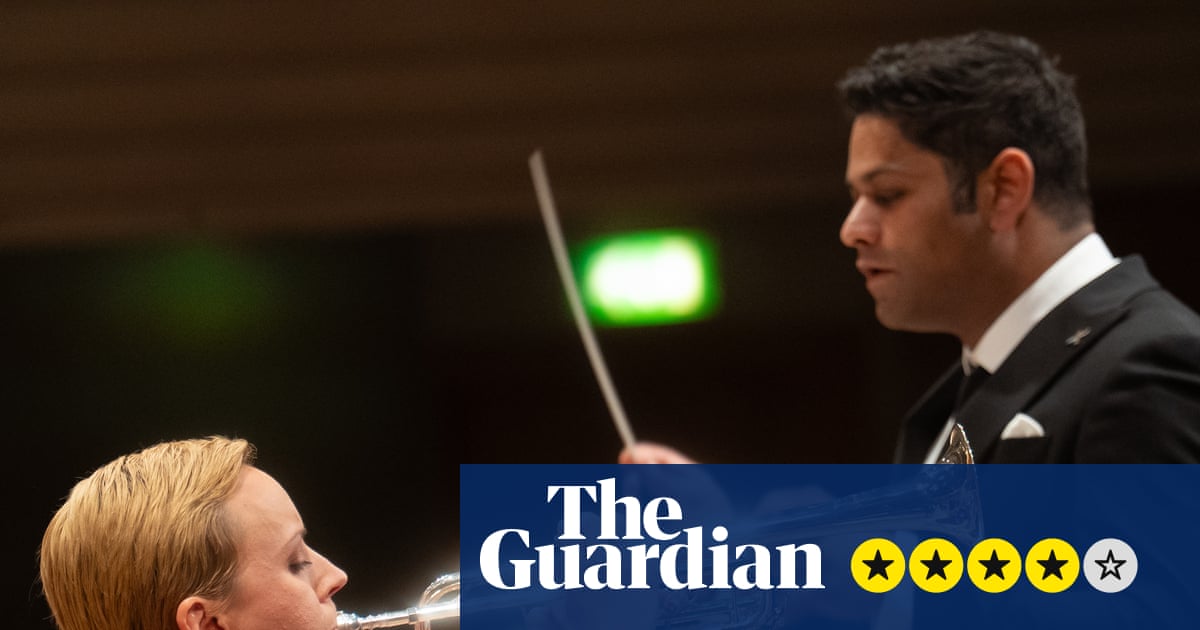
Audiences can be fickle. The Hallé’s latest programme featured one of the world’s most celebrated trumpeters, a UK premiere from one of the world’s most high-profile living composers, and one of this country’s most successful young conductors – yet the Bridgewater Hall yawned with empty seats. Whatever the reasons, those who decided against booking missed an exhilarating evening. It started politely enough, with the rollicking baroquery of Britten’s Courtly Dances from Gloriana. A set of Tudorbethan pastiches, these dances encourage orchestral good behaviour. But conductor Alpesh Chauhan also allowed glimpses of a harsher, modernist world outside in the viciously chirrupping winds and off-kilter repetitions of the central Morris Dance and the gleeful snaps and rattles of the closing Lavolta. A Hallé co-commission, Nico Muhly’s trumpet concerto Doom Painting was composed for Norwegian trumpeter Tine Thing Helseth and inspired by the instrument’s biblical roles. Muhly’s note on the piece points to distinct sections featuring the trumpet as a ceremonial instrument, as an expressive fixture of depictions of the apocalypse, and as a jubilant feature of the …

Sacconi Quartet review – new Freya Waley-Cohen work reveals ensemble at their finest

Sacconi Quartet review – new Freya Waley-Cohen work reveals ensemble at their finest

Founded at the Royal College of Music in 2001, the Sacconi Quartet celebrated their silver jubilee by looking forward as well as back. If Haydn and Beethoven represented the bedrock upon which their musical sensibilities were grounded, it was a newly commissioned work by Freya Waley-Cohen that revealed them at their finest. Impeccably crafted and full of rhythmic and harmonic invention, Dances, Songs & Hymns for Friendship is a six-movement string quartet informed by the composer’s observations of the four musicians both in and out of rehearsal – she even watched them making tea! It opened with Spin, in which bold unison passages dissolved into fragmentary solos. Waley-Cohen’s musical fingerprints here were spicy, but rarely ventured beyond a world that Bartók, for example, would have recognised. It suited the Sacconi’s tightness of ensemble and muscular tone, especially in the lower instruments. Subsequent movements included the pensive Sing, with an aching melody reminiscent of a deconstructed folk song; Play, where dancing syncopations hinted at eastern Europe; the hypnotically skirling Step; and Pray, a luminous meditation in …

LSO/Treviño/ Kopatchinskaja review – he conducts with a coiled-spring muscularity

LSO/Treviño/ Kopatchinskaja review – he conducts with a coiled-spring muscularity

Back in 2017 a little-known young American, Robert Treviño, stepped in at short notice to conduct the London Symphony Orchestra in Mahler’s Third Symphony – the most substantial in the repertoire – for the first time. It was a seriously exciting debut. The year after, Treviño pulled off a similar coup in Zurich, establishing a career that has since caught fire across Europe. It has taken nearly a decade, but Treviño – this week announced as the new principal conductor of Bucharest’s George Enescu Philharmonic – is finally back with the LSO. It was worth the wait. Treviño isn’t a flamboyant figure on the podium; his beat is tidy, his gestures deceptively contained. But there’s a coiled-spring muscularity and authority to his delivery that translated across the repertoire in this bizarrely programmed sequence. Rachmaninoff’s Symphony No 2 was the crowd-pulling second half, but before that a magnificent 20th-century oddity and something even odder from the 21st. Lost during the second world war, Messiaen’s 1932 Hymne was later “reconstructed” from memory by the composer. How accurately? …