


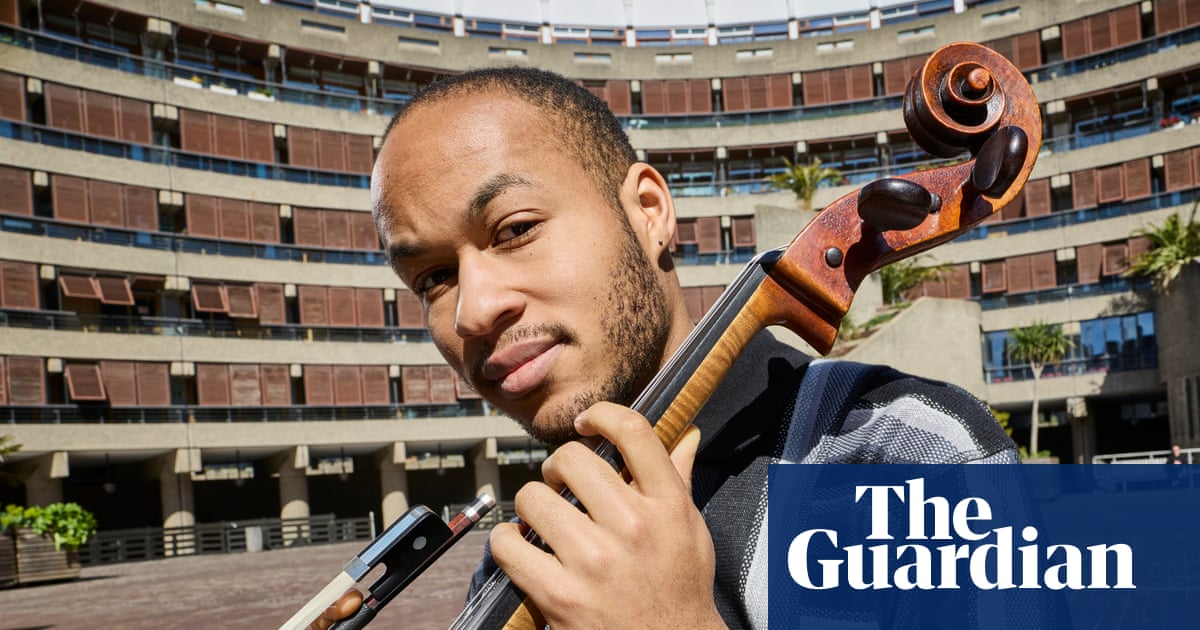
As the mother of seven supremely talented young musicians, Kadiatu Kanneh-Mason is better placed than most to understand the value of a musical education.
Her children, including the renowned cellist Sheku Kanneh-Mason, all benefited from the rich musical opportunities on offer in the state schools of Nottingham, where they grew up, and enjoyed the support of the music department at their local university.
But last month, the University of Nottingham confirmed that its music department – described by many as one of the finest in the country – would close because of a drop in student demand, bringing to an end 100 years of pioneering music tuition.
“I’m devastated by this news,” Kanneh-Mason wrote in a letter to supporters of the Campaign for the Arts, of which she is a trustee. “This department helped make my family who we are.”
Her daughters, Konya and Jeneba, had their first piano lessons with one of its professors – now they are touring internationally and playing with the Stuttgart Philharmonic Orchestra – and it was a pianist from the university who accompanied Sheku in his grade 8 cello exam.
“As all my children grew up in Nottingham, the university gave them accompanists, teachers, places to perform, encouragement and expertise,” Kanneh-Mason said. “Its closure is a colossal blow to the cultural life of the entire East Midlands and its impact will be deep and far-reaching.”
Similar cuts to music have happened elsewhere in higher education, including Oxford Brookes and the University of Kent. Meanwhile, in schools across England, the number of students taking A-level music has fallen to a record low – part of a wider decline in take-up of arts subjects.
Last Tuesday, Kanneh-Mason, a former lecturer in English at the University of Birmingham, was part of a delegation in Downing Street to deliver a petition with more than 60,000 signatures, calling on the prime minister, Andy Burnham, to put music and the arts at the heart of his 10-year plan for the country.
“Nottingham has always been an excellent city for music,” Kanneh-Mason told the Guardian. “There were always opportunities for the children to perform and have experiences and lessons with people.”
But with the closure of the university’s music department and deep cuts to music and the arts in schools, she said there was a sense that music was “dropping out of the heart of Nottingham”.
She worries that the vibrant musical education her older children enjoyed at Trinity Catholic School in Aspley, a deprived area of Nottingham, is no longer accessible to most children in the state system.
“[Trinity] punched above its weight because the headteacher and the leadership team were passionate about music and funded music. It didn’t matter that they were Black children playing musical instruments. They didn’t feel that they were alien or what they did was unusual,” said Kanneh-Mason.
“Now, with all the budget cuts, that’s been rolled back significantly and I think the education of my older four or five children was quite different from that of my younger two.”
She also worries that music is becoming the preserve of those who can afford to go to private schools. “If I ever meet any young Black musicians, they are never from state schools. The only route now is through the private school system.
“I think we have to be very mindful of what that’s doing to education, to society. We are allowing a huge gap between the privileged few and the unlucky masses, and we shouldn’t be allowing that to happen.
“The government would like to blame budgets and lack of money, but I think it’s more than that. It’s a decision and a choice. It’s something I think we need to fight against very strongly.”
Does she think her children would have achieved the same musical success if they were in school now? Probably not, she said. “And that’s really heartbreaking to see. Fewer children are going to have the opportunity to go on and study music or become musicians.
“More than that though, that link between audiences and the music industry is going to loosen. Because if you don’t get music in schools, you’re also not going to be in an audience.”
A Department for Education spokesperson said: “The arts and creativity should be an intrinsic part of a broad, well-rounded education providing young people with vital skills for the future – not just putting them on a path for GCSE exams.
“That’s why we’re moving away from the EBacc, which has narrowed subject choice, making sure pupils have access to high-quality extracurricular activities and transforming the curriculum so that every young person experiences the arts alongside a strong academic core.”
A University of Nottingham spokesperson said: “A societal shift has significantly affected student demand for music degrees over recent years, with the downward trend in recruitment reflecting changing demographics and educational and career preferences.
“In order to ensure that our institution is sustainable for current and future generations, we need to make tough decisions based on changes in student demand, the cost of delivering courses and competition from other institutions offering similar courses.”