


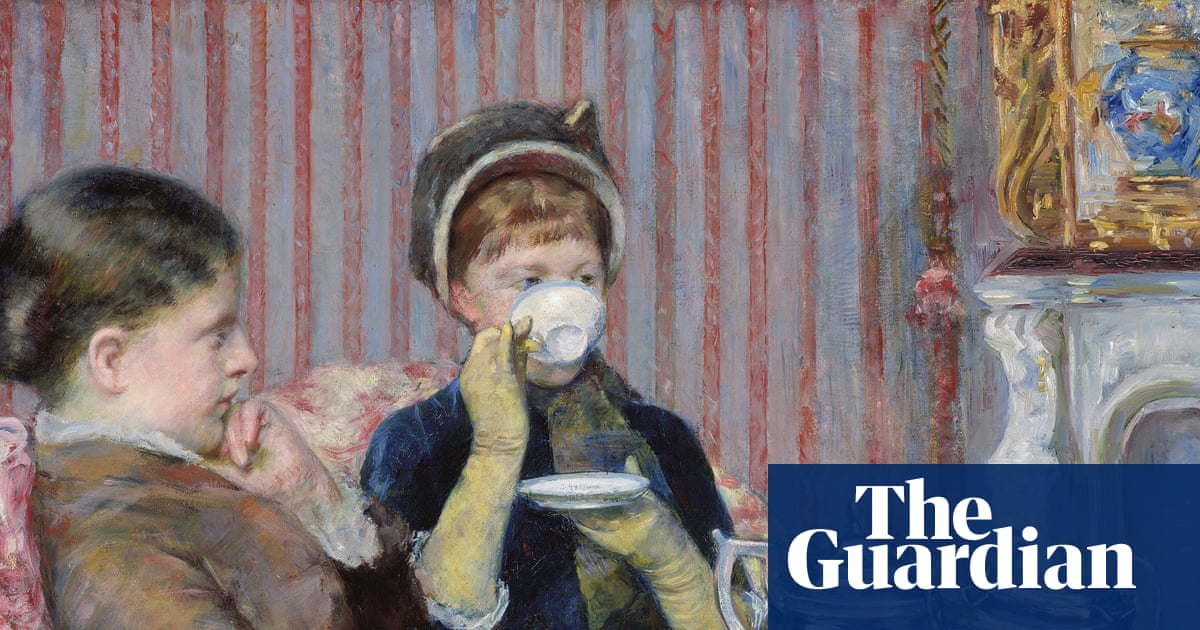
As a painter, friend, and collaborator of Edgar Degas, who exhibited with impressionist artists including Claude Monet and Camille Pissarro, Mary Cassatt was at the heart of the 19th-century movement that emerged in France and revolutionised art.
She was also a woman and foreign – “American, American through and through” is how she described herself. As a result, in the 100 years since her death, Cassatt has been frequently overlooked in the country where she produced her best work.
An exhibition at Paris’s Musée d’Orsay, which comes to London early next year, aims to change that and place Cassatt back in her role as an active member and pillar of France’s impressionist group.
It features 80 paintings, pastels and prints covering her career, many from private European and US collections and previously unseen, along with unpublished private letters.
Caroline Corbeau-Parsons, an exhibition curator, said: “She was overlooked because she was a woman and a foreigner.”
She added that Cassatt’s choice of subjects – mostly women and children – means she was also stereotyped.
“We hope this exhibition will put Mary Cassatt back in her rightful place in the history of impressionism.”
Cassatt specialised in mother-and-child paintings, a genre in great demand in 19th-century Paris, and women, depicting their social and private lives, often severely constricted by conventions of the time. She was a lifelong advocate for women’s rights.
Sadly, the work of which she was most proud, Modern Woman, a commission to produce a monumental 4-metre by 18-metre mural to decorate the 1893 World’s Fair in Chicago, has long disappeared. The Musée d’Orsay exhibition features a digital representation of the work.
Cassatt, born into a wealthy Pennsylvania banking family with French Huguenot roots, first visited France with her parents and siblings in 1854, when she was just 10 years old and fell in love with the country.
On her return to the US, she later enrolled at the Pennsylvania Academy of the Fine Arts and learned to paint. As a woman, there were restrictions in an era when painting was considered a social skill, not a career option. She was only allowed to paint reproductions based on statues and was forbidden from painting nudes.
Her father, Robert, was vehemently opposed to her becoming a painter and abhorred the bohemian lifestyle associated with the artistic world, but did not stop her moving to Paris in 1866, aged 21, with her mother and various female relatives as chaperones.
Unable to enter the École Nationale Supérieure des Beaux-Arts, where women would not be admitted until 1897, Cassatt took private lessons with masters from the prestigious school and spent her days copying masterpieces in the Louvre museum.
after newsletter promotion
She later sought out communities of artists outside the French capital whose atmosphere she described as “stifling and petty” and acquired a chateau in the Oise department north of Paris.
Cassatt met Degas at an exhibition held by rebel artists, who had rejected the formal strictures of the Beaux-Arts academy. Known as “the intransigents”, they included Claude Monet, Berthe Morisot, Pierre-Auguste Renoir, Édouard Manet, Alfred Sisley and Camille Pissarro. Degas invited her to exhibit with the group, nicknamed impressionists by the press.
Degas and Cassatt subsequently collaborated on several works, including Cassatt’s Little Girl in a Blue Armchair, one of her best-known paintings. The relationship was fruitful for both. Cassatt introduced America to Degas and other impressionist artists.
While recognised during her lifetime, in the century after her death only one retrospective has been held in France, where she lived for 32 years. After her death in June 1926, several exhibitions were organised to commemorate her life and work. In France, she was largely forgotten.
Anne Robbins, who curated the exhibition, said Cassatt was overlooked in France because she was a foreign woman. As most of her paintings were sold to US collectors, with few remaining in France, she added.
“Although Mary Cassatt’s work is represented in the Musée d’Orsay collection, her presence there is significantly less prominent than that of her fellow impressionists, including Berthe Morisot and Marie Bracquemond, the two other ‘ladies of impressionism’, to use the words of art critic Gustave Geffroy in 1894.
“Furthermore, she was not part of the major French collections of her time, so her paintings were not included in the catalogues of national museums.”
The Musée d’Orsay’s exhibition will transfer to the National Portrait Gallery in London in January and then to the Museum of Fine Arts in Boston.