


‘Write, write, write until your fingers break!” That was Chekhov’s advice to writers. Until I started writing for television I thought I understood what he meant. I thought I knew what writing was: the solitude, the making yourself do it, the finger-shattering pain of doing it seriously, on your own.
As well as being chief film critic for the Guardian, I have written fiction and in some ways the basic technical challenge has not been so very different from cinema criticism; after having had the idea, or having seen the film, you have to go away on your own and turn the computer on.
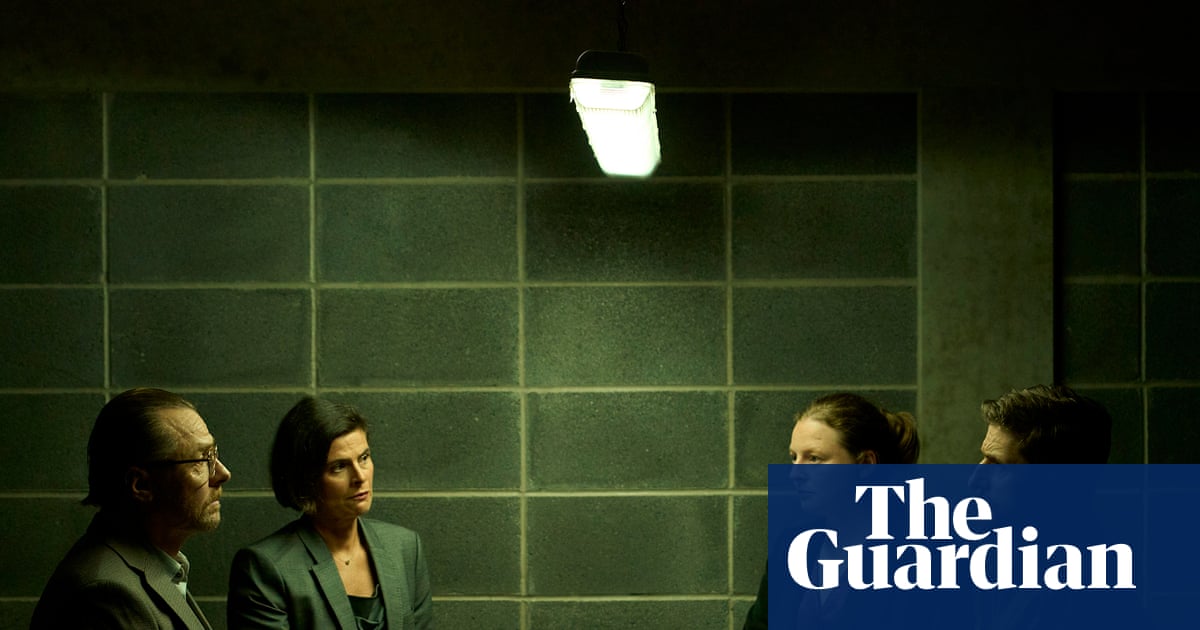
But TV is different. TV is all about The Room. It’s a learning curve I have tremulously ascended having co-written and executive-produced the forthcoming Channel 4 drama-thriller Hunting Alice Bell, working with head writer and showrunner, David Baddiel. This is about a sports centre manager, living in an ordinary UK town, who gets accused online of being the onetime girlfriend of a notorious serial killer, a woman relocated after her own short jail sentence under a false name, for her own safety. It’s a story of misogyny, online paranoia and digital mob rule.
Before starting work on Hunting Alice Bell, I still had the mindset that writing, with all its mistakes and false starts, was something that happened in forgiving privacy.
The Room is not like that. The Room is about productivity and the creation of story. For Hunting Alice Bell, we convened an intimidatingly super-smart group of writers, including Kate Verghese (who has written for HBO’s Industry), Polly Buckle (who wrote the Netflix hit Love Rat), Stuart Cheetham (who writes for the cruiseship caper The Good Ship Murder) and dramatist David Persiva (who writes for The Teacher) and we gathered round a boardroom table at the production offices, crunching out narrative: plot beats and character arcs. Then the episodes get divvied up for people to go away and write.
We settle in and go episode by episode, talking about simply what happens, not the dialogue. Someone writes it up on a whiteboard in a water-based marker pen (one of the oddities of our room is that it was not typed out on a laptop and projected on the wall legibly. No, it’s the manuscript culture of the whiteboard). It is a collective experience, creativity in real time. The other writers, of whom I was in awe, zapped clever ideas and smart fixes back and forth, although David has the responsibility of final say. His is the loneliness of the long-distance showrunner.
And I learned to contribute, while feeling that creating narrative like this was like having your brain squeezed.
As David says: “The room is fantastic, in terms of creative adventure and possibility. The only thing I would say is you do, in the end, have to do the actual slog of writing the bloody thing, line by line, scene by scene, as before. The difference is that all the ideas and energy and storylining from the room remains in play as you do that work, lessening the slog. It’s like your own exhausted old writing brain is in a complex back-and-forth long-distance, hopefully still productive, non-toxic relationship with the new more youthful communal hive mind of the room.”
From the very first, I personally was obsessed with the handsome plateful of snacks that nestled in the centre of the polished table, their silvery paper glittering like jewellery. There was healthy fruit as well, such as bananas and grapes, and at first I would high-mindedly take a single grape or two while talking about the show, as if this was all the mental bandwidth I could give to eating. It wasn’t long before my blood-sugar was in freefall: I was gobbling KitKats, Penguins and Tesco treats, making a feral keening noise, my face a smudgy chocolatey mask as if it was Christmas Day and there was no work to be done.
Jesse Armstrong, showrunner and creator of HBO’s Succession, told me: “I love it. It’s the one part of working on a television show that I have uncomplicated feelings of regret not to be doing any longer. A good writers’ room can feel wonderful and light, filled with promise and a tingling sense that you’re getting close to the best version of the show. Of course, when you get stuck, on some plot thing or the shape of a whole season, that can feel terrible; you feel that you’re leading a small platoon of brave soldiers to certain death.”
He adds: “In the room, you can experiment. The second season is more relaxed because everybody knows what you’re working with. The downside of later seasons can be the queasy, uneasy feeling that you are writing fan fiction of your own work.”
However, Armstrong says a showrunner sometimes has a tricky task: “You have to make little decisions all day on what direction the room pursues. Usually, the room has its own momentum. But the showrunner has to be the ultimate decider. Someone might say: Shiv should do this. Someone else feels: no – that’s not real. If it’s important, in the end I would have to say: ‘OK, I think this is the way we have to go, for now, I have to make a call on this.’”
Buckle tells me: “In the US, they can pay writers tens of thousands of dollars a week to work in rooms, enough money so you can afford to turn everything else down. There can be tension if the producer thinks that the writers should challenge the showrunner. Some people have standup rows. Not me. I’m too much of a people-pleaser. I’ve heard of rooms where people aren’t guaranteed to get an episode to write. Eight people competing for four episodes. It’s a case of ‘dance, monkey, dance!’”
For Verghese, the room is a vital US import: “In this country, I think we don’t spend enough time or money on the story part of the process, and that is what happens in the room. For me, story is like emotional maths. You work out: what the character wants, why they’re doing it, and how the pursuit of their desire ultimately changes them. I’ve been in five-month-long American rooms, some quite alpha rooms. It can be performative and competitive. When the creative alchemy is good, though, it’s such a buzz.”
And eating? “I usually get through about two packs of chewing gum a day – chewing, chewing, chewing,” says Verghese. “On one show, they gave that mannerism to one of the characters: I watched it, and thought: ‘Shit, is that based on me?!’”
So the room can be competitive, fierce, abrasive or supportive. Our room on Hunting Alice Bell was terrifically collaborative and positive, although at the end of the day I had to be stretchered out on a saline drip.
Armstrong says that we in the UK still haven’t got to the US level: “I heard about a room in America that was so big people had microphones so everyone could hear and one writer deliberately crinkled their Coke can on the punchline of every joke another writer else pitched.”