


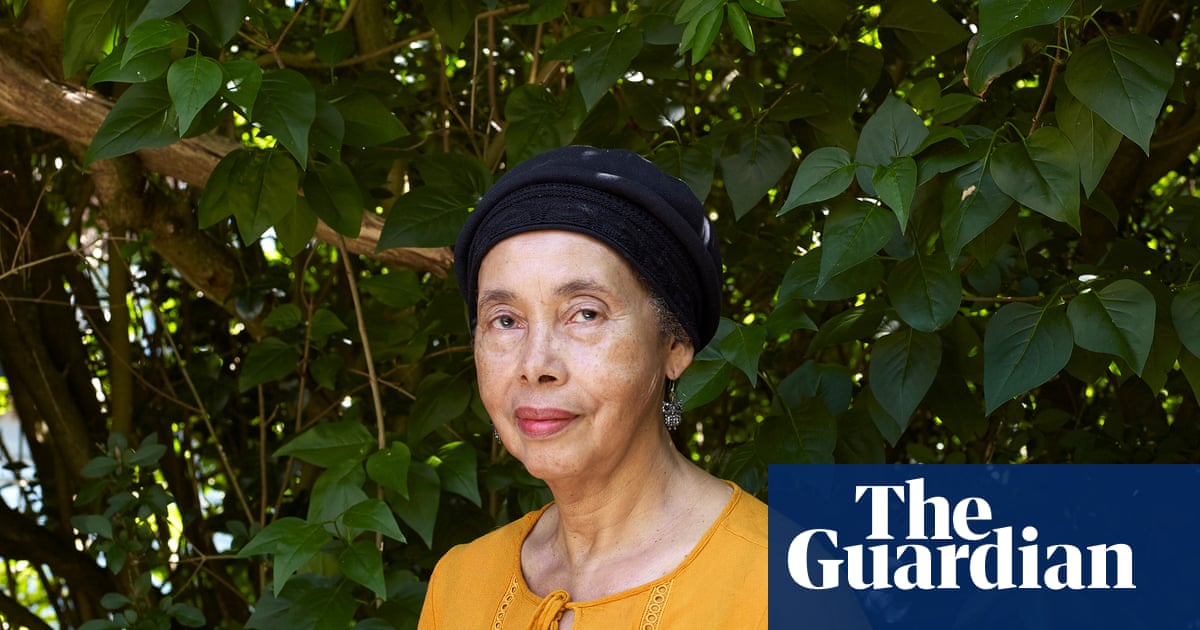
The poet Grace Nichols has been named the winner of the 2026 Royal Society of Literature Pioneer prize, a £10,000 award that recognises women writers over 60 who broke through at a time when the literary world was less open to them.
Nichols, 76, who was born in Guyana and moved to the UK in 1977, made her name with I Is a Long-Memoried Woman, which took the Commonwealth poetry prize in 1983, and The Fat Black Woman’s Poems, a collection published the following year. Her poems have been GCSE set texts for decades, and she has written extensively for children as well as adults.
The Pioneer prize was established last year by the then president of the Royal Society of Literature (RSL), Bernardine Evaristo, who donated the £100,000 she received from the 2025 Women’s prize outstanding contribution award to fund it for 10 years. The award will rotate between forms each year, and this year was given for poetry. The winner of the inaugural Pioneer prize was the novelist, playwright and activist Maureen Duffy, who died in May.
Nichols’ poems draw on Guyanese folk tales, oral tradition, landscape, and on the history of slavery. She was also one of a group of West Indian poets whose work tackled racial tensions during a time of inflammatory immigration debates in Thatcher’s Britain. Her other collections include Lazy Thoughts of a Lazy Woman (1989), Sunris (1996), which won the Guyana poetry prize, and Startling the Flying Fish (2005). She has also published a novel, Whole of a Morning Sky (1986), as well as books for younger readers including Come on Into My Tropical Garden (1988) and Give Yourself a Hug (1994). Several of those were anthologies she co-edited with her partner, fellow Guyanese poet John Agard.
Ruth Borthwick, the chair of English PEN, who led the judging panel, called Nichols “one of our most important contemporary poets”, who had developed “her own poetic language – an earthy mix of Creole and standard English”.
“Grace showed the way for generations of poets from the diaspora to make the cultural connections between the Caribbean and Britain,” Borthwick said.
Borthwick was joined on the panel by the poet Sarah Howe, who said: “Grace Nichols is a legend, a trailblazer in the truest sense. Her work spans continents and traditions, alive to orality and shapely on the page, light and weighty at once. Her work blends the rhythms and stories of her Caribbean heritage with a unique vision of modern Britain.”
Nichols said she had been surprised to get the call from Borthwick. “I am honoured and delighted to have the RSL Pioneer prize bestowed on me and grateful to poetry for all that it’s given me, as well as to the judges and my parents who made books a part of our lives,” she said.
Judith Palmer, the director of the Poetry Society, also on the judging panel, said Nichols “was probably the first poet who really lifted poetry off the page for me”.
When she established the prize, Evaristo said: “It’s very easy to forget the feminist struggles of the past and the intrepid women who paved the way for successive generations, and it’s important to celebrate our trailblazers while they are still around to enjoy it.”
after newsletter promotion
Nichols, who is a vice-president of the RSL, received the Queen’s gold medal for poetry in 2021. Her next collection for adults, The Tracks of My Name, will be published on 19 November.
She will be celebrated at an event at the British Library on 1 March 2027.